
Yes — a 3 oz Fast Pickle shot delivers 570 mg of sodium in a single swallow, which is closer to what a wildland firefighter needs on a 14-hour fire assignment than a bottle of water or a sports drink sipped between water stops. The sodium replaces what a Nomex-covered body sweats out near the flame front, and the same throat reflex documented in a 2010 exercise-science study eased induced muscle cramping in under 90 seconds — faster than plain water absorbs.
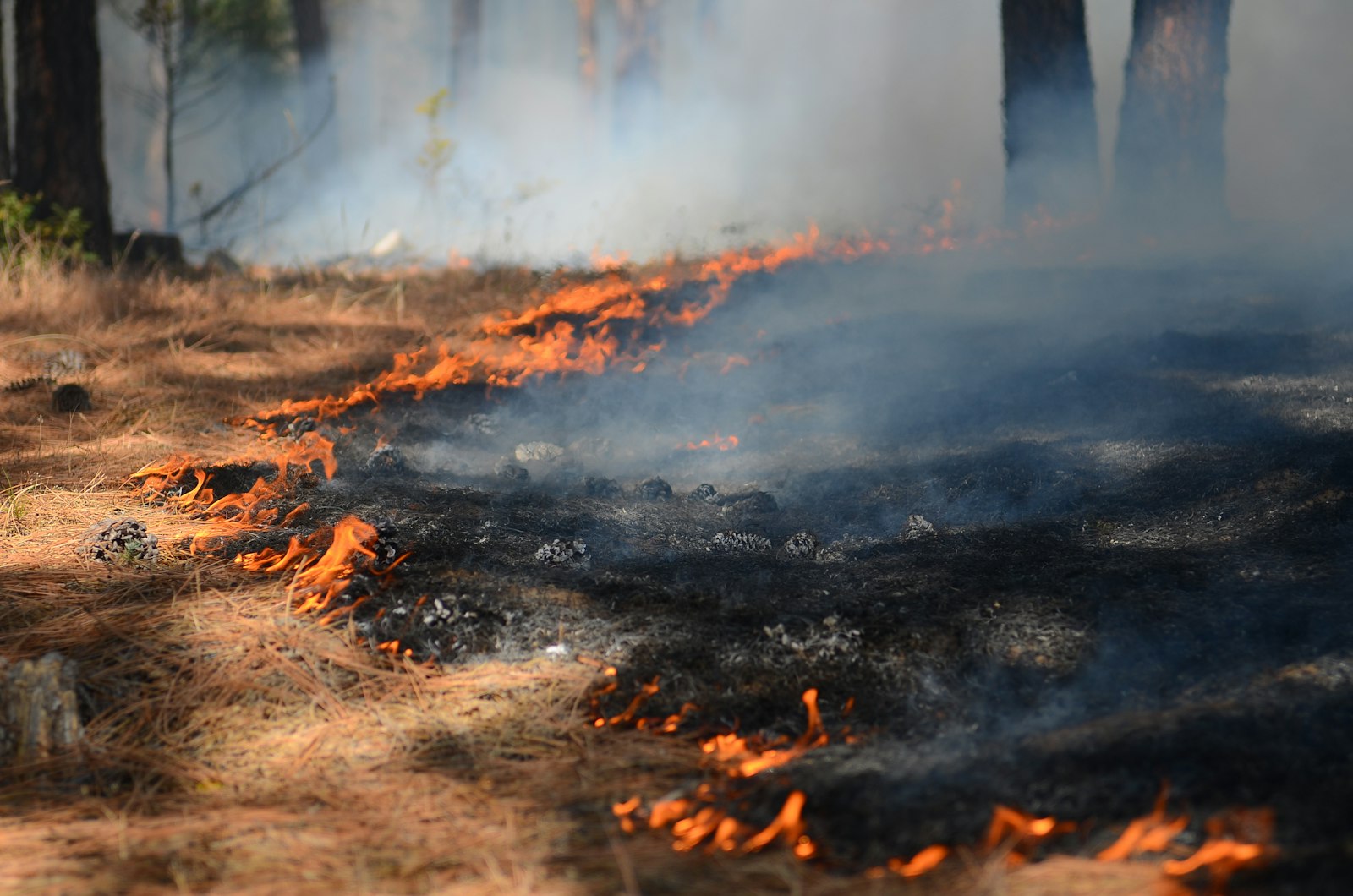
A hotshot crew doesn't take a break because someone is thirsty. It takes a break when the division supervisor calls one, when the saw team finishes a section of line, or when the fire lets it. Between those breaks, a firefighter in full Nomex — long sleeves, leather boots, a 25-plus pound pack — is working next to radiant heat that a bystander two hundred feet back doesn't feel. The sweat starts before the crew ever reaches the fire line, from the hike in alone.
How Hot Is It Actually on the Line?
Ambient air temperature is the wrong number to look at. The number that matters is what's happening inside the gear. Nomex shirts and pants are flame-resistant, not breathable in the way a cotton T-shirt is, and they're worn as a second, insulating layer over a base layer in weather that's already 90°F-plus on a typical August fire. Add the radiant heat of an active flame front, direct sun on a barren burn scar with no canopy left to shade it, and the physical output of swinging a Pulaski or running a chainsaw, and core temperature climbs long before anyone feels sick.
The National Wildfire Coordinating Group's own hydration guidance for firefighters is built around this gap between how a body feels and what it's actually losing: sweat evaporating fast in dry heat can leave someone looking dry and unbothered while still running a serious fluid deficit underneath the gear.
How Much Do Wildland Firefighters Actually Need to Drink?
NWCG's baseline is a minimum of one quart of fluid for every hour of fire suppression work. The Forest Service's Missoula Technology and Development Center puts the daily target higher still — 4 to 6 liters of water a day to stay hydrated through a full operational period — and recommends that roughly a third to half of hourly fluid intake come from a sports or electrolyte drink rather than plain water, specifically because straight water doesn't replace what's lost with it.
Actual intake on the line rarely hits that target. Field research cited by the Forest Service found firefighters drinking anywhere from about 200 milliliters to just over a liter per hour during a shift — a huge range, and one where the low end is well short of the quart-an-hour minimum. Fatigue, focus on the task, and canteens that are simply empty all play a part. A shift doesn't pause for a water break; it pauses when the line boss calls one.
The Water-Only Mistake NWCG Specifically Warns About
It would be easy to assume the fix is just "drink more water," and NWCG's own materials push back on that directly. Drinking large volumes of plain water without replacing electrolytes can dilute blood sodium to the point of hyponatremia — a genuine medical emergency that mimics dehydration in its early symptoms, which is part of why it's dangerous on a fire assignment where the obvious response to feeling bad is to drink more water. NWCG also flags that unacclimatized firefighters — someone in week one of a fire season, or an out-of-region crew that got called up fast — lose more sodium in sweat than someone who's spent weeks in the heat, and need to pay closer attention to salt replacement, not less.
Sweat sodium concentration varies a lot person to person, generally running somewhere between 460 and 1,840 mg per liter depending on genetics, diet, and heat acclimation, with a rough midpoint around 800 mg/L. A single quart of sweat at that midpoint is carrying somewhere close to 750 mg of sodium out of the body — replaced by exactly nothing if the only thing going back in is water.
| Drink | Typical Serving | Sodium per Serving |
|---|---|---|
| Fast Pickle Shot | 3 oz | 570 mg |
| Plain water | 8 oz | 0 mg |
| Gatorade Thirst Quencher | 8 oz | ~110 mg |
| Liquid I.V. Hydration Multiplier | 1 packet (16 oz) | ~500 mg |
| LMNT | 1 stick pack | ~1,000 mg |
Ounce for ounce, Fast Pickle carries more sodium than a sports drink out of the cooler, in a format small enough to carry a half-dozen shots in a pack pocket without adding meaningful weight — a real constraint when everything on a fireline pack is already accounted for in pounds.
Why the Response Is Fast, Not Just the Sodium Content
A 2010 study published in Medicine & Science in Sports & Exercise (Miller et al.) tested pickle juice against water and against no treatment on electrically induced muscle cramps. Cramps treated with pickle juice resolved in roughly 85 seconds — about 37% faster than water and 45% faster than doing nothing. The researchers' explanation wasn't about sodium hitting the bloodstream; blood sodium levels hadn't meaningfully changed in that short a window. It pointed instead to a neurally mediated reflex, triggered by the acidity and salinity hitting receptors in the mouth and throat, that appears to interrupt the nerve signal driving the cramp. That reflex is why the response is measured in seconds rather than the twenty-plus minutes it takes fluid to actually absorb and redistribute sodium through the body.
On a fire line, that distinction matters. A firefighter whose calf locks up mid-shift isn't going to wait twenty minutes for a drink to work. A shot that can be swallowed between swings of a tool and acts on a reflex rather than a digestion timeline fits how the work actually happens.
Building a Hydration Routine Around a Fire Assignment
- Load sodium before the briefing, not during the shift. A salted breakfast at camp — the fire cache food is usually generous with salt for exactly this reason — gives you a head start before the first hour on the line.
- Treat every break as a mandatory refill, not an optional one. If the crew stops, drink on the stop, even if you don't feel thirsty yet. Thirst lags dehydration by the time you're sweating through Nomex.
- Don't chase a fluid deficit with water alone. Alternate water with something carrying sodium, particularly in the first few days of an assignment before you're heat-acclimated.
- Keep a shot in your line pack, not just the buggy. Fire caches stock water and sometimes a powdered electrolyte mix, but neither is guaranteed to be where you are when a cramp hits mid-shift.
- Watch for hyponatremia signs, not just dehydration signs. Nausea, confusion, or swelling after heavy water intake with little sodium is a different problem than dehydration and needs different first aid — flag it to your crew boss rather than just drinking more water.
How fast does a pickle shot actually work compared to a cramp cream or stretching?
In the Miller research, the cramp response landed around 85 seconds — faster than the time it typically takes to stop, find a spot to stretch the affected muscle, and hold it. On a fire line where stopping to stretch isn't always an option mid-task, that speed is the practical advantage, not a claim that it works better in a controlled setting.
Is 570 mg of sodium too much sodium for one shot?
For most healthy adults working a physically demanding shift in the heat, 570 mg is a modest fraction of what's lost in a single hour of hard sweating — nowhere near excessive in that context. It's a different calculation if you're on a sodium-restricted diet for blood pressure or kidney reasons; talk to your doctor before adding any sodium product to your routine if that applies to you.
Does it need to be refrigerated on a fire assignment?
No. It ships and stores shelf-stable, which matters when your fridge for two weeks is a cooler in the back of a buggy that may or may not have ice in it by day three.
Which pack size makes sense for a 14-day fire assignment?
The 12-pack is built for exactly this — a roster, a module, or one person covering a full assignment without running out around day nine. The 6-pack is a reasonable way to try it on a shorter initial-attack callout before committing a crew order to it.
Is this a replacement for the electrolyte mix in my fire cache?
Think of it as a different tool for a different moment. A powdered mix in a hydration bladder is for steady, ongoing replacement across a shift. A shot is for the specific moment your calf or forearm locks up and you need something fast, concentrated, and already in your pocket.
The Short Version
Wildland fire doesn't run on a water-break schedule — it runs on what the fire is doing, and the crew drinks when the line lets them. NWCG's own numbers show real intake on the line often falling well short of the one-quart-an-hour minimum, and its hydration guidance is explicit that plain water without sodium can create a different, more dangerous problem than the dehydration it's meant to solve.
A 3 oz Fast Pickle shot carries 570 mg of sodium — more per ounce than a sports drink from the cooler — in a format that survives a pack pocket for two weeks without refrigeration. Load sodium before the shift, refill at every stop the crew gets, and keep a shot within reach for the moment a cramp shows up mid-task rather than at a convenient time.
Related reads: pickle juice for firefighters, which covers structural and municipal crews, and pickle juice for heat cramps, which covers the mechanism in more depth.
*These statements have not been evaluated by the Food and Drug Administration. This product is not intended to diagnose, treat, cure, or prevent any disease. Individual results may vary.