
Yes — wastewater treatment plant operators lose real sodium on shift, even though the job reads "wet" instead of "hot." Confined-space entries into digesters, wet wells, and dewatering rooms require waterproof suits and respirators that trap sweat the same way insulated gear does anywhere else, and a federal health hazard evaluation at one treatment plant logged average outdoor summer conditions of 93.5°F with 81% relative humidity. A 3 oz Fast Pickle shot carries 570 mg of sodium, more per ounce than anything in the break room cooler, in a format built for a confined-space debrief or a fixed lunch window.
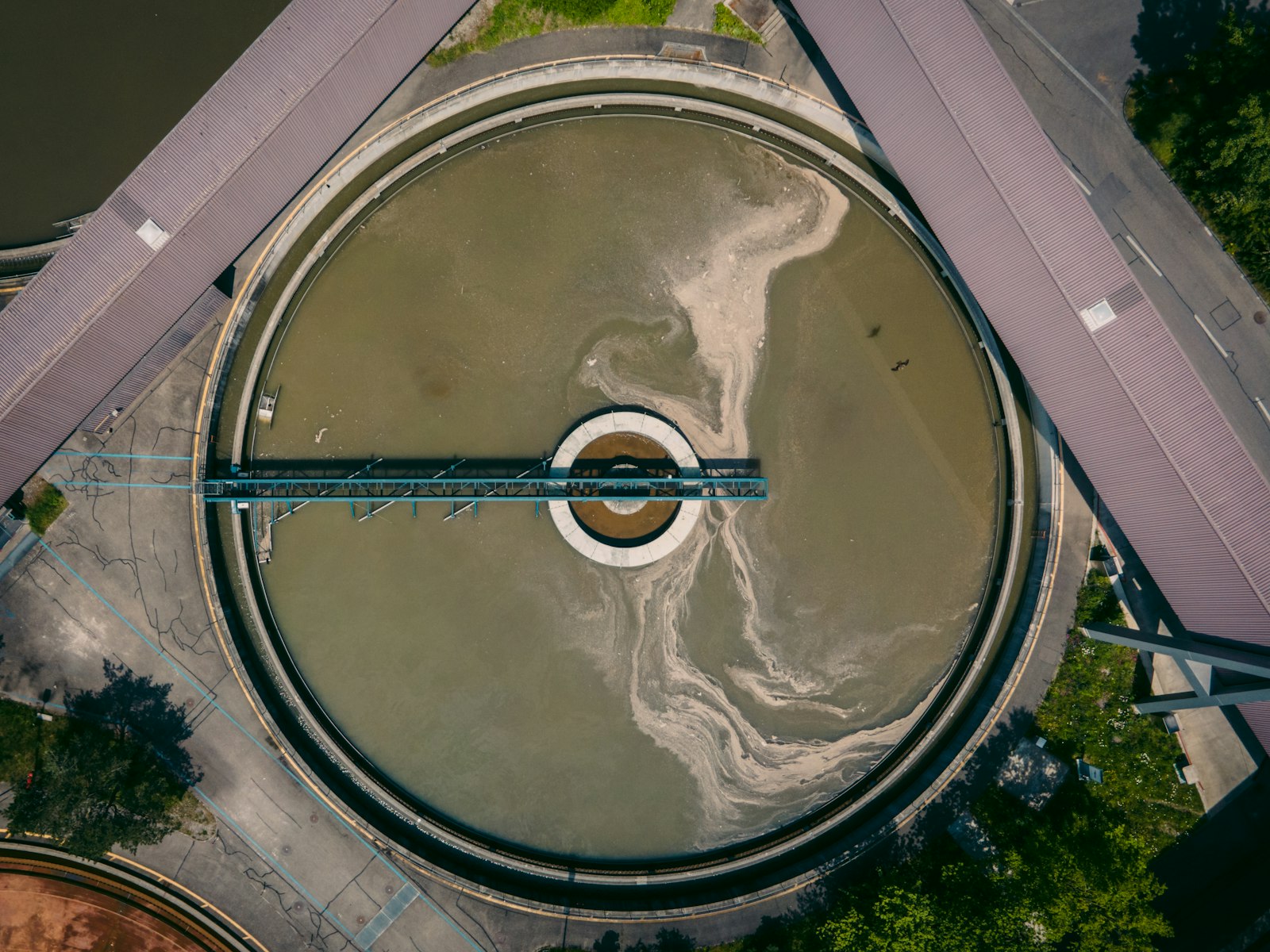
Ask someone what a wastewater treatment plant job looks like and they'll usually say one word: wet. Screens, wet wells, clarifiers, tanks of moving water in every direction. That picture isn't wrong. It's also the reason the actual heat hazard on this job gets waved off before anyone bothers to measure it.
Wet Isn't The Same As Cool
Working around water all day doesn't mean the work itself is cool. A screening room, a headworks building, or a biosolids dewatering floor can run hot and humid regardless of how much liquid is moving through the tanks below it, and the plant's outdoor tank farm sits in the same summer sun as any other industrial site. The presence of water changes what the job smells like. It doesn't automatically change what the job costs a body working hard next to it.
Confined-space entry adds a second layer most outside observers never picture. Digesters, wet wells, and some dewatering vaults require full PPE before anyone climbs in: waterproof coveralls, gloves, sometimes a respirator or supplied air. That gear does exactly what it's built to do — keep contamination out — and as a side effect it also keeps sweat in. The wet, cool-sounding job and the sealed-suit job can happen in the same shift, sometimes the same hour.
Where The Heat Actually Lives At A Treatment Plant
A federal health hazard evaluation conducted in June 2024 at a state-operated wastewater treatment plant offers real numbers instead of guesswork. The facility, built in 1978 and still processing sewage into Class B biosolids for an adjacent state correctional institution, was measured for outdoor conditions across the evaluation period: temperatures ranging from 82.1°F to 101°F, averaging 93.5°F, with relative humidity swinging from 35% to a saturated 100% and averaging 81.4%. Indoors, in the plant's laboratory building, conditions were far milder — 67.1°F to 80.8°F, averaging a comfortable 72.6°F, after a mini-split system was installed to bring the space within ANSI/ASHRAE comfort range.
That gap is the whole story in two numbers. An operator who splits a shift between the climate-controlled lab and the outdoor tank farm, the headworks screening building, or a confined-space entry isn't working in one environment. They're working in two, and only one of them shows up on the break room thermostat.
The Suit Doesn't Know What The Thermometer Says
Confined-space and biological safety guidance for water and wastewater operators generally treats 68–74°F as the comfortable target range for enclosed work, since normal human core temperature sits at roughly 98.6°F and doesn't need much outside help to climb. Field conditions inside a digester vault or dewatering room in July routinely run well past that range before anyone even accounts for the suit.
That's because waterproof PPE creates what safety researchers call a microclimate: a pocket of heat and moisture trapped between skin and fabric that has nowhere to evaporate. The room's thermometer might read a manageable number. The air inside a sealed coverall, worn while lifting, climbing, or operating equipment in a confined space, can be running well above it — and rising faster than the room around it would suggest. That mismatch is exactly why relying on a wall-mounted gauge to judge whether a shift is "hot" misses the hazard that actually matters.
Sodium Per Ounce: What Fits In A Break
| Product | Serving | Sodium | Sodium per oz |
|---|---|---|---|
| Pedialyte | 12 oz | 370 mg | about 31 mg |
| Liquid I.V. stick in water | 16 oz | 500 mg | about 31 mg |
| LMNT stick in water | 16 oz | 1,000 mg | about 63 mg |
| Fast Pickle 3 oz shot | 3 oz | 570 mg | 190 mg |
The per-ounce column is the one that matters when your break is a fixed window between confined-space entries, not an open hour with a water bottle at your desk. A 3 oz shot carrying 570 mg of sodium delivers more sodium than a full 16 oz sports drink, in a fifth of the volume, and it's finished in about eight seconds — no bottle to recap before the next entry log signature.
Why 3 oz Works On A Reflex, Not On Absorption
The math looks off at first glance. If a shift under waterproof PPE costs you well over a thousand milligrams of sodium, how does 570 mg in one shot make a real difference? It matters because of what it does, not how much of it there is.
In Miller et al. 2010, published in Medicine & Science in Sports & Exercise, researchers electrically induced muscle cramps in dehydrated subjects and found that a concentrated hypertonic saline solution eased the cramping in about 85 seconds — roughly 37% faster than plain water, and well before the sodium could have reached the bloodstream through digestion. The leading explanation is a neural reflex: concentrated sodium hitting receptors in the mouth and throat appears to interrupt the misfiring nerve signal driving the cramp, independent of the slower process of gut absorption. That reflex is why a small, concentrated shot can act fast even though it can't fully restock what a heavy shift under PPE already cost you.
How Much Sodium Does A Wastewater Shift Actually Cost You?
Sweat sodium concentration varies person to person, but a review of sweat studies across roughly 500 people puts the range at 460 to 1,840 mg per liter, with a mean around 826 mg per liter. Layer that onto a shift that mixes climate-controlled lab time with outdoor tank work or a confined-space entry in full PPE, and the totals climb fast:
- 1 liter of sweat, a shift spent mostly on rounds and lab work with one short confined-space entry: 460 to 1,840 mg of sodium out.
- 2 liters of sweat, adding a stretch working the headworks screens or tank farm on a summer afternoon: 920 to 3,680 mg of sodium out.
- 3 liters of sweat, a full confined-space entry program in a dewatering vault during a heat wave: 1,380 to 5,520 mg of sodium out.
No 3 oz shot closes a gap that size, and this page won't pretend one does. Closing it takes salt at meals, sodium in what you drink across the whole shift, and enough food before you clock in. What the shot is for is the specific moment a hand, calf, or forearm locks up mid-entry, when the fastest documented response plus 570 mg back in the tank is worth more than a slower fix you don't have time for while someone's watching your entry permit clock.
Frequently Asked Questions
Isn't a treatment plant a cool, wet place to work?
Parts of it, yes. The lab and control room usually run comfortable. But headworks screening buildings, outdoor tank farms, and confined-space vaults don't follow the same rules, and a federal health evaluation at one plant logged summer outdoor averages of 93.5°F with 81% humidity. Wet and cool aren't the same thing once you're the one wearing a sealed suit.
Why would I need electrolytes if I'm not doing "outdoor" work?
Because confined-space PPE traps heat and sweat regardless of what's happening outside. A waterproof coverall and respirator create a microclimate against your skin that can run well past the room's own temperature, and that heat load adds up the same way outdoor heat does.
Is this a substitute for water on the job?
No. Water handles ongoing hydration across a shift. A Fast Pickle shot is for the specific moment a muscle locks up and you need the fastest documented response available, in a size that survives a coverall pocket through a wet shift.
Which pack size makes sense for a crew or a full week of shifts?
The 12-pack is built for a full work week or a small crew sharing a case in the break room. The 6-pack is a reasonable way to try it before committing a crew order to it.
Does it need refrigeration, or will it survive a locker?
It ships and stores shelf-stable at room temperature, which matters when your break-room storage is a shared locker, not a fridge.
Is there anyone who shouldn't add extra sodium to their routine?
If you're on a sodium-restricted diet for blood pressure or kidney reasons, talk to your doctor before adding any sodium product to your routine. For most people doing hard physical work in confined-space PPE, 570 mg in a single shot is a small fraction of daily intake.
The Short Version
A wastewater treatment plant looks like a wet job from the outside, and large parts of it genuinely are. What that picture leaves out is a lab and control room running a comfortable 72°F next to an outdoor tank farm averaging 93.5°F in summer, and confined-space entries where a sealed, waterproof suit traps heat regardless of what the wall thermometer says.
A 3 oz Fast Pickle shot carries 570 mg of sodium — more per ounce than anything in the break room cooler — in a shelf-stable format built for a fixed entry-permit break. Load sodium through the shift, and keep a shot within reach for the moment a cramp shows up inside the suit rather than at a convenient time.
Related reads: pickle juice for data center technicians, which covers the same climate-controlled-room-versus-hot-zone split in a different industry, and pickle juice for tunnel workers, which covers confined-space heat load in another below-grade setting.
*These statements have not been evaluated by the Food and Drug Administration. This product is not intended to diagnose, treat, cure, or prevent any disease. Individual results may vary.