
Probably not for the period cramps themselves. Period cramps come from the uterus, a smooth muscle that contracts in response to hormone-like chemicals called prostaglandins. The best evidence for pickle juice (Miller et al. 2010) is for skeletal muscle cramps, like a calf or foot cramp, and the reflex it seems to trigger acts on the nerves that run those muscles, not the uterus. Heat, over-the-counter pain relievers like ibuprofen and regular exercise have far better support for period pain. Where a pickle juice shot can still fit is the leg cramps and heavy-sweat workouts some people deal with during their cycle.
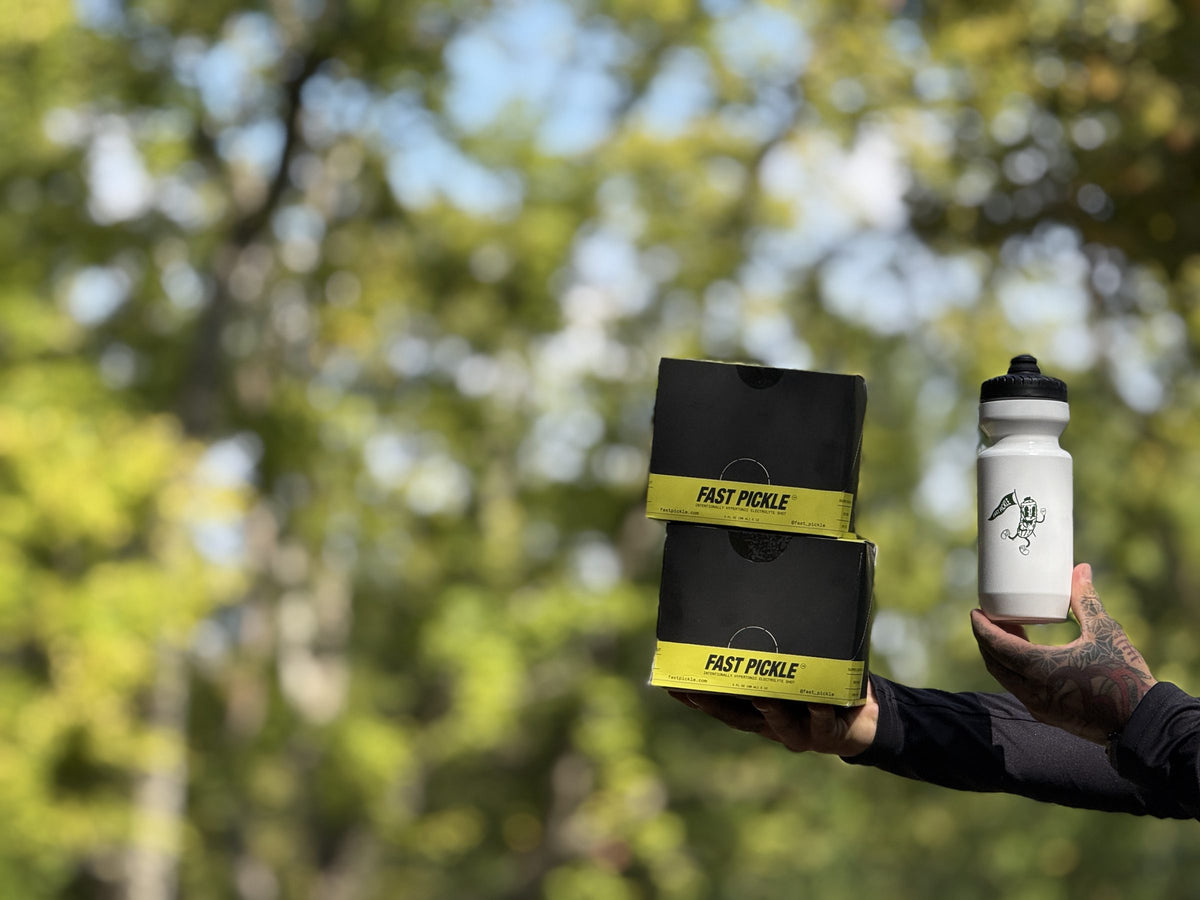
Getting leg cramps, not just period cramps? That is the job pickle juice is built for. Every Fast Pickle shot is 3 oz with 570 mg of sodium and zero added sugar. Get the 24-pack at $2.08 a shot, with a free Fast Pickle bottle while supplies last.
Why This Question Comes Up So Often
Pickle juice has a reputation as a cramp fix, and "cramp" is the word almost everyone uses for period pain. So it is a fair question. If a shot of brine can stop a calf cramp in about a minute and a half, why not a period cramp?
The answer comes down to the fact that these are two very different kinds of muscle, run by two very different control systems. Once you see that, it becomes clear where pickle juice can help, and where it is the wrong tool.
What Actually Causes Period Cramps
The medical name for painful periods is dysmenorrhea. In the most common form, called primary dysmenorrhea, there is no underlying disease. The pain comes from the lining of the uterus releasing prostaglandins as it prepares to shed. Prostaglandins make the uterine muscle contract harder, which can briefly cut blood flow to the muscle. That squeeze plus the reduced blood flow is what you feel as cramping in the lower belly, sometimes spreading to the lower back and thighs.
Prostaglandins do not stay politely in one place, either. They are also linked to the nausea, loose stools and headaches some people get around their period. Higher prostaglandin levels tend to mean more painful periods.
There is also secondary dysmenorrhea, where the pain is caused by a condition such as endometriosis, adenomyosis or fibroids. That kind of pain often gets worse over time and needs a proper medical workup. More on that below.
How Pickle Juice Stops A Leg Cramp
Most of what we know about pickle juice and cramps comes from one well-known study: Miller and colleagues, published in Medicine & Science in Sports & Exercise in 2010. Researchers mildly dehydrated participants, triggered a cramp in a small muscle of the foot with electrical stimulation, then had them drink about 1 mL of pickle juice per kilogram of body weight. Those cramps ended in about 85 seconds on average, faster than when participants drank plain water.
The surprising part was the timing. That is far too fast for the sodium to be absorbed and change anything in the blood. The leading explanation is a reflex: the sharp, sour taste of vinegar stimulates receptors in the mouth and throat, which sends a signal that quiets the overactive motor nerves keeping the muscle locked in a cramp. We cover that timing in detail in how long pickle juice takes to work for cramps.
The key detail: that reflex is thought to work on the motor neurons that control skeletal muscle, the muscles you move on purpose, like your calves, hamstrings and feet.
Why That Reflex Probably Does Not Reach The Uterus
The uterus is smooth muscle. You cannot flex it on command, and it is not run by the same motor neurons that fire your calf. Its contractions are driven by hormones, prostaglandins and the autonomic nervous system. A period cramp is not a nerve misfiring in a locked muscle. It is a chemical signal telling the muscle to contract, and that signal keeps going for as long as the prostaglandins are there.
So even if the vinegar reflex works exactly the way researchers think, there is no clear path for it to calm uterine contractions. We have not found any published study testing pickle juice for menstrual cramps. Until one exists, the honest answer is that there is no good evidence it helps, and a solid reason to expect it would not.
What About The Sodium?
Sodium is the other half of pickle juice, and it does not help much here either. Period pain is not caused by low sodium, so adding sodium does not address it. And many people already deal with water retention and bloating in the days before and during their period. Extra salt makes your body hold on to more water, so a big pour of brine could make that puffy feeling worse, not better.
Pickle juice is also acidic. If prostaglandins are already giving you nausea or an unsettled stomach, a sour, salty shot on an empty stomach is not likely to feel great. Our guide to pickle juice side effects covers the stomach and sodium issues in more depth.
Where Pickle Juice Can Still Make Sense During Your Period
None of this means you have to skip pickle juice during your cycle. It just means using it for the right job. A few situations where a shot is a reasonable fit:
- Calf, foot or hamstring cramps. Some people notice more leg cramps around their period, especially at night or during workouts. Those are skeletal muscle cramps, the exact kind the Miller study looked at. See our guide to the best electrolyte for leg cramps at night.
- Training through your period. If you are running, lifting or doing hot yoga and sweating heavily, a shot puts back some of the sodium you lose in sweat. Our pickle juice for hot yoga guide covers that use.
- As a low-sugar option. If you want something salty without the sugar load of a sports drink, a zero-added-sugar shot fits. See the best no-sugar electrolyte drink for how options compare.
The dose stays the same as any other use: about 2 to 3 oz, which is one shot. If you are prone to bloating or nausea that week, have it with food and follow it with water. For the full dosing breakdown, see how much pickle juice you need for a cramp.
What Has Better Evidence For Period Pain
If the goal is relief from period cramps specifically, these options have much stronger support than pickle juice. Talk with a doctor or pharmacist about what fits you, especially if you have other health conditions or take other medications.
- Heat. A heating pad, heat wrap or warm bath on the lower belly is one of the most consistently recommended home remedies, and studies of continuous low-level heat have found meaningful pain relief.
- Over-the-counter NSAIDs. Pain relievers such as ibuprofen and naproxen work by lowering prostaglandin production, which goes straight at the cause. They are commonly recommended as a first option, often started at the first sign of a period. Follow the label, and check with a clinician if you have stomach, kidney or bleeding issues.
- Regular exercise. Research reviews suggest that regular physical activity may reduce period pain for some people. Light movement during your period, like walking or gentle cycling, helps some people too.
- Hormonal options. For people with painful periods month after month, hormonal birth control is a common treatment a clinician may discuss.
When To See A Doctor
Some period pain is normal. Pain that disrupts your life is not something you have to just put up with. Get checked if:
- Your pain keeps you from work, school or normal activities, or over-the-counter pain relievers do not help.
- Your cramps are getting worse over time, or started for the first time after years of easy periods.
- You have very heavy bleeding, pain outside your period, pain during sex, or fever.
Those can be signs of conditions like endometriosis, which the World Health Organization estimates affects roughly 10 percent of women and girls of reproductive age, as well as fibroids or adenomyosis. A drink is not the answer to any of those, and they are worth a real diagnosis.
Frequently Asked Questions
Does pickle juice help with period cramps?
There is no good evidence that it does. Period cramps are uterine contractions driven by prostaglandins, and pickle juice's fast cramp effect has only been shown for skeletal muscle cramps like calf and foot cramps.
Can pickle juice make period bloating worse?
It can. Pickle juice is high in sodium, and extra salt makes the body hold on to water. If you already feel bloated before or during your period, a large pour may add to it. Stick to one measured shot and drink water alongside it.
Is pickle juice good for leg cramps during my period?
Yes, that is where it makes the most sense. Calf, foot and hamstring cramps are skeletal muscle cramps, the type studied in the Miller 2010 research. About 2 to 3 oz is the studied dose.
Is it safe to drink pickle juice on your period?
For most healthy adults, a single shot is fine at any point in the cycle. The usual cautions apply: watch your total sodium if you have high blood pressure or have been told to limit salt, and skip it on an empty stomach if you feel nauseated.
Does pickle juice help PMS?
There is no research showing that pickle juice relieves PMS symptoms such as mood changes, breast tenderness or fatigue. Because of its sodium, it is more likely to add to water retention than ease it.
Why do I crave pickles on my period?
Salty cravings around a period are commonly reported, but the reasons are not well understood. Hormone shifts that affect appetite and taste are a likely part of it. A craving is not a sign that pickle juice will treat cramps.
Does magnesium or potassium help period cramps more than sodium?
Some small studies have looked at magnesium for period pain with mixed results, and the evidence is not strong enough to call it a treatment. Pickle brine carries little of either mineral, so it is not a meaningful source of them either way.
The Short Version
Pickle juice is a fast, well-studied tool for skeletal muscle cramps, the calf or foot cramp that locks up mid-run or wakes you at night. Period cramps are a different problem: a smooth muscle responding to prostaglandins. Heat, NSAIDs and regular exercise have far better support for that pain, and pain that keeps getting worse deserves a doctor's visit.
Keep a 3 oz Fast Pickle shot for the cramps it is built for: 570 mg of sodium, zero added sugar and a known dose every time.
Related reads: pickle juice side effects, how long pickle juice takes to work and the benefits of drinking pickle juice.
*These statements have not been evaluated by the Food and Drug Administration. This product is not intended to diagnose, treat, cure, or prevent any disease. Individual results may vary.