
Pickle juice is safe for most healthy adults in small amounts, and its side effects come from two things: sodium and acid. The common ones are an upset stomach, heartburn, bloating, thirst and, over time, wear on tooth enamel. The bigger risk is sodium for people who are salt-sensitive or have high blood pressure, heart or kidney disease. A 3 oz shot is about 570 mg of sodium, roughly a quarter of the 2,300 mg daily limit most adults are advised to stay under.
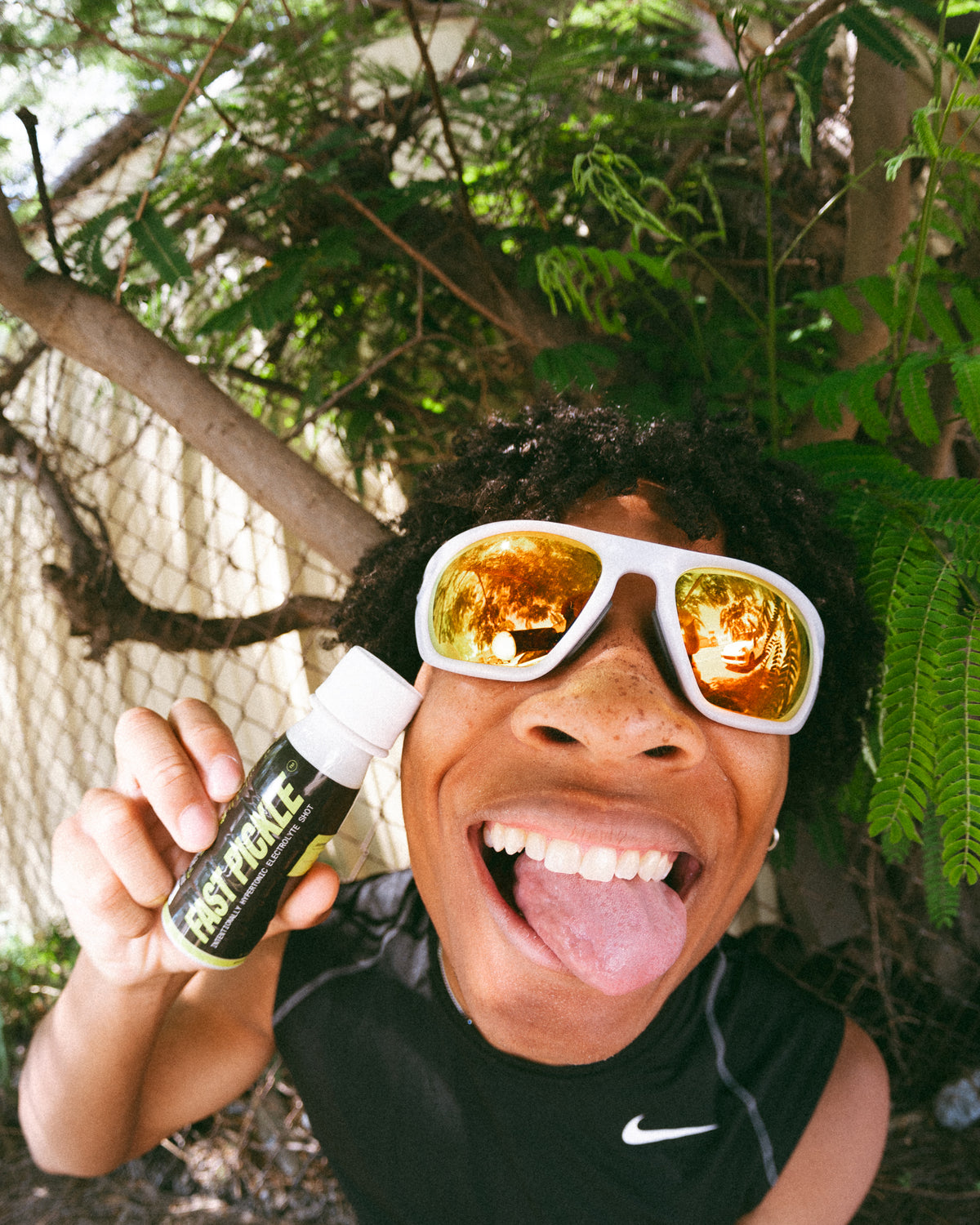
Want a known dose instead of a jar guess? Every Fast Pickle shot is 3 oz with 570 mg of sodium and zero added sugar. Get the 24-pack at $2.08 a shot, with a free Fast Pickle bottle while supplies last.
Why Pickle Juice Has Side Effects At All
Pickle brine is basically three things: water, salt and vinegar, plus whatever spices and additives a given brand uses. The salt is what makes it useful for heavy sweaters, and the sharp vinegar taste is what researchers think triggers the fast cramp-stopping reflex. Those same two ingredients are behind almost every side effect people report.
That framing matters because it tells you how to avoid problems. You are not dealing with a mystery compound. You are managing a sodium dose and an acid dose, and both scale with how much you drink and how often.
1. Upset Stomach, Nausea And Bloating
This is the side effect people notice first. Vinegar is acidic, and a big swig of something salty and sour can sit badly, especially on an empty stomach. Common complaints are a queasy feeling, cramping in the gut, bloating and, for some people, loose stools after a large pour.
Most of this is about volume. The best-known cramp study (Miller et al. 2010) used about 1 mL per kilogram of body weight, which is 2 to 3 oz for most adults. People who get sick on pickle juice are usually drinking far more than that, often straight from a jar. If you want the full dosing breakdown, see how much pickle juice you need for a cramp.
- Stick to the studied dose. One 3 oz shot is plenty for a cramp.
- Have it with or near food if your stomach is sensitive.
- Follow it with water rather than chasing it with more brine.
If sports drinks also tend to bother you, our piece on why sports drinks upset some stomachs explains how sugar load and concentration play into it.
2. Heartburn And Acid Reflux
If you already deal with reflux, acidic drinks can make it worse. Vinegar is the main suspect here. Some people feel a burn right away, while others notice it later, especially if they drink brine and then lie down.
The practical fix is timing. Avoid pickle juice right before bed if reflux is a problem for you, and do not take it on a completely empty stomach. If you get night-time leg cramps and reflux at the same time, talk to your doctor about the best plan, and see our guide to the best electrolyte for leg cramps at night for other options.
3. Too Much Sodium
This is the side effect that matters most for long-term health. The Dietary Guidelines for Americans recommend that most adults keep sodium under 2,300 mg a day from all sources, and the American Heart Association says an ideal limit for most adults is closer to 1,500 mg, especially for people with high blood pressure.
Here is how pickle juice stacks up against that 2,300 mg line:
- One 3 oz Fast Pickle shot: 570 mg, about 25 percent.
- Two shots: 1,140 mg, about half, before you eat anything.
- A long pour from a pickle jar: hard to know. Jar brine sodium varies widely by brand, and it is easy to drink well past 3 oz without noticing.
Who this matters for depends on what you are doing. A heavy sweater on a long, hot workout can lose a lot of sodium: published sweat studies put sweat sodium at roughly 460 to 1,840 mg per liter. For that person, a shot is putting back part of what sweat took out. Someone who is mostly sedentary and already eats a typical high-salt diet does not have that gap to fill, and daily brine just adds to the total.
4. Water Retention And Thirst
Extra salt makes your body hold on to water, which some people notice as puffiness or a feeling of being bloated. It can also make you thirsty. That is not dangerous in a healthy person, and drinking water helps. But it is one more reason not to treat pickle juice as your only fluid. It is a small sodium dose, not a replacement for water.
5. Tooth Enamel Wear
Acidic drinks can soften tooth enamel, and repeated exposure adds up over time. This is the same concern dentists raise about sports drinks, soda and citrus juice. A single shot now and then is not a big deal. Sipping brine slowly throughout the day is the pattern to avoid.
- Drink it in a few swallows instead of sipping it over a long stretch.
- Rinse with plain water afterward.
- Wait a while before brushing, since brushing right after an acidic drink can be harder on softened enamel.
6. Additives In Some Jar Brines
Not every brine is just salt and vinegar. Some shelf-stable pickle jars include dyes such as Yellow 5, preservatives, or sweeteners, and some dill brines carry far more sodium per ounce than others. If you are drinking jar brine regularly, read the label so you know what you are actually getting. A purpose-made shot with a printed sodium number takes that guesswork out. Our comparison of the best pickle juice shots walks through what to look for.
Who Should Be Careful With Pickle Juice
For most healthy, active adults, an occasional shot is a low-risk tool. Some people should check with a doctor before adding any sodium product:
- People with high blood pressure or who have been told to cut back on salt.
- People with heart failure or kidney disease, where sodium and fluid balance are closely managed.
- Anyone on a medically prescribed low-sodium diet.
- People taking medications affected by sodium intake, such as some blood pressure drugs or lithium, where changes in salt intake can matter.
- People with frequent reflux, ulcers or a sensitive gut.
- Children. The research dose scales with body weight, so ask a pediatrician before giving brine to kids.
And if cramps are severe, frequent, or come with swelling, weakness, or chest symptoms, get them checked. Pickle juice is for ordinary exercise cramps, not a way to cover up something more serious.
What Pickle Juice Does Not Do
Part of avoiding side effects is not overusing it for jobs it was never meant to do. A few things worth knowing:
- It is not a complete electrolyte drink. Brine is mostly sodium. It carries little potassium or magnesium, so it does not replace a balanced diet.
- It does not rehydrate you by itself. A few ounces of fluid is a few ounces of fluid. Water still does the heavy lifting.
- More is not faster for cramps. The quick effect appears to come from a taste-triggered reflex, not from absorbing more salt, so a bigger pour mostly adds sodium and acid. We cover the timing in how long pickle juice takes to work for cramps.
How To Use Pickle Juice With The Fewest Side Effects
- Use a measured dose. About 2 to 3 oz for a cramp, not a jar-sized pour.
- Match it to sweat. Save it for long, hot or hard sessions, heavy sweating days, or a cramp in progress.
- Count it toward your daily sodium. One shot is about a quarter of the 2,300 mg guideline.
- Pair it with water and food if your stomach is sensitive.
- Do not sip it all day. Your teeth and your stomach will both be happier.
Curious about the upside? See the benefits of drinking pickle juice for what the research does and does not support.
Frequently Asked Questions
Is it bad to drink pickle juice every day?
For a healthy, active adult who sweats a lot, a single shot a day is unlikely to be a problem as long as total daily sodium stays reasonable. For someone who is mostly sedentary, already eats a lot of salt, or has high blood pressure, daily pickle juice adds sodium they probably do not need. Talk to a doctor if you are unsure.
Can pickle juice raise your blood pressure?
Sodium can raise blood pressure, especially in people who are salt-sensitive. A single shot is not likely to cause a lasting change in a healthy person, but regular high-sodium intake is a known contributor to high blood pressure. If you have hypertension, check with your doctor first.
Why does pickle juice give me diarrhea?
Large amounts of salty, acidic liquid can pull water into the gut and speed things along. This is almost always a volume issue. Drinking a measured 2 to 3 oz instead of a large pour usually solves it.
Can pickle juice cause heartburn?
Yes, for some people. Vinegar is acidic and can trigger reflux, particularly on an empty stomach or right before lying down.
Is pickle juice bad for your teeth?
Like other acidic drinks, it can soften enamel with repeated exposure. Drink it quickly rather than sipping, rinse with water afterward, and wait before brushing.
Can pickle juice dehydrate you?
A normal shot will not dehydrate you, but a lot of salt without enough water can leave you thirsty and feeling off. Drink water alongside it. For hangover-related questions, see pickle juice for hangovers.
Does pickle juice break a fast?
A shot with zero added sugar and under 1 g of carbs is very unlikely to matter for most fasting goals. Details are in does pickle juice break a fast.
How much pickle juice is too much?
There is no single cutoff, because it depends on how much you sweat and how much sodium you get from food. A useful rule: if your pickle juice alone is pushing you toward 2,300 mg of sodium for the day, that is too much for most people.
The Short Version
Pickle juice side effects come down to salt and acid. In a measured dose, used around hard or sweaty sessions, it is low risk for most healthy adults. Problems show up with big pours, all-day sipping, empty stomachs, and people who need to watch their sodium. Know your dose, count it toward your daily sodium, and check with a doctor if you have blood pressure, heart or kidney concerns.
A 3 oz Fast Pickle shot gives you that known dose: 570 mg of sodium, zero added sugar, and no guessing at the jar.
Related reads: how much pickle juice for cramps, pickle juice vs Pedialyte and the best no-sugar electrolyte drink.
*These statements have not been evaluated by the Food and Drug Administration. This product is not intended to diagnose, treat, cure, or prevent any disease. Individual results may vary.