
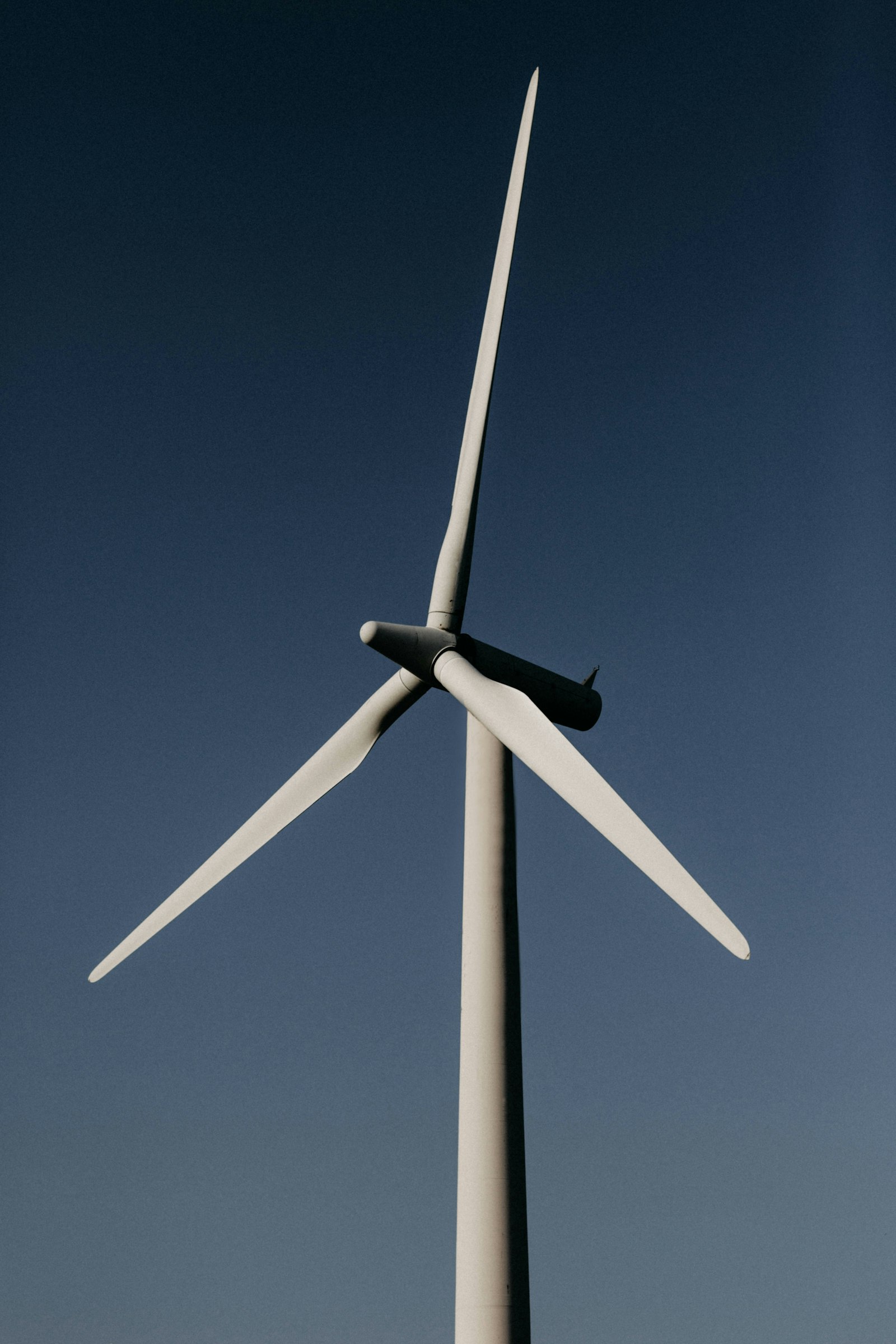
Wind turbine technicians cramp because the job stacks a maximal physical effort on top of a confined hot box with no easy exit. The climb to the nacelle is a 200 to 300 foot vertical ascent in a full-body harness carrying tools, which pushes heart rate toward maximum before any work starts. The nacelle itself behaves like a car parked in the sun, heated by solar gain from outside and by the gearbox and generator from inside, with interior temperatures reported near 140 degrees Fahrenheit. A 3 oz Fast Pickle shot carries 570 mg of sodium and triggers a nerve reflex that quiets cramp signaling in roughly 85 seconds, which matters when descending to fix the problem is a twenty minute proposition.
Most hot trades have a truck. If a roofer locks up, he climbs down and sits in the cab with the air conditioning running. If a lineman cramps, the bucket comes down. A wind tech who cramps in the nacelle is 300 feet up a steel tube, clipped into a fall arrest system, with a ladder and a controlled descent between him and the ground.
That single fact reorganizes everything about how hydration works in this trade. The problem is not just that the environment is hot. The problem is that the cost of dealing with a cramp badly is measured in twenty minutes and a partner who has to stop working too.
The Bureau of Labor Statistics counts roughly 13,600 wind turbine service technicians in the United States and projects the occupation will grow 49.9 percent between 2024 and 2034, adding about 6,800 jobs and averaging roughly 2,300 openings a year. It is the fastest-growing occupation in the country. That means a large share of the people doing this work right now have less than three years in it, and heat tolerance is one of the things experience buys you.
This article covers why the nacelle heats from two directions at once, why the climb is a physiological event and not just transport, what the sodium math looks like across a shift you cannot easily leave, and why a 3 oz shot fits a climb pack better than anything you have to mix.
The Nacelle Heats From Both Directions
The nacelle is a composite housing sitting in open sky with no shade of any kind. Solar radiation lands on it from sunrise to sunset and there is nothing between it and the sun. Industry guidance compares the result to a car left in a parking lot, with interior temperatures reaching roughly 140 degrees Fahrenheit on a summer day.
The difference is that a parked car is not generating its own heat. A running turbine is. The gearbox, the generator, the converter cabinet, and the hydraulic systems are all rejecting waste heat into the same enclosed volume you are working in. Thermal management studies of nacelles operating in hot climates treat this as the central design problem, because the electronics have upper temperature limits and the machine will alarm out before it damages itself.
Notice what that means. The turbine has a protection threshold. You do not. The cooling loops, the diverter valves, the nacelle radiators, and the early shutdowns that operators accept as a small production loss are all specified around oil temperature and component life. None of them were sized around the person kneeling next to the gearbox with a torque wrench.
Airflow is the other half of it. A nacelle is a confined space by design, sealed against weather and lightning, with limited natural ventilation. Sweat only cools you when it evaporates and evaporation needs moving air to carry the vapor away. In still, already-warm air inside a metal and composite box, sweat runs down your back and drips into the down tower access hatch. That transaction cooled nothing. It only cost you fluid and sodium.
The Climb Is The Workout Before The Work
Most turbines exceed 300 feet, and the nacelle sits at the top of that. Reaching it means a vertical ladder climb in a full body harness, wearing a hard hat, gloves, and boots, connected to a fall arrest system, and often carrying tools or parts. Industry fitness guidance notes that some of the components technicians carry up exceed 45 pounds.
Published fitness-for-work guidance for the wind industry is direct about the physiological load. Heart rates can be expected to rise close to maximum during a tower climb, especially for less experienced or less conditioned climbers, and the task demands substantial hand, arm, back, and leg strength. Climb assist systems take some of the load off, but they reduce the effort rather than eliminate it, and not every tower has one.
So the sequence is this. You perform a near-maximal effort. You arrive already sweating, with core temperature elevated and your legs loaded. Then you enter the hottest, least ventilated part of the structure and start doing precise work in awkward positions, often for hours. Then you climb down.
A cramp does not usually announce itself during the climb. It announces itself forty minutes later when you are wedged next to a yaw drive with one leg extended, or on the descent when your forearms have been gripping all day. That delay is why technicians consistently underestimate how much the climb cost them.
You Cannot Just Come Down
This is the part that separates wind from every other heat trade Fast Pickle writes about.
Coming down is not a break. It is a controlled descent on a fall arrest system that takes real time, and in most operations it is not something you do alone or casually. Coming down means your partner stops. It means whatever you had opened up gets left open. It means the work order slips, and on a schedule built around weather windows and crane availability, slipping is expensive.
The practical consequence is that wind techs are strongly incentivized to stay up tower and push through discomfort. That is exactly the wrong incentive structure for heat management, and it is why the intervention has to work where the person already is. Anything that requires a cooler, a clean bottle, a sink, or a walk to the truck is not a real option at 300 feet. It has to fit in the climb pack, survive the climb, and work without preparation.
Why Water Alone Leaves You Cramping
Everyone in this trade carries water. That is not the gap. The gap is what leaves with the water.
Sweat is not distilled water. It carries sodium, and the concentration varies a lot between individuals. Across a hard hot shift, a heavily sweating worker can lose somewhere in the range of 900 to 1,800 mg of sodium per hour. Over an eight hour day up tower, that is a very large number, and plain water replaces none of it.
Replacing fluid without replacing sodium dilutes what is left. You end up drinking steadily, urinating clear, and still cramping, which is the exact pattern techs describe when they say they were drinking plenty and it did not help. The volume was never the missing piece. The sodium was.
There is a second problem specific to this job. Carrying enough fluid up a 300 foot ladder has a weight penalty, and every ounce in the pack is an ounce you lifted with your arms. A hydration strategy that depends on drinking large volumes is fighting the climb it is supposed to support.
Sodium Per Ounce: What Fits In A Climb Pack
Total sodium on a label is only half the story. Up tower the binding constraint is how much sodium arrives per ounce you had to carry up a ladder, and whether the format works with gloves on, in a confined space, with no water source and no place to set anything down.
| Option | Serving | Sodium | Sodium per oz | Added sugar |
|---|---|---|---|---|
| Fast Pickle 3 oz shot | 3 oz | 570 mg | 190 mg | 0 g |
| LMNT (mixed) | 16 oz | 1,000 mg | 63 mg | 0 g |
| Liquid I.V. (mixed) | 16 oz | 500 mg | 31 mg | 11 g |
| Gatorade Thirst Quencher | 20 oz | 270 mg | 14 mg | 34 g |
| Water | 16 oz | 0 mg | 0 mg | 0 g |
At 190 mg of sodium per ounce, the 3 oz shot is three to thirteen times as sodium-dense per ounce as the mixed drinks. The powders also assume something the nacelle does not give you: a clean bottle, a second source of potable water, and a hand free to shake it. A sealed shot needs none of that. It goes in the pack, it rides the climb, and it opens one-handed.
The Neural Reflex Behind A 3 oz Shot
The obvious objection to a 3 oz format is that 3 oz cannot rehydrate anybody. That is correct, and it is also not the mechanism.
In 2010, Kevin Miller and colleagues at North Dakota State University induced cramps in the flexor hallucis brevis of hypohydrated men using percutaneous tibial nerve stimulation, then gave them either pickle juice or water. Cramp duration was 84.6 seconds after pickle juice versus 133.7 seconds after water, a difference of about 49 seconds. That relief arrived far faster than the fluid could possibly have been absorbed and distributed to the muscle.
The explanation Miller proposed is a reflex. Acetic acid from the vinegar stimulates receptors in the oropharynx, the back of the throat, and that signal reduces activity in the alpha motor neuron pool driving the cramping muscle. It is a nervous system event, not a plumbing event. The signal travels at nerve speed, which is why the timeline is seconds rather than the twenty to forty minutes absorption would require.
For a wind tech that distinction is the entire value proposition. You are not looking for a rehydration plan while wedged next to a gearbox. You are looking for the fastest available way to turn off a cramp so you can finish the task and descend under control rather than descend because your calf locked.
A shot is the off-switch. Water and food across the day are the daily plan. Both matter, and they are not the same tool.
What Does Not Work Up Tower
A few habits that look reasonable at the base of the tower fall apart at the top.
- Mixing a powder in the nacelle. There is no clean water source up tower, no counter, and no good place to set a bottle down in a machine you are working inside. Powders are a truck-level solution.
- Loading up on fluid right before the climb. A full stomach and a near-maximal vertical effort do not combine well, and the extra weight is carried by your arms either way.
- Relying on the sugary bottle in the truck. A 20 oz sports drink is 270 mg of sodium and 34 g of sugar. That is a lot of carbohydrate and very little of the mineral you actually lost.
- Waiting to see if it passes. A cramp that starts as a twitch in a confined space at height is a safety issue, not a comfort issue. Address it early, while you still have full control of your position.
- Assuming acclimatization carries over. Heat tolerance fades within about a week off. Coming back from vacation, a stretch of weather days, or a winter of indoor work puts you back near baseline.
Quick Reference: Up-Tower Heat Protocol
- Salt before the climb, not after. Sodium taken at the base is sodium already circulating when the climb spikes your core temperature.
- Two shots in the climb pack. One for you, one for whoever locks up first. They are shelf stable, so nothing depends on cooler space.
- Take the shot at the first twitch. Not at full lockup. The reflex works better on a cramp that has not fully recruited.
- Keep drinking water on top of it. The shot is the off-switch. Fluid volume is still the daily plan.
- Treat the descent as part of the shift. Grip and forearm cramps show up on the way down. Do not leave yourself with nothing for the ladder.
- Stock the crew truck and the O and M building. If a shot is not within reach of the tower base, nobody carries one up.
Frequently Asked Questions
How fast does a pickle shot work on a cramp?
In the Miller 2010 trial, induced cramps resolved in about 85 seconds with pickle juice compared to about 134 seconds with water. The relief comes from a nerve reflex triggered in the back of the throat rather than from absorption, which is why it works faster than any drink could be digested.
How hot does it actually get inside a nacelle?
Industry guidance compares a summer nacelle to a car sitting in the sun, with interior temperatures around 140 degrees Fahrenheit. It heats from the outside through solar gain on an unshaded housing and from the inside through waste heat off the gearbox, generator, and converter equipment.
Why do I cramp on the way down instead of during the climb?
Cramping typically follows accumulated load rather than tracking it in real time. The climb elevates core temperature and loads your legs, the work period adds hours of sweat loss in still hot air, and the descent asks your forearms and calves to work again after all of that. The descent is where the bill comes due.
Is 3 oz really enough to do anything?
It is not enough to rehydrate you, and it is not meant to be. It delivers 570 mg of sodium and the vinegar content that drives the oropharyngeal reflex. Think of it as fast-acting cramp support that fits in a climb pack, layered on top of the water you are already drinking.
Can I take one before the climb?
Many techs do. Taking a shot at the base puts sodium in the system before the climb spikes core temperature, which is a different use than treating an active cramp. Both uses are common, and neither replaces drinking water through the shift.
Can a site buy these for the whole crew?
Yes. Site managers and O and M leads commonly stock multi-packs in the crew truck and the operations building so a shot is within reach at the tower base rather than a drive away. They are shelf stable, so nothing depends on refrigeration at a remote site.
The Science Behind The Bottle
Fast Pickle is a 3 oz shot of purpose-built brine: 570 mg of sodium, zero added sugar, under 1 g of carbohydrate, and the vinegar content that drives the oropharyngeal response documented in the cramp literature. It is fast-acting hydration support, not a daily plan, sized for a job where the nearest sink is 300 feet below you.
For the roughly 13,600 people the Bureau of Labor Statistics counts in this trade, and the thousands more the projections say are coming into it over the next decade, the case is straightforward. The climb is a near-maximal effort. The nacelle is a hot box that heats from two directions and vents poorly. Coming down costs twenty minutes and your partner's time, so the fix has to work where you already are. A format that delivers 190 mg of sodium per ounce, needs no clean water, and works on a nerve-reflex timeline is built for exactly that.
*These statements have not been evaluated by the Food and Drug Administration. This product is not intended to diagnose, treat, cure, or prevent any disease. Individual results may vary. If you experience symptoms of heat exhaustion or heat stroke, stop work, descend safely, get to a cool area, and seek medical attention.