
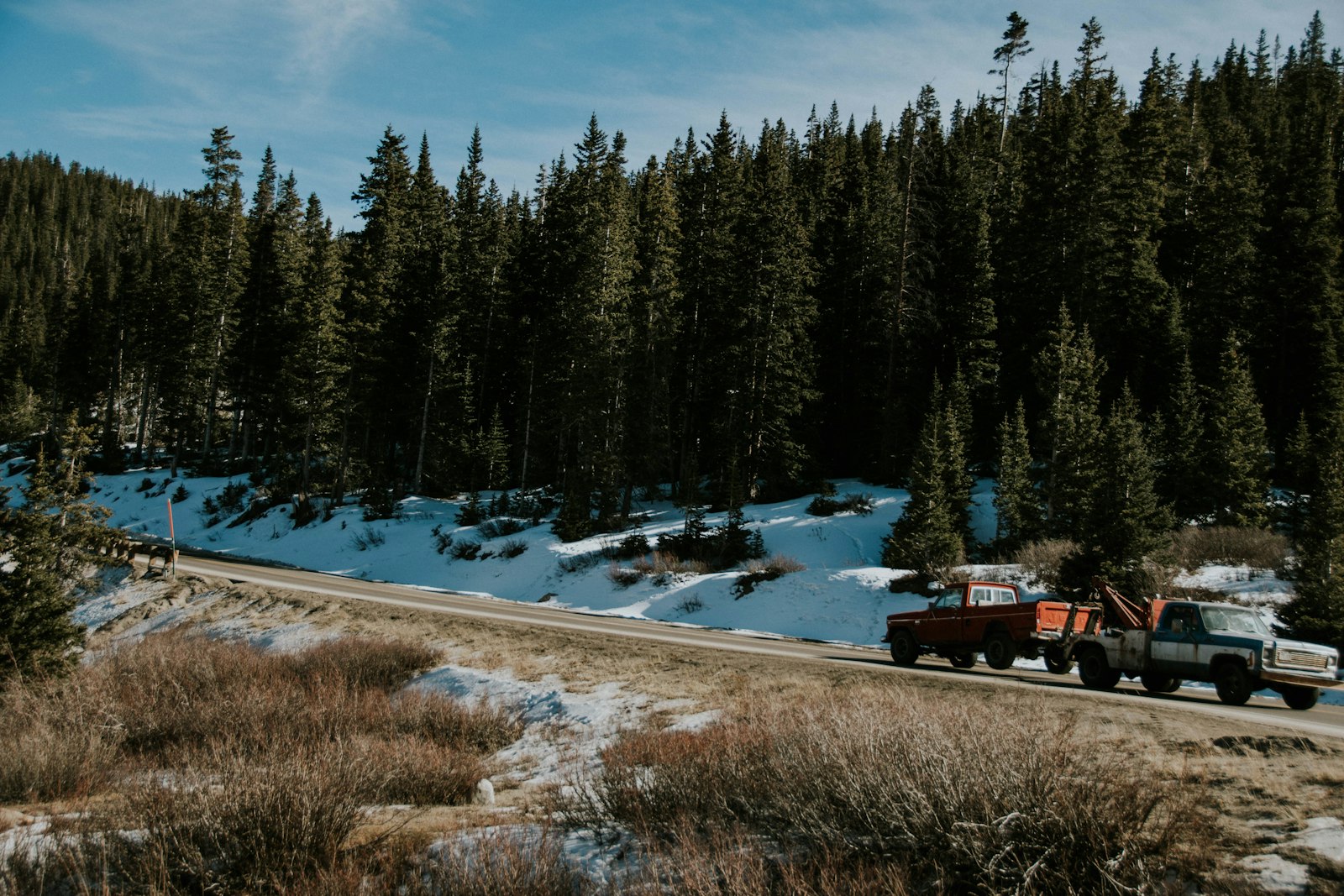
Tow truck operators cramp because the shoulder is the hottest workplace on the road and nobody measures it. Asphalt runs 40 to 60 degrees Fahrenheit hotter than the air, so a 95 degree afternoon has you kneeling on a surface near 150 degrees, next to an engine bay that just overheated. A 3 oz Fast Pickle shot carries 570 mg of sodium and triggers a nerve reflex that quiets cramp signaling in roughly 85 seconds, which is faster than any drink can be absorbed.
On paper, towing is a driving job. The truck has air conditioning, the seat is padded, and the miles between calls look like rest. That framing is why nobody treats tow operators as a heat trade, and it is wrong in a specific way. You do not spend the day driving. You spend the day getting out of a cold cab, walking into the hottest surface in the county, doing twenty minutes of hard physical work in it, and getting back in. Ten times. Fifteen on a bad Friday.
There are roughly 128,000 towing jobs in the United States spread across about 45,000 towing businesses, and close to 84 percent of those businesses are single-owner operations. That last number matters more than it looks. It means most of the people doing this work have no crew, no shade tent, no water buffalo, and nobody refilling a cooler at lunch. Whatever is in the truck at six in the morning is the whole plan.
This article covers why the shoulder runs so much hotter than the forecast, why the vehicle you are hooking is a second heat source, why cycling in and out of the cab works against you, and why a cramp on a shoulder is a safety problem rather than a comfort problem in the deadliest roadside job in the country.
The Shoulder Runs Hotter Than The Forecast
Dark asphalt absorbs up to about 95 percent of the solar radiation that hits it and converts it straight to heat. The published range for how much hotter that makes the surface is 40 to 60 degrees Fahrenheit above the air temperature on a clear summer day, and in high-sun regions like Arizona the gap has been measured at 50 to 70 degrees.
Run the arithmetic on a normal summer call. Air temperature 95 degrees. Pavement surface somewhere between 135 and 155 degrees. That is not a number you experience by standing on it in boots. You experience it by kneeling on it to get a strap around a control arm, by lying on it to find a frame point, by putting a gloved hand flat on it while you look under a bumper for a tow hook that is not where it should be.
At that distance you are taking radiant heat up into your face and chest from eighteen inches away while the sun works on your back. There is no shade on a shoulder. There is no breeze except the one that arrives at seventy miles an hour every few seconds and does nothing to cool you.
This is the core measurement problem for the trade. Indoor trades at least know their building is hot. Tow operators check a weather app that reports the air temperature six feet off the ground in a shaded box, and then go work on a griddle.
The Vehicle You Are Hooking Is A Second Heat Source
A large share of summer calls are the vehicles that could not take the heat. Overheated engine, split hose, boiled coolant, dead battery that cooked in a parking lot. You are not arriving at a cold car. You are arriving at a car that just ran hot, shut down, and is now heat-soaked with no airflow moving through the bay.
Then you reach into it. Pop the hood on a vehicle that was steaming five minutes ago. Get a shifter into neutral. Crawl in beside a hot exhaust and brake rotors that just dragged two miles down the shoulder. Every one of those is a radiant load that never shows up in any heat guidance because heat guidance assumes an environment, not a 2,000 degree exhaust manifold ten inches from your forearm.
The practical effect is that your worst heat exposure and your hardest physical output happen at the same moment. Winching, dollying, and rigging are all heavy work. Doing heavy work is how you generate metabolic heat. Doing it on 150 degree pavement beside a heat-soaked engine bay is how you stack three heat sources on one body at once.
Cycling In And Out Of The Cab Works Against You
Heat acclimatization is real and it is earned. It takes somewhere in the range of seven to fourteen days of sustained daily heat exposure to get the adaptations that matter: more plasma volume, earlier onset of sweating, and sweat that holds on to more of your sodium instead of dumping it.
A roofer gets that adaptation, because a roofer is in the heat for eight straight hours. A tow operator gets a different pattern. Twenty minutes on the shoulder, then twenty-five minutes in a 65 degree cab, then fifteen minutes at the drop, then back in the cab. Repeat all day.
That pattern gives you the full sweat losses of a hot day delivered in bursts, without the sustained exposure that drives the most complete adaptation. You get the bill without the benefit. It is also why operators who have been doing this for a decade still cramp in July and quietly assume something is wrong with them. Nothing is wrong with them. The work pattern is just structured in a way that makes acclimatization harder to build than it is for a crew that stays outside.
You Cannot Restock The Way A Crew Can
A construction crew on a hot day has infrastructure. A jug that gets refilled. A shade trailer. A foreman who calls a break. A solo operator has a door pocket.
Dispatch does not care that you have been on the shoulder for four hours. Calls stack in the afternoon precisely because that is when cars overheat and tires blow on hot pavement, which means your busiest window and the hottest window are the same window. You do not stop at a gas station because there is another call waiting, and the next thing you know it is 4 p.m. and you have had one bottle of water since ten.
That is the constraint that decides what actually works here. Anything that requires a sink, a shaker bottle, a free hand, or a cold chain is a plan for a different job. What works in a tow truck is something shelf stable that goes in a door pocket, opens one-handed, and takes four seconds. That is the entire reason the 3 oz shot format exists.
On A Shoulder, A Cramp Is A Safety Problem
This is where towing separates from every other hot trade, and it is worth being blunt about it.
Government data puts tow operator fatalities at roughly 43 deaths per 100,000 workers, against about 3 per 100,000 across all other industries. Research cited by the CDC has put the towing death rate at roughly 15 times that of private industry as a whole. The AAA Foundation counted 123 roadside assistance workers fatally struck between 2015 and 2021, and the industry averages around 23 operators killed at the roadside every year. Struck-by traffic accounts for the largest single share of work-related deaths in motor vehicle towing.
All 50 states and the District of Columbia have a Slow Down, Move Over law. AAA research released in 2025 found only about 58 percent of drivers actually comply, and roughly one in three ignore it outright.
Now put those two facts next to each other. You are working a few feet from a traffic stream that is one-third non-compliant, and the only real defense you have is the ability to move, fast, at an unpredictable moment. A calf that locks while you are standing between the wheel lift and the white line is not an inconvenience. It is the one second where stepping back is not an option.
That reframes the whole question. For most trades, cramp management is about comfort and getting through the shift. On a shoulder it belongs in the same mental category as the vest and the strobes. Keeping a shot in the door pocket is cheap insurance on the thing that lets you move when you need to.
What You Are Actually Losing
Sweat is not just water. Published normative data puts sweat sodium concentration across a wide range, commonly cited between roughly 200 and 2,000 mg per liter, with most people landing somewhere in the middle of that. Sweat rates during hard work in the heat commonly run 1 to 1.5 liters per hour.
Multiply it out and a heavy sweater doing shoulder work in July can be losing on the order of 900 to 1,800 mg of sodium per hour of actual exposure. Even at the low end, four or five hours of cumulative shoulder time in a shift is a meaningful deficit.
Water alone puts none of that back. Drinking plain water and nothing else actually dilutes what is left in circulation, which is why the guy chugging a gallon a day can still be the guy locking up at 6 p.m. The white ring on the collar of your uniform is the receipt. If your shirt is stiff at the end of a shift, you are a salty sweater, and the plan has to include salt.
Sodium Per Ounce, Compared
| Option | Serving | Sodium | Sodium per oz | Added sugar |
|---|---|---|---|---|
| Fast Pickle 3 oz shot | 3 oz | 570 mg | 190 mg | 0 g |
| LMNT (mixed) | 16 oz | 1,000 mg | 63 mg | 0 g |
| Liquid I.V. (mixed) | 16 oz | 500 mg | 31 mg | 11 g |
| Gatorade Thirst Quencher | 20 oz | 270 mg | 14 mg | 34 g |
| Water | 16 oz | 0 mg | 0 mg | 0 g |
At 190 mg of sodium per ounce, the 3 oz shot is three to thirteen times as sodium-dense per ounce as the mixed drinks, in a bottle that fits a door pocket, needs no mixing, and does not require a sink you do not have on a shoulder.
The Reflex Behind A 3 oz Shot
The obvious objection to a 3 oz format is that 3 oz cannot possibly rehydrate anybody. That is correct, and it is also not the mechanism.
In the controlled study most often cited on this, Miller and colleagues induced cramps in the toe flexor muscles and compared pickle juice against deionized water. Cramp duration averaged 84.6 seconds with pickle juice versus 133.7 seconds with water. The detail that matters is what the blood work showed: plasma electrolyte concentrations were unchanged at five minutes. The relief arrived well before anything could have been absorbed and delivered to a muscle.
The working explanation is a neural one. Receptors in the mouth and throat respond to the acetic acid in the brine and fire a reflex that appears to inhibit the runaway alpha motor neuron activity driving the cramp. In plain terms, the acid hits the back of your throat and the signal telling the muscle to keep clenching gets interrupted.
That gives you two separate tools in one bottle. The 570 mg of sodium addresses the deficit you are building across the shift. The reflex addresses the cramp that has already started. Most products only do the first, and only if you have twenty minutes and a place to sit.
What Does Not Work On A Call
- Water alone. Fixes volume, adds nothing back, and past a certain point makes the concentration problem worse.
- A 20 oz sports drink. 270 mg of sodium and 34 g of sugar. To reach the sodium in one shot you would need most of a half gallon, plus the sugar that comes with it.
- Dry salt tablets. Common in this trade and a reliable way to end up nauseated on a shoulder with a car half-hooked.
- Powder sticks. They require a bottle, water, and a free hand. Under a raised hood in live traffic you have none of the three.
- Waiting until it locks. A cramp is late information. By the time the calf goes, the deficit has been building for hours.
A Roadside Heat Protocol For A 12-Hour Shift
- Salt at breakfast. Start the day ahead instead of chasing it. Salt the eggs, and do not start a July shift on coffee alone.
- Stage the truck before you roll. Water where you can reach it from the seat, and shots in the door pocket. They are shelf stable, so it does not matter when the ice melts.
- Drink between calls, not at the end. Aim for 16 to 24 oz per hour of actual shoulder work on a hot day. The cab is where you catch up, so use it.
- Take a shot on the heavy calls. Anything with a winch, a long recovery, a hood up in the sun, or more than twenty minutes on pavement earns one.
- Take one at the first twitch, not the first lock. That flicker in the calf or the arch on your third call is the warning shot. Answer it there.
- Do not deep-freeze the cab. A moderate cab lets you recover without making the next shoulder feel like a wall. Save the 62 degree blast for the ride home.
- Reset overnight. Salt with dinner and a look at urine color in the morning. Two consecutive hot days without a reset is how the third one goes badly.
Why The 12-Pack Lives In The Truck
Format decides whether a plan survives contact with a real shift. The 12-pack runs $28.99, which works out to $2.42 per shot, and it clears the free shipping threshold on its own. Twelve shots covers roughly two weeks of hot-shift coverage for one operator at a shot a day, or a hard single week in August when every afternoon is a heavy call.
More importantly, it is shelf stable. Nothing about it depends on a cooler that got forgotten, a shift that ran long, or a truck that sat in the sun at the yard.
Frequently Asked Questions
How fast does a pickle shot work on a cramp?
In the Miller study, cramp duration averaged 84.6 seconds with pickle juice against 133.7 seconds with water. That is roughly a minute and a half, and the relief arrives before absorption could explain it, which is why the effect is attributed to a reflex in the mouth and throat rather than to replacing electrolytes in the blood.
Why do tow operators cramp if they are in an air-conditioned truck all day?
Because the truck is not where the work happens. The work happens on pavement that runs 40 to 60 degrees hotter than the air, in short heavy bursts, ten or more times a shift. The sweat losses add up the same as a full day outdoors, and the on-off pattern makes it harder to build the acclimatization that would blunt them.
Is 570 mg of sodium a lot for one shot?
It is dense for the volume, which is the point on a job where you cannot carry much. In context it is less sodium than a typical fast food sandwich, delivered in 3 oz instead of a meal. If you are on a sodium-restricted diet or managing blood pressure, that is a conversation for your doctor before you add anything.
Do the shots need refrigeration?
No. They are shelf stable, which is what makes them work in a door pocket, a toolbox, or a duty bag. Cold is nicer. Cold is not required.
Does this replace drinking water?
No, and it is not meant to. A 3 oz shot is a sodium and reflex tool, not a fluid plan. Water handles volume and the shot handles what water cannot. Skipping either one leaves a gap.
Can a towing company buy these for a whole fleet?
Yes. Multi-pack orders are common with crews and shops that stock trucks the way they stock gloves and flares. Reach out through the site for volume on a fleet order.
The Bottom Line
Towing gets classified as a driving job, and that classification is the reason its heat problem goes unmanaged. The truth is that the work happens on the hottest surface available, next to a heat-soaked vehicle, in short heavy bursts that build the losses of a full outdoor day without the acclimatization that normally comes with it. There is no crew cooler and no shade, and the consequence of locking up is measured in something more serious than lost time.
A format that carries 190 mg of sodium per ounce, opens one-handed, needs no cold storage, and works on a nerve-reflex timeline is built for exactly that set of constraints. Keep them where you can reach them from the seat.
*These statements have not been evaluated by the Food and Drug Administration. This product is not intended to diagnose, treat, cure, or prevent any disease. Individual results may vary. If you experience symptoms of heat exhaustion or heat stroke, stop work, get to a cool area, and seek medical attention.