
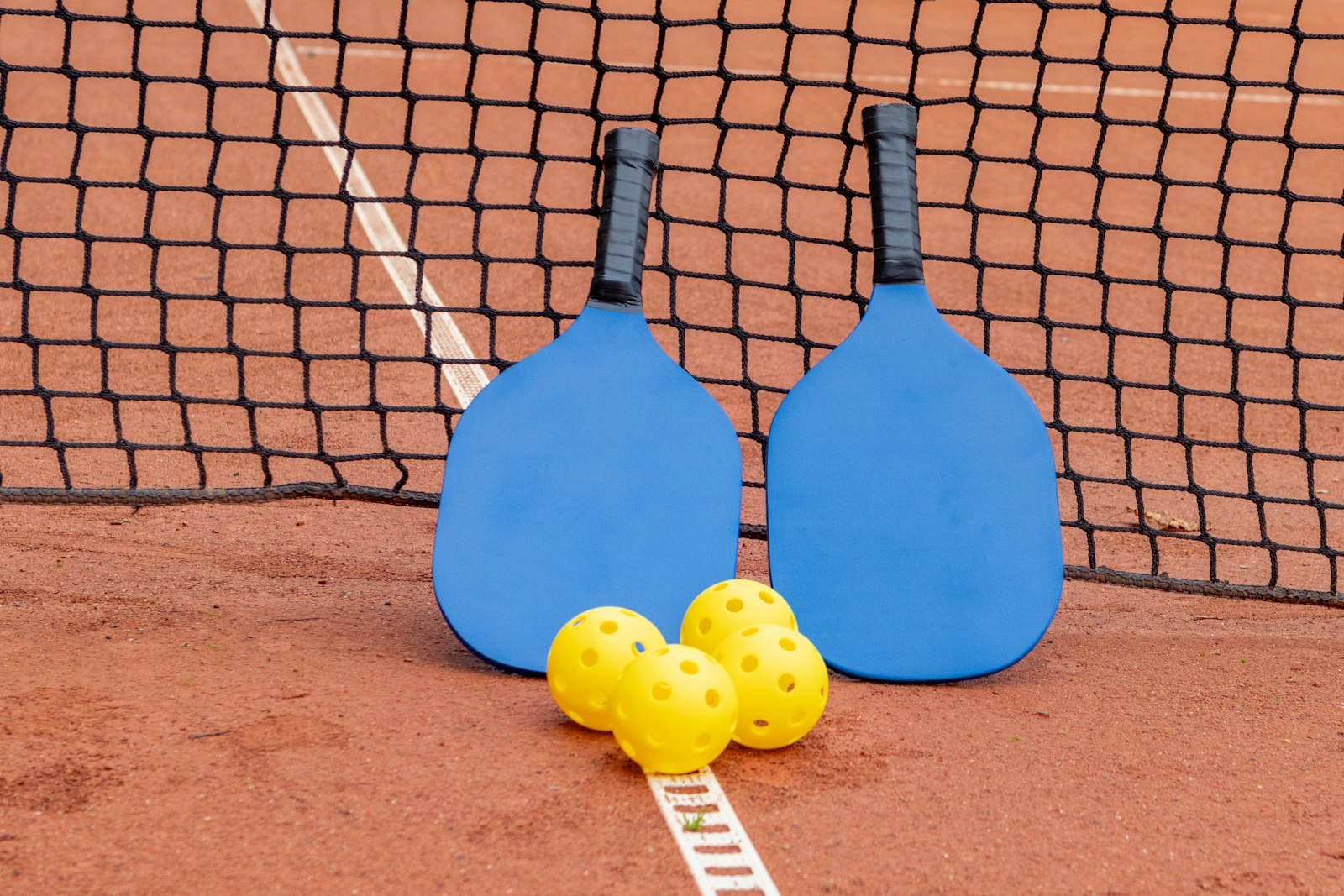
Yes — pickle juice stops pickleball cramps, usually in 60 to 90 seconds. A 3 oz brine shot triggers a neural reflex in the throat that quiets the overactive motor neurons firing in your calves, hands, or forearms — the exact muscles that seize up during long rallies. For a 2-to-3-hour session in the heat, most players do one shot 30 minutes before play and a second shot between matches. It works faster than water, faster than sports drinks, and doesn't load you with sugar mid-tournament.
Pickleball looks easy until you play four games in a row on an 85-degree court and your calf locks up mid-dink. The sport has a cramping problem — not because the movements are extreme, but because the combination of stop-start sprints, hot outdoor courts, back-to-back matches, and a player base that's often over 50 is a near-perfect recipe for electrolyte depletion.
This guide explains why pickleball specifically causes cramps more than tennis or running, how a concentrated pickle brine shot stops them in under two minutes, and the exact protocol that tournament players use to get through a full day of bracket play without seizing up.
Why Pickleball Players Cramp More Than You'd Expect
The conventional wisdom is that cramps come from dehydration. The modern research says something different: cramps are primarily a neural problem, not a fluid problem. When you sweat out sodium faster than you replace it, the motor neurons that control your muscles become hyperexcitable and start firing involuntarily. That's the spasm you feel.
Pickleball accelerates this in four specific ways:
- The rally pattern is a stop-start stress test. A single point might include three sprints forward, two lateral shuffles, and a sudden pivot — all in under 15 seconds. Your calves, hamstrings, and forearms fire in rapid bursts, which is exactly the pattern associated with exercise-associated muscle cramps (EAMC).
- Outdoor courts are hotter than you think. A painted concrete court in direct sun runs 15–25 degrees hotter than the ambient air temperature. A 78-degree day feels like 95 at foot level.
- Sessions stack up fast. Recreational play is rarely just one game. Open play sessions run 2–3 hours; tournaments stretch to 6+ hours with bracket play. Each additional hour of sweat compounds the sodium deficit.
- The demographic skews older. Players over 50 produce less sweat volume but often have saltier sweat, tighter calves, and a higher baseline risk for nocturnal cramps even when they don't play. Pickleball didn't create the risk — it just exposes it.
The result: a sport that feels low-impact but produces the same cramping profile as a 90-minute soccer match. The fix isn't drinking more water. It's putting sodium back into your system fast enough to keep the neural system quiet.
The Neural Reflex: How a 3 oz Shot Works in 85 Seconds
The 2010 landmark study from Kevin Miller at Brigham Young University remains the core evidence. Researchers induced cramps in trained athletes, then gave them either deionized water or a small volume of pickle juice. The pickle juice group saw cramps resolve in a median of 85 seconds — about 45% faster than water, and nearly four times faster than doing nothing.
The kicker: the volume used was only 1 mL per kilogram of bodyweight — roughly 2.5 oz for a 170-pound player. That's far too little, too fast, to restore any electrolyte balance in the bloodstream. Something else is happening.
The accepted explanation is the oropharyngeal reflex. Sensory nerves in the back of your throat detect the acidity and sodium of the brine and fire an inhibitory signal up to the brainstem. The brain then signals the alpha motor neurons in the cramping muscle to stop firing. The cramp releases.
You don't need to drink the whole bottle. You don't even need to swallow much. The reflex fires at the throat level, which is why a small, concentrated shot works better than a 20 oz sports drink sipped over 10 minutes.
How Much Sodium You Actually Lose in a Pickleball Match
Sweat sodium concentration varies widely — a "salty sweater" can lose two to three times more sodium per hour than an average sweater. But for most recreational pickleball players playing hard in warm weather, the ballpark looks like this:
| Session Length | Avg. Sweat Volume | Sodium Lost | Cramp Risk |
|---|---|---|---|
| 1 hour (cool court) | 0.5 L | 250–500 mg | Low |
| 2 hours (open play, 75°F) | 1.0–1.5 L | 500–1,500 mg | Moderate |
| 3 hours (hot outdoor) | 1.5–2.5 L | 750–2,500 mg | High |
| Tournament day (6+ hrs) | 3.0–5.0 L | 1,500–5,000 mg | Very high |
For comparison: the Fast Pickle 3 oz shot contains 570 mg of sodium. That's more than most 20 oz sports drinks in a format that takes 10 seconds to drink. Three shots across a tournament day delivers 1,710 mg of sodium — roughly matching what a moderate-sweating player loses in a 6-hour bracket.
The Tournament-Day Protocol
This is the schedule that tournament regulars follow. Even if you only play recreational open play, the timing translates directly.
30 Minutes Before You Step on the Court
Drink one 3 oz shot with 8–12 oz of water. The sodium starts pre-loading your bloodstream so you don't start the first game already in a deficit. Water alone before play actually increases cramp risk in salty sweaters because it dilutes your already-low sodium levels — the shot fixes that.
Between Matches (Every 60–90 Minutes)
One shot per break. If you're at a tournament with long gaps between bracket rounds, pair it with a banana or a handful of salted nuts for the potassium and slower-release sodium. The shot is the fast acute dose; the food is the slow top-up.
When a Cramp Actually Hits
Shot the whole 3 oz. Swish it against the back of your mouth for 2–3 seconds before swallowing — that's where the throat reflex fires. Most players feel the cramp start to release within 60 to 90 seconds. Stretch the affected muscle gently while the brine is doing its work, but don't stretch aggressively — a seized-up calf can tear if you force it.
Post-Match Recovery
One final shot within 30 minutes of your last game, paired with 16–24 oz of water. This cuts the "day-after pickleball" leg cramps that wake a lot of players up at 2 AM — those nocturnal cramps are almost always a delayed sodium deficit from the day before.
Pickle Juice vs. Water vs. Sports Drinks for Pickleball
| Option | Sodium per Serving | Sugar | Cramp Speed | Best For |
|---|---|---|---|---|
| Plain water | 0 mg | 0 g | Doesn't stop cramps | Casual warm-up, short sessions |
| Standard sports drink (20 oz) | 150–200 mg | 30–40 g | 15–30 min | Long slow burn, not acute relief |
| Low-sugar electrolyte powder | 300–500 mg | 0–5 g | 5–10 min | General hydration between games |
| Fast Pickle 3 oz shot | 570 mg | 0 g | 60–90 sec | Acute cramp relief + pre-game priming |
Sports drinks aren't wrong — they just do a different job. A 20 oz Gatorade is useful for slow rehydration between matches. But if your calf is seizing in the middle of a third-game tiebreaker, no amount of sugary fluid sipped over 10 minutes is going to save the point. The shot will.
What About Tennis, Paddle, Or Platform Tennis?
The same protocol works for any racquet sport played on an outdoor hard court. Tennis players have used pickle juice for cramps for over a decade — Gabriela Sabatini famously used it during her career, and NFL athletic trainers adopted it in the 2000s. Platform tennis and paddle players running multi-hour tournaments in heat face an almost identical electrolyte profile. If you're running, pivoting, and sweating for two hours on a painted court, the protocol applies.
Common Mistakes Pickleball Players Make With Cramps
- Waiting until the cramp happens. The fastest protocol is prevention. One shot 30 minutes before you play costs you $2.42 and cuts cramp risk across the session.
- Chugging water between games. If you're a salty sweater and you're only drinking water, you're making the sodium deficit worse. Pair water with sodium, not instead of it.
- Taking magnesium instead of sodium. Magnesium has very little evidence for exercise-induced cramps in healthy players. Sodium is the one with decades of research behind it.
- Stretching a locked-up calf too hard. The cramp is a neural spasm. Force can tear fibers. Take the shot, breathe, gentle stretch, wait 60–90 seconds.
- Ignoring next-day cramps. If you wake up at 2 AM with a calf cramp after a tournament, it's a delayed sodium debt. A 1 oz sip before bed the following night prevents it.
Frequently Asked Questions
Can I just drink pickle juice from a jar?
You can — but most grocery-store pickle jars contain around 300–500 mg of sodium per 3 oz, plus dill oil, calcium chloride, and other preservatives that aren't ideal mid-match. A purpose-built shot like Fast Pickle is filtered to just brine and concentrated electrolytes, with 570 mg of sodium and zero added sugar, so the dose is predictable and it doesn't sit heavy in your stomach before you serve.
Will the sodium spike my blood pressure?
For players with well-controlled blood pressure, a 3 oz shot during athletic activity is a replacement dose — you're putting back what you just sweated out. If you have hypertension or a sodium-restricted diet, talk to your doctor before making it part of your routine.
How long before a match should I take the shot?
Thirty minutes is the sweet spot. The sodium starts elevating plasma levels within 10–15 minutes, and you're fully primed by the time the first serve drops. Taking it 5 minutes before play still works — it just leans more on the throat reflex for preventive effect.
Can I use it for cramps that show up hours later?
Yes. The same neural reflex works for nocturnal cramps that show up hours after play. A 1–2 oz sip at the first twinge, before bed, is a well-documented protocol for post-exercise nighttime leg cramps.
Is it safe to take multiple shots in one day?
During a 4–6 hour tournament day, three to four shots spaced across the day matches what most moderate sweaters lose. Drink water with each shot and pay attention to how you feel — if you're bloating or getting headachy, you may be over-doing sodium relative to fluid.
The Bottom Line for Pickleball Players
Pickleball cramps are a sodium-timing problem, not a hydration problem. The combination of hot courts, back-to-back games, stop-start sprints, and an older player base makes EAMC one of the most common reasons a great day on the court ends early. A 3 oz concentrated brine shot delivers 570 mg of sodium in 10 seconds and fires the throat reflex that tells your motor neurons to stop spasming — in under 90 seconds on average. For tournament players, the 12-pack covers a full bracket day. For rec players, it keeps the 2 AM calf cramps away. Either way, the protocol is the same: one before, one between every 60–90 minutes, one the moment a cramp hits.