
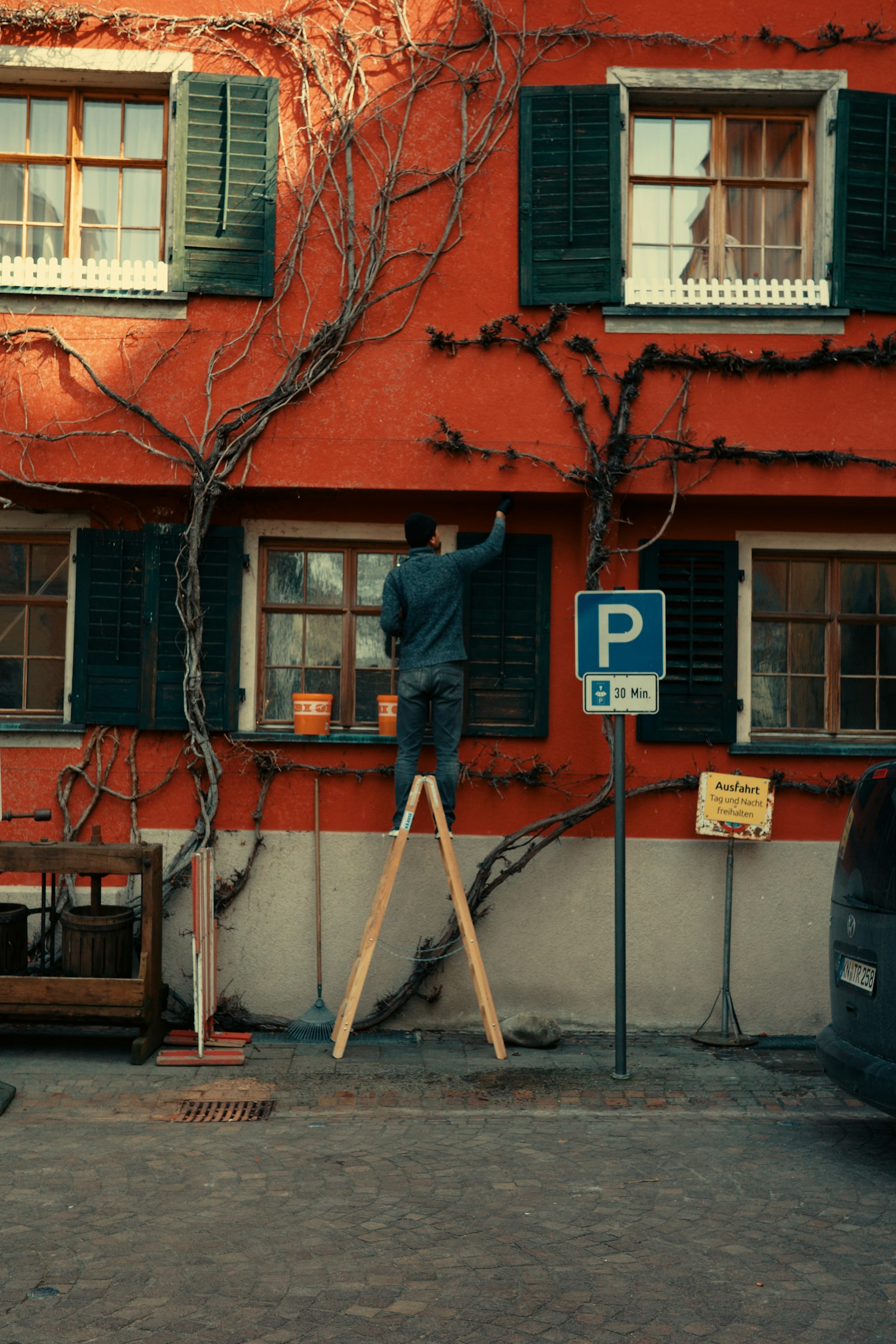
A 3 oz pickle brine shot delivers 570 mg of sodium and triggers a TRP-mediated neural reflex that stops muscle discomfort in approximately 85 seconds — significantly faster than any sports drink can absorb. For exterior painters working in direct sun at the top of a ladder, that speed is not a convenience. It is a safety issue.
Why Painters Cramp in the First Place
Exterior painting is summer work. Prep days, prime coats, and finish coats pile up during the hottest months of the year — and painters spend most of that time in direct solar radiation with nowhere to step into the shade. A ladder on the south face of a two-story house is one of the most exposed positions a worker can be in on a job site.
In that environment, sweat losses climb fast. Research on outdoor workers in summer heat consistently documents sodium losses of 500–1,500 mg per hour in moderate-to-high heat, with heavy sweaters approaching 2,400 mg/hour in peak conditions. A painter running a full 8-to-10-hour exterior job in July can easily lose 4,000–8,000 mg of sodium across a shift — well beyond what sports drinks or water alone can replace during brief breaks.
Two cramp mechanisms operate in parallel. The sodium-depletion model holds that low extracellular sodium disrupts the electrochemical gradient at the muscle cell membrane, triggering uncontrolled contractions. The neuromuscular fatigue model — now backed by stronger evidence — points to overworked muscle spindles firing repetitive motor signals that won't self-terminate. Sustained arm-overhead work (cutting in a trim line), repeated brush strokes on a long roller run, and isometric calf tension from standing on a ladder rung for hours all push muscle groups toward both failure modes simultaneously.
What It Means to Cramp on a Ladder
A cramp that hits while you are on the ground is an inconvenience. A cramp that hits while you are 20 feet up a ladder with a full bucket in one hand is a safety incident waiting to happen. Painters face a constraint that most other workers do not: you cannot simply stop and stretch it out when you are above a foundation or a roofline.
The conventional wisdom is to hydrate more. That advice misses the mechanism. Hydration fixes volume depletion. It does not fix the neuromuscular signal malfunction that causes the cramp. Drinking 20 oz of Gatorade at the bottom of the ladder and climbing back up does not stop a cramp that is already firing — the sodium from that drink will not reach meaningful plasma levels for 15–30 minutes.
The pickle brine neural reflex operates on a different timeline. Acetic acid in pickle brine stimulates TRPV1 and TRPA1 TRP channels in the oropharynx, which send an inhibitory signal to the alpha motor neurons driving the cramping muscle. Miller et al. (2010, Medicine & Science in Sports & Exercise, PubMed ID 19997012) documented median cramp resolution of 85 seconds — before measurable sodium absorption had even occurred. For a painter on a ladder, 85 seconds is the difference between descending safely and not descending at all.
Why Pickle Juice Stops Cramps Faster Than Any Hydration Drink
The research is clear: the speed advantage is neurological, not osmotic. When you drink pickle brine, the acetic acid triggers a reflexive inhibitory signal from the oropharynx that overrides the motor neuron driving the cramp — in roughly the same time it takes to climb back down a ladder and find a seat. No other oral product does this. Sports drinks, salt tabs, and electrolyte powders all rely on gut absorption, which takes 15–30 minutes and requires adequate fluid volume to work.
For painters, the compact format matters as much as the mechanism. A 3 oz shot fits in a paint apron pocket, a tool bucket pocket, or the cupholder of a work van. It does not require mixing, refrigeration (shelf-stable until opened), or more than three seconds to consume. On a hot job site without a dedicated break station, that portability is a practical differentiator.
Painting Crew Protocol: When to Take a Shot
Prevention and rescue serve different functions. Both are part of a complete hydration protocol for a long painting day.
Before the First Ladder Climb
If you know you are going into a full day of exterior work in summer heat: take one 3 oz shot with a full glass of water 60–90 minutes before starting. This supports baseline plasma sodium going into a high-sweat shift. Pair it with a sodium-rich breakfast (eggs, whole-grain toast with butter, a piece of fruit) to start the day in positive electrolyte balance rather than playing catch-up by noon.
Mid-Morning and Midday Breaks
On a full exterior day, take one shot at each major break — typically around 10 a.m. and at the lunch stop. Drink 16–20 oz of water alongside each shot to support fluid volume. The shot handles the sodium replacement and the neural recovery; the water handles rehydration. Do not skip the water — sodium without adequate fluid volume will not fully address plasma osmolality.
When a Cramp Hits
Come down from the ladder first. Always. Once you are on solid ground, take one 3 oz shot immediately. The 85-second reflex window applies from when the acetic acid contacts the oropharynx — so consume the shot, hold your position, and allow the reflex to work before resuming any overhead or ladder work. If the cramp does not resolve within 3–5 minutes, or if you have additional symptoms (nausea, dizziness, absence of sweating), stop work and get into the shade with water and seek medical attention if symptoms worsen.
End-of-Day Recovery
Electrolyte debt does not resolve the moment you put down the brush. The body continues to regulate sodium for several hours after exertion. One additional shot at the end of the shift, with a sodium-containing meal, helps prevent the nocturnal leg cramps that painters often report after long summer days — the body catching up on the electrolyte deficit while you sleep.
Pickle Juice vs. Sports Drinks vs. Salt Tabs: Honest Comparison
| Option | Sodium per Use | Time to Effect | Format | Best For |
|---|---|---|---|---|
| Fast Pickle (3 oz) | 570 mg | ~85 seconds (neural reflex) | Pocket-size shot | Active cramps, mid-ladder prevention |
| Gatorade Thirst (20 oz) | 270 mg | 15–30 min | Bottle (heavy, cold required) | Volume hydration, light exertion |
| Gatorade Endurance (20 oz) | 620 mg | 15–30 min | Bottle | Pre-loading, long endurance events |
| Salt tabs (1 g NaCl) | ~390 mg | 15–30 min | Pill | Prophylactic loading, not acute cramps |
| Water alone | 0 mg | No effect on cramps | Bottle | Volume — necessary, but insufficient solo for heavy sweaters |
The honest math: a painter doing 8 hours in summer heat may need 4,000–8,000 mg of sodium replacement across the day. A 12-pack of Fast Pickle shots provides 12 × 570 mg = 6,840 mg — enough to cover a full week of heavy summer work, plus additional margin from food sodium. No other portable format delivers that density without added sugar, without mixing, and with the neural reflex speed advantage.
Tips for Keeping Shots Cold on a Job Site
Fast Pickle is shelf-stable until opened — temperature does not affect the active mechanisms. A warm shot works identically to a cold one. That said, many painters prefer them cold as a mid-day reset. A few practical options:
- Truck cab cooler: A small 12-can cooler in the back seat or cargo area stays cool all day. Park in shade when possible.
- Insulated paint bucket bag: Several aftermarket bag systems fit a 5-gallon bucket and have an insulated front pocket. A 12-pack fits in the side pouch with a small ice pack.
- Personal cooler backpack: For solo painters doing ladder work all day with no helper on the ground, a small insulated backpack lets you keep a few shots on your person without leaving the wall.
- Room temperature is fine: If none of the above applies, room temperature shots work the same. Drink a cold cup of water alongside to get the temperature contrast.
Pack Size Guidance for Painting Crews
The 12-pack covers a solo painter for a full week of heavy exterior work at 2 shots per shift. For two-person crews running long jobs in summer heat, a 24-pack at the start of the week is the right stock level — keeps the cooler topped without daily restocking.
- Solo exterior painter: 12-pack per week during summer season. 2 shots per full exterior day (one mid-morning, one midday), plus a rescue shot if needed.
- Two-person crew: 24-pack per week. Split evenly — each painter gets 2 shots per day with margin.
- Commercial painting crew (4+ painters): Case quantity. Keep a cooler on the job site — the foreman restocks at the start of each week. A crew losing this much sodium collectively will feel it in afternoon productivity and next-day soreness if they do not replace it.
Frequently Asked Questions
Do I need to refrigerate Fast Pickle shots on a job site?
No. Fast Pickle shots are shelf-stable and do not require refrigeration until opened. A warm shot is just as effective as a cold one. The active mechanism is neurological, not temperature-dependent. Refrigerate opened shots, or drink the full 3 oz at once — the format is designed for single-serving use.
Can I take pickle juice on the ladder itself?
We recommend descending to a safe position before consuming anything — food, drink, or a shot. A 3 oz shot takes under 5 seconds to drink, but you need both hands free and a stable footing. Come down, take the shot at the base, wait 85–90 seconds for the reflex to work, then re-ascend when you feel the muscle release.
Why do I cramp more on afternoon jobs than morning jobs?
Cumulative sodium deficit. Morning work starts from a closer-to-neutral sodium baseline. By afternoon, a painter who has not been actively replacing sodium is running a 2,000–4,000 mg deficit from morning sweat losses. That deficit is what makes the afternoon the cramp window — not the heat itself, but the accumulated electrolyte debt. Taking a shot proactively at the morning break prevents much of the afternoon cramping.
Is pickle juice safe if I have high blood pressure?
The 570 mg sodium in a single shot is modest in a dietary context — comparable to a medium bowl of chicken noodle soup. However, painters with diagnosed hypertension who are on sodium-restricted diets or taking antihypertensives should consult their physician before adding concentrated sodium shots to their routine, particularly on high-exertion days when electrolyte balance is more volatile.
Does it matter what kind of painter I am — interior vs. exterior?
Yes. Interior painting in a climate-controlled building generates significantly less sweat than exterior work in direct sun. The pickle juice protocol above is designed for exterior painters in summer heat. Interior painters in air-conditioned spaces have much lower sweat rates and may not need sodium supplementation beyond a normal diet. If you are painting non-climate-controlled interiors (unheated garages, warehouses, construction sites mid-build), treat it like exterior work and apply the same protocol.
What about painting in high humidity? Does that change anything?
High humidity reduces evaporative cooling efficiency — your sweat does not evaporate as readily, so your body sweats more to compensate, and sodium losses increase even though you may feel less visibly wet. On high-humidity summer days, assume your sodium losses are on the higher end of the 500–1,500 mg/hour range. Increase your shot frequency accordingly and prioritize shade breaks when conditions allow.
*These statements have not been evaluated by the Food and Drug Administration. This product is not intended to diagnose, treat, cure, or prevent any disease.