
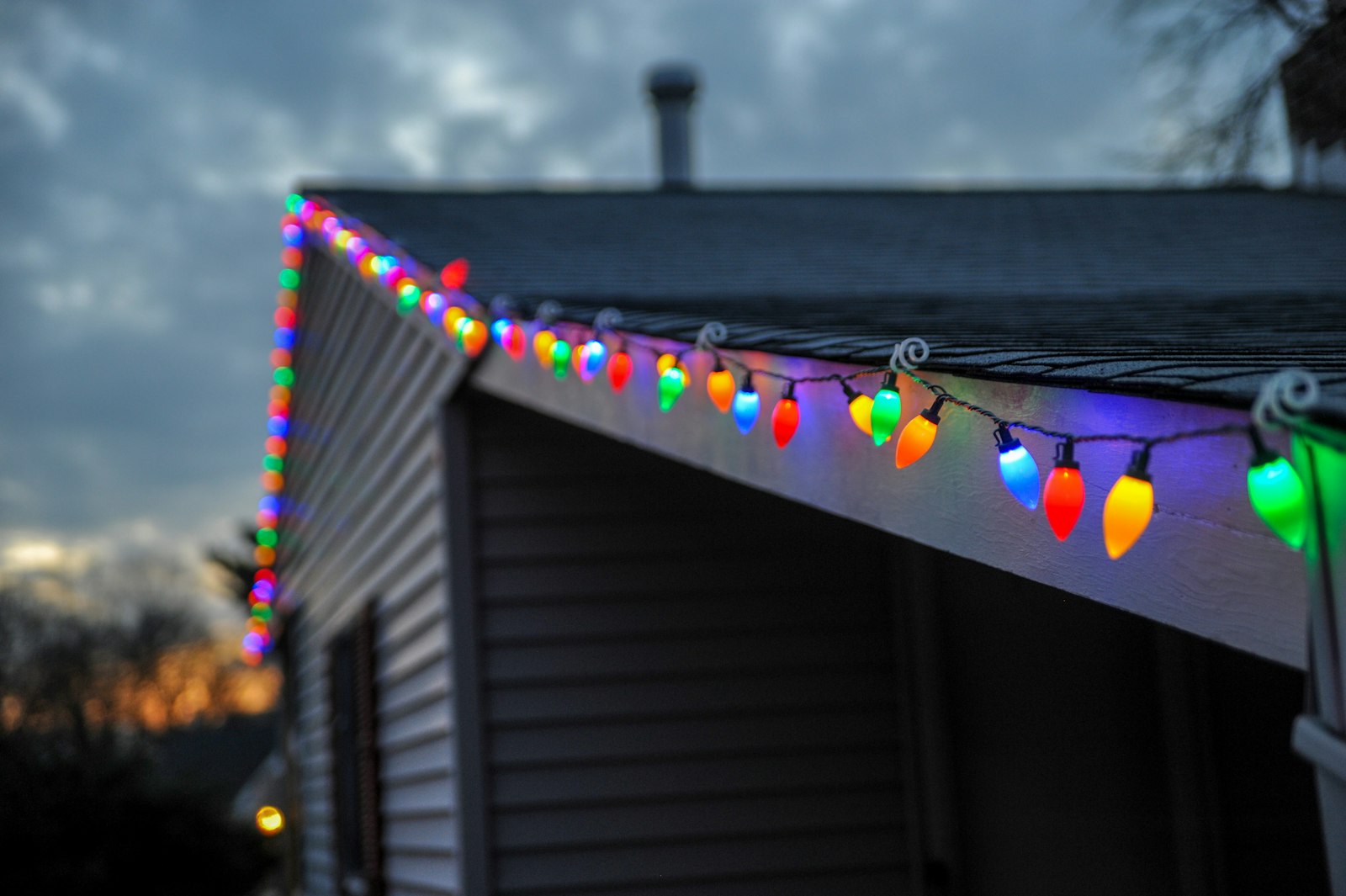
Yes, holiday light installers lose real sodium on the job, because climbing extension ladders, walking pitched roofs and clipping thousands of feet of light line all day drives steady sweat under winter layers, while cold, windy air hides thirst. A 3 oz Fast Pickle shot carries 570 mg of sodium, more than a full 20 oz sports drink, and it rides in a jacket pocket on the truck.
The Busiest Six Weeks On The Calendar
Holiday lighting is a sprint. Most crews start installs in October, run flat out from early November through mid-December, then come back in January to take everything down. A residential crew can hit several houses a day, and commercial crews spend long shifts in lifts wrapping trees, rooflines and storefronts.
The work itself is simple to describe and hard to do: carry and set ladders, climb, walk the roof, run the line, clip every few inches, test, fix, move the ladder, repeat. Hundreds of ladder trips in a week is normal at peak season.
Cold Weather Still Makes You Sweat
It is easy to assume nobody sweats much in November. Installers do. Ladder climbing is repeated, loaded stair climbing with a box of clips or a coil of line in one hand. Walking a steep roof means bracing every step. All of that work happens inside a hoodie, a work jacket and gloves, so the body heats up and dumps the heat as sweat that soaks into the layers where nobody sees it.
Then the crew stands in the wind at the ladder base sorting tangled strands, cools off, and climbs again. Cold air is also dry, and breathing hard in dry air carries water out with every exhale. Cold exposure tends to increase urine output too.
Meanwhile, cold blunts the thirst signal. Research on cold-weather work has found that people in the cold feel less thirsty than they would at the same fluid loss in mild conditions. An installer can be running a deficit by lunch without ever reaching for the water jug in the truck.
Where Cramping Tends To Show Up
- Calves and arches: standing on narrow ladder rungs for minutes at a time, toes pressed in, plus hundreds of climbs a day.
- Quads and hips: bracing on a pitched roof, crouching along the gutter line and stepping over ridges and valleys.
- Forearms and hands: pinching clips onto shingles and gutters thousands of times, often in cold gloves.
- Shoulders and neck: working overhead along eaves and peaks for most of the shift.
Sustained load plus sweat loss is where muscle cramps tend to appear. A calf that locks up on the top half of a 28-foot ladder is not just uncomfortable, it is a fall risk.
Why Sodium, Not Just Water
Sweat is not plain water. Published sweat studies covering roughly 500 subjects put sweat sodium concentration between about 460 and 1,840 mg per liter, with a mean near 826 mg per liter. Replace a liter of sweat with a liter of water and the fluid comes back, but the sodium does not.
Per ounce, the numbers are lopsided:
- Water: 0 mg of sodium.
- Gatorade Thirst Quencher, 20 oz: about 270 mg, roughly 14 mg per ounce.
- Pedialyte, 12 oz: about 370 mg, roughly 31 mg per ounce.
- Fast Pickle 3 oz shot: 570 mg, or 190 mg per ounce.
In 35-degree wind, nobody wants to chug 20 ounces of a cold sports drink between houses. A 3 oz shot with 570 mg of sodium is three swallows, and because it is shelf-stable it lives in the truck console or a jacket pocket without a cooler.
Why 3 oz Works On A Reflex, Not On Absorption
In Miller et al. 2010, published in Medicine & Science in Sports & Exercise, participants whose muscle cramps were induced electrically saw them resolve in about 85 seconds after drinking pickle brine, roughly 37 percent faster than with water. That is too fast for the sodium to have been absorbed, which points to a neural reflex triggered in the mouth and throat by the strong taste.
That makes a brine shot a tool for the moment a muscle locks up. It does not replace eating, drinking and salting food properly across a long install day.
What A Peak-Season Install Day Can Cost In Sodium
- 1 liter of sweat: 460 to 1,840 mg of sodium out.
- 2 liters of sweat: 920 to 3,680 mg of sodium out.
- 3 liters of sweat, a long commercial day with lift work and steep residential roofs: 1,380 to 5,520 mg of sodium out.
No single shot closes a gap that size, and this page will not pretend one does. Meals, salt and steady fluids through the day do the heavy lifting. The shot is for the moment a muscle seizes.
Short Days Make It Worse
Peak install season lands on the shortest days of the year. Crews race the sunset, skip lunch to finish one more house, and eat in the truck between jobs if they eat at all. Takedown in January adds ice on the roof and frozen clips. Those are the days to be deliberate about fluids, food and salt from the first job, not after the first cramp.
A Simple Install-Day Routine
- Before the first ladder: eat a real, salted breakfast and drink before you layer up.
- Every house: drink something at the truck when you move the crew, even if you are not thirsty. In the cold, thirst is a late signal.
- Shed a layer before the roof: unzip or drop the hoodie before a long stretch on the roof so less sweat soaks in.
- Eat at midday: a salted lunch does more for a long afternoon than another coffee.
- Keep a shot in the truck: for the calf or forearm that grabs between houses. Get off the ladder first.
Frequently Asked Questions
Do holiday light installers really get dehydrated in cold weather?
Yes. Repeated ladder climbs and roof work under insulated layers produce sweat, cold dry air increases water lost through breathing, and cold exposure tends to increase urine output while blunting thirst. The deficit can build all day without anyone noticing.
Why do calves cramp on ladders?
Standing on narrow rungs keeps the calves and arches loaded for long stretches, and installers climb hundreds of times a day. Long holds under load plus sweat loss are where cramping tends to show up.
What should I do if a muscle cramps on the ladder or roof?
Stop working, keep three points of contact and get down to the ground or a safe, stable spot before you do anything else. Do not drink anything while climbing or on a roof edge. Deal with the cramp once you are safely down.
Will the shots freeze in the truck overnight?
Brine has a lower freezing point than water because of the salt, but a bottle left in a cold truck on a hard-freeze night can still turn slushy. Bring the case inside at night or keep shots in the cab while the heater runs and they stay ready to drink.
Is this a substitute for water on the job?
No. Water and food handle ongoing hydration. A Fast Pickle shot is for the moment a muscle locks up.
Which pack size makes sense for a lighting crew?
The 12-pack fits a truck shared by a crew or one installer across several weeks of peak season, and it stays shelf-stable. The 6-pack is an easy way to try it first.
Is there anyone who shouldn't add extra sodium?
If you are on a sodium-restricted diet for blood pressure or kidney reasons, talk to your doctor before adding any sodium product to your routine.
The Short Version
Holiday light installation is a six-week sprint of ladders, roofs and cold wind, in a job that rarely leaves time for a real meal. Thirst lies in the cold, sweat hides in your layers, and water alone does not put the sodium back.
A 3 oz Fast Pickle shot carries 570 mg of sodium in a shelf-stable format that rides in the truck and goes down in seconds. Eat, drink and salt through the day, and keep a shot within reach.
Related reads: pickle juice for gutter installers and pickle juice for roofers.
*These statements have not been evaluated by the Food and Drug Administration. This product is not intended to diagnose, treat, cure, or prevent any disease. Individual results may vary.