
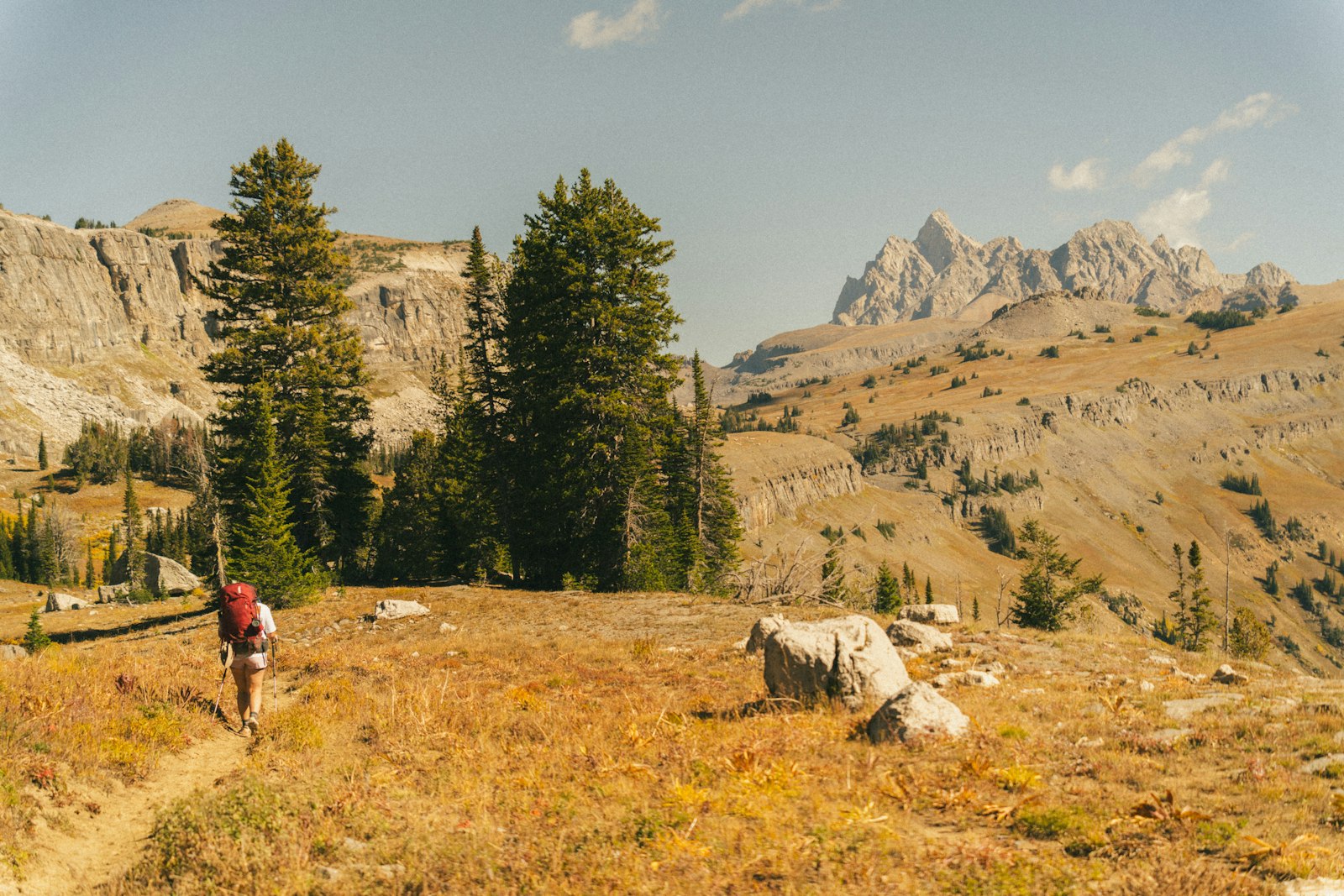
Pickle juice works for hiking because it replaces the sodium you sweat out faster than water alone can. A 3 oz shot delivers roughly 570 mg of sodium and triggers a vinegar-mediated neural reflex that stops a cramp in about 85 seconds. On long days in the heat, hikers can lose 800 to 2,000 mg of sodium per hour through sweat. Plain water makes that worse by diluting what's left. One shot at the trailhead, one at the halfway point, and one in camp keeps you ahead of the deficit on most full-day hikes.
You started the trail strong. Six miles in, the calf locks. Then the quad. You stop, stretch, eat a granola bar, drink half a liter of water, and the cramp comes back ten minutes later. By the time you stagger into camp, you're shuffling like someone twice your age. That's not a fitness problem. That's a sodium problem.
Long hikes are one of the worst sodium-deficit traps in outdoor sport. You're moving for hours, often in heat, often at altitude, often carrying weight, and the conventional advice — drink more water — is the exact opposite of what your body needs after the first liter or two. Hikers who push fluid without replacing electrolytes don't just cramp. They get the textbook trifecta: cramps, headache, nausea. That's hyponatremia in slow motion.
This is the field manual for using a 3 oz pickle brine shot on the trail — when to take it, how many to pack, and why it works faster than salt tabs, gels, or electrolyte powders.
Why Hikers Cramp In The First Place
A cramping calf is almost never a magnesium problem and almost never a "you didn't drink enough water" problem. It's a sodium problem. Sweat is salty — your body dumps roughly 500 to 1,500 mg of sodium per liter of sweat, and heavy sweaters can push that toward 2,000 mg/L. On a hot, exposed climb, you can sweat 1 to 1.5 liters per hour. Do the math.
Once your blood sodium drops, the motor neurons in your muscles get jumpy. Small electrical signals fire when they shouldn't, and the muscle locks. That lock-up is the cramp. Drinking plain water at that point dilutes the sodium that's still in your bloodstream and makes the next cramp worse, not better.
The real fix is to put sodium back in. Fast. And not in a sugar bomb your stomach can't process when it's already 95°F and you've been climbing for four hours.
The Pickle Juice Mechanism — In Plain English
Two things happen when you knock back a 3 oz shot of fermented pickle brine on the trail.
1. The vinegar reflex. The acetic acid in the brine triggers chemoreceptors in the back of your throat and esophagus. Those receptors fire a signal to the spinal cord that downregulates the runaway motor neurons causing the cramp. A 2010 study in Medicine & Science in Sports & Exercise (Miller et al., PubMed 19997012) measured cramp resolution in electrically-induced calf cramps and found pickle juice ended them in roughly 85 seconds — far too fast for the sodium itself to have absorbed and reached the muscle. The reflex is doing the immediate work.
2. The sodium top-up. Behind the reflex, the brine is also delivering 570 mg of sodium that lands in your gut and starts replenishing the sweat deficit over the next 15 to 30 minutes. By the time you're moving again, the next cramp risk has been pushed back another hour or two.
That two-stage punch — fast neural reflex plus sustained sodium delivery — is why a brine shot beats salt tabs, gels, and most powdered drink mixes for trail use. Salt tabs are sodium only and slow. Gels are sugar-forward and don't address the reflex. Powders need water and shaker mixing time you don't always have.
How Much Sodium Do You Actually Need On The Trail?
The honest answer: it depends on how much you're sweating, the temperature, your bodyweight, and whether you're a salty sweater. But there's a workable range.
The American College of Sports Medicine puts replacement sodium at 500 to 700 mg per liter of fluid for endurance activity over an hour. For hot-weather hikers and salty sweaters, that goes up to 1,000 mg per liter or more. A typical full-day hike is 4 to 8 hours. Even at the conservative end — 500 mg/hour — that's 2,000 to 4,000 mg of sodium across the day.
Here's the trail dosing chart we use:
Trail Pickle Juice Dosing By Hike Type
- Day hike, 2–4 hours, mild weather: 1 shot at the trailhead, 1 in the truck on the way home. 1,140 mg sodium total.
- Day hike, 4–8 hours, hot or exposed: 1 shot at the trailhead, 1 at the halfway point, 1 in camp or the truck. 1,710 mg sodium plus whatever's in your meals.
- Multi-day backpacking, moderate weather: 2 shots per day — morning + late afternoon. Plan 2 shots per day for the trip.
- Multi-day backpacking, heat or altitude: 3 shots per day — morning, midday, camp. The 12-pack covers a 4-day trip cleanly.
- The desperation dose: Already cramping mid-trail? Drink the whole 3 oz shot. Resume movement after 90 seconds. If the cramp returns within 15 minutes, take a second.
The 3 oz size matters here. Each Fast Pickle shot weighs about 3.4 oz with the bottle and stows flat in a hip-belt pocket. You're not packing a 32 oz Gatorade. You're packing the active ingredient.
Pickle Juice vs. Salt Tabs vs. Gels vs. Powders
Every long-distance hiker has a strong opinion on this. Here's the comparison straight.
Salt tabs (S! Caps, Saltstick, etc.) deliver 200 to 300 mg of sodium per capsule with no fluid. They're light, cheap, and shelf-stable. They also don't trigger any reflex — you swallow a pill and wait 30 to 45 minutes for it to dissolve and absorb. If you're already cramping, that's three switchback climbs too long.
Gels (GU, Maurten, Spring) are designed for fast carbs, not sodium. A typical gel has 50 to 200 mg of sodium and 22 to 27 g of sugar. They solve a calorie problem, not an electrolyte problem. They also tend to sit heavy in a stomach that's already working overtime to digest in heat.
Electrolyte powders (LMNT, Skratch, Liquid IV) deliver 300 to 1,000 mg of sodium when mixed into a full bottle of water. They work — but only if you have water, a clean bottle, and the time to shake one up. Mid-cramp on a switchback, you don't.
Pickle juice shots are pre-mixed, pre-measured, and trigger a neural reflex no other option does. The trade is weight (3.4 oz per bottle) and the taste (briny, vinegar-forward — some hikers love it, some don't).
The honest stack for a hot multi-day trip: a few shots for cramp emergencies and pre-loading, salt tabs for steady-state sodium, and a powder mix for one of your two water bottles. Different tools, same goal.
Heat And Altitude Make The Math Worse
Two trail variables silently double your sodium need.
Heat. A 70°F trail and a 95°F trail are completely different sodium problems. The CDC and the National Park Service both flag sodium loss as a leading cause of heat illness on summer trails — every year, search-and-rescue teams in places like Grand Canyon, Zion, and Big Bend pull out hikers who drank gallons of water and still collapsed. The diagnosis is almost always exertional hyponatremia, not dehydration. Plain water without sodium is the trap.
Altitude. Above 8,000 feet, your kidneys excrete more sodium and more water as your body adapts to thinner air. You also breathe harder and exhale more water vapor. For a hut-to-hut hike or a high-Sierra loop, plan for 30 to 50% more sodium than you'd take at sea level for the same effort.
Combine the two — a 95°F desert day at 7,000 feet, say a Bright Angel descent — and a hiker without electrolyte support is a candidate for evac before they realize it. The brine shot doesn't substitute for water. It substitutes for the salt that the water flushes through you.
The Pre-Loading Strategy For Big Days
If tomorrow is a 12-mile day with 3,000 feet of climb in summer heat, the work starts the night before. This is the four-step pre-load we use:
- Dinner the night before: Salt your food more than feels normal. Add an extra 500 mg via a pickle on the side or olives.
- 30 minutes before the trailhead: 1 Fast Pickle shot. Sodium starts banking before you sweat anything out.
- Trail mile 4–6 (or hour 2–3): Second shot. Replaces what you've already lost; pushes the next cramp window back.
- Camp / car / summit: Third shot, paired with real food. This one closes the day's deficit so you wake up tomorrow fresh, not shuffling.
This is the same pattern endurance athletes use for races, scaled for a hiking pace. The principle is the same: replace what's leaving before the deficit catches you.
Practical Packing — Where The Shots Actually Go
Three things matter for stowing pickle juice on the trail: weight, leak-proofness, and access.
Each 3 oz shot is roughly 3.4 oz packaged. Three shots is about 10 oz — less than a single can of beer, less than half a Nalgene of water. The bottles are screw-cap and don't leak in a pack as long as the cap is hand-tight.
Where to put them on a day pack: hip-belt pocket for the trailhead and mid-trail shots (you don't have to take the pack off), and the main compartment for the camp/finish shot. On a multi-day, the morning shot lives in a side mesh pocket so it's the first thing you grab post-coffee.
One more thing: pickle juice is shelf-stable for 18+ months unrefrigerated and the brine doesn't freeze hard at typical mountain temperatures (the salt drops the freeze point well below 0°F). For winter hiking, keep one in an inside chest pocket; it'll stay slushy, not solid.
FAQ
Is pickle juice safe to drink on long hikes?
Yes. Fermented pickle brine is mostly water, salt, vinegar, and dill. It has been studied in the context of exercise-induced cramps for nearly two decades and is sold specifically for athletic use. The only people who should be cautious are hikers on a sodium-restricted diet (hypertension, kidney disease, certain heart conditions) — talk to a doctor first if that's you.
How much pickle juice should I drink for a day hike?
For a typical 4 to 6 hour day hike in summer, plan on 2 to 3 shots — one at the trailhead, one at the halfway mark, and one at the finish. That covers roughly 1,140 to 1,710 mg of sodium, which lines up with 2 to 3 hours of moderate sweating. If you're cramp-prone or a salty sweater, lean toward 3.
Can pickle juice replace electrolyte powder on the trail?
For most day hikes, yes. For thru-hikes and multi-week trips where you're processing 2 to 4 liters of water per day, a brine shot is best paired with a powder in one of your bottles — the powder hydrates while the shot fixes acute cramps. Different tools, same goal.
Will the bottle leak in my pack?
Not if the cap is hand-tight. Fast Pickle ships the 3 oz shots with screw caps designed for travel. Stand them upright in a side pocket or hip pocket and they'll stay sealed through scrambles, switchbacks, and cooler bounces.
Does pickle juice work for altitude headache?
Indirectly, yes. Most "altitude headaches" below 10,000 feet are part dehydration, part sodium loss from increased breathing and urination. A brine shot won't fix true acute mountain sickness, but it does address the electrolyte half of the problem and often blunts the headache within 30 minutes when sodium loss is the driver.
What if I'm already cramping on the trail?
Stop, sit, and drink the full 3 oz shot. Hold it in your mouth for 5 seconds before swallowing — the longer the brine touches the receptors in your throat, the stronger the reflex. Most cramps resolve within 90 seconds. Wait 5 minutes before walking again. If a cramp returns within 15 minutes, take a second shot.
The Bottom Line
Hiking cramps aren't a sign you're out of shape. They're a sign your sodium is gone. Plain water makes the deficit worse; salt tabs are slow; gels solve a different problem; powders need a bottle and a minute you don't always have.
A 3 oz pickle brine shot solves the cramp in about 85 seconds via a vinegar reflex, and replaces the sodium itself over the next 15 to 30 minutes. Pack one for the trailhead, one for the middle, one for camp. Pre-load the night before for big days. Add a shot per day in heat or above 8,000 feet.
On the trail, the goal isn't to hike harder. It's to hike longer without breaking. Sodium is how.
Shop the Fast Pickle 12-Pack →
Read the science: Does Pickle Juice Help Cramps? What the Research Shows →