
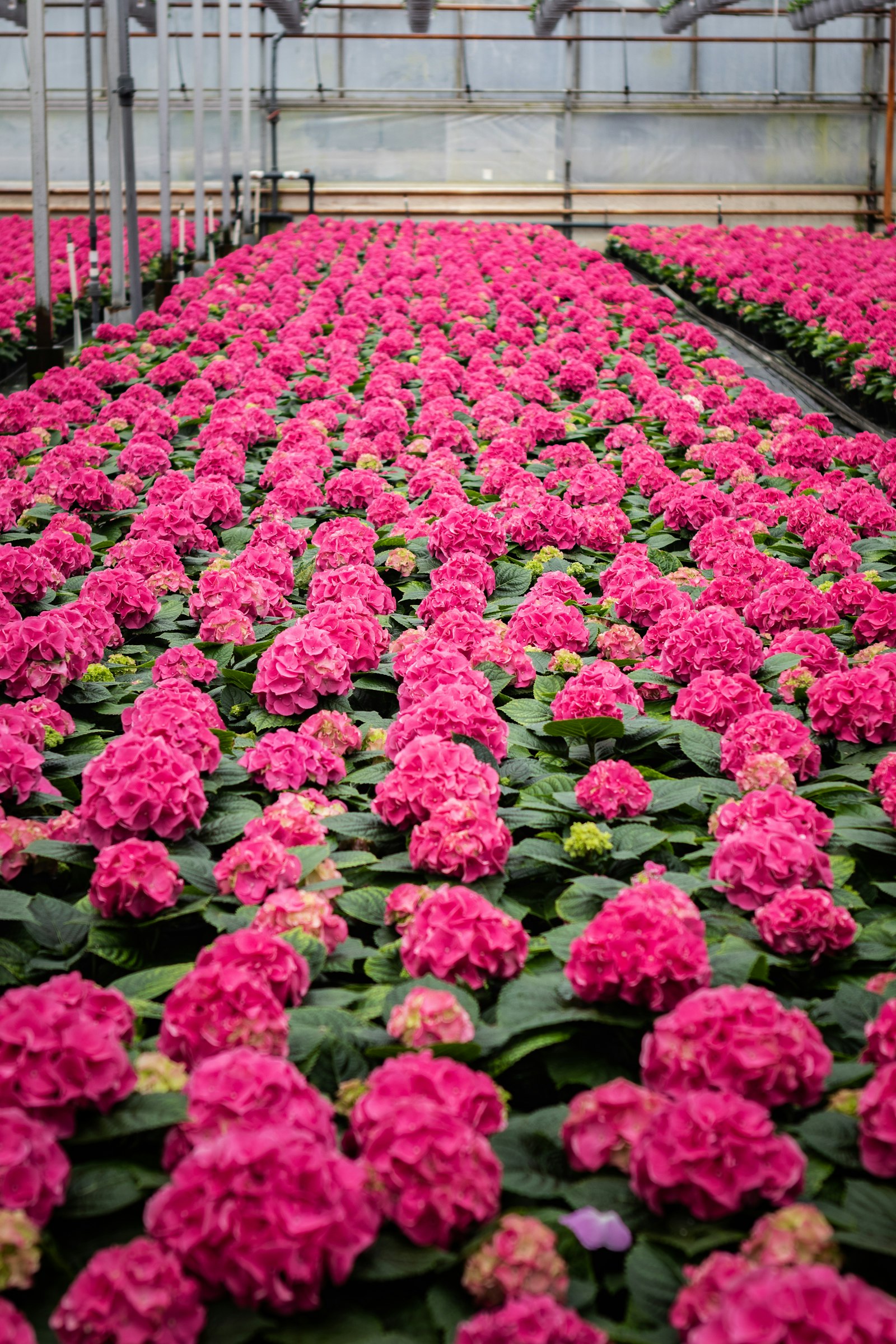
Greenhouse and nursery workers cramp because the building is engineered to do the exact thing that hurts you. Glazing lets short-wave solar radiation in and traps the long-wave heat that comes off the soil and benches, so interior temperatures commonly run 105 to 115 degrees Fahrenheit on a summer afternoon. Misting, irrigation, and plant transpiration then push humidity high enough that sweat stops evaporating, which shuts down your main cooling system while your sweat rate climbs. A 3 oz Fast Pickle shot carries 570 mg of sodium and triggers a nerve reflex that quiets cramp signaling in roughly 85 seconds, which is faster than any drink can be absorbed.
Every other hot trade fights the weather. Greenhouse work fights the design. A roofer is hot because the sun is out. A grower is hot because somebody built a structure whose entire purpose is to capture solar energy and refuse to give it back, and then filled it with wet media and misting lines to keep the humidity up.
The Bureau of Labor Statistics groups this work under farmworkers and laborers in crop, nursery, and greenhouse operations, a category with roughly 295,000 people in it. Most of them are not standing in a field. They are inside a poly house or a glass range, moving flats, sticking cuttings, pulling orders, and running a hose, in air that no weather app has ever described.
This article covers why the structure concentrates heat by design, why humidity is the part that actually breaks your cooling, why the worst days do not line up with the hottest days of the year, what the sodium math looks like across a ten-hour pull, and why a 3 oz brine shot fits a job where your hands are wet and your break is over when the truck shows up.
The Building Is Supposed To Trap Heat
A greenhouse works because glazing is asymmetric. Short-wave solar radiation passes straight through glass or poly and lands on soil, benches, concrete, and plant canopy. Those surfaces absorb it and re-radiate it as long-wave heat, which does not pass back out through the glazing nearly as easily. The energy goes in faster than it comes out, and the air inside heats up. That is not a flaw. That is the entire product.
Published guidance for the industry puts summer greenhouse interiors commonly between 105 and 115 degrees Fahrenheit. That figure gets quoted as a crop problem, because above about 90 degrees most floriculture crops stop growing well and quality starts to slip. Nobody quotes it as a worker number, even though the person moving flats is standing in the same air as the crop.
The cooling systems that exist are built around the plants, not the people. Shade cloth is specified by percentage to hit a light target for a crop. Roof vents and ridge vents are sized to protect the canopy. Evaporative pad-and-fan walls are tuned to a target leaf temperature. All of it helps you incidentally, and none of it was designed with you in mind.
Placement matters in a way that catches people out too. Shade cloth hung on the outside of the structure blocks solar radiation before it ever reaches the glazing. Shade cloth hung on the inside intercepts the light after it is already through, which means the heat is already in the building. An interior shade curtain protects the crop from light and does far less for the air temperature under it than most crews assume.
Humidity Is The Part That Breaks Cooling
Your body has one high-capacity cooling system and it is evaporation. Sweat leaves the skin, carries heat away, and the skin cools. That transaction only works if the surrounding air is dry enough to accept the water. Sweat that runs down your forearm and drips onto a bench cooled nothing. It only cost you fluid and sodium.
A greenhouse is a machine for keeping air wet. Overhead misting and boom irrigation run through the day. Floors get hosed for cooling and sanitation. Propagation and germination houses hold deliberately high humidity so cuttings do not desiccate before they root. And every plant in the building is transpiring, which means the crop itself is a continuous humidifier running on the same solar energy that is heating the air.
That is why the dry-bulb thermometer on the post is a bad guide here. What matters for a person is wet bulb globe temperature, which folds in humidity, radiant heat, and air movement alongside air temperature. NIOSH recommends measuring environmental heat at least hourly, during the hottest portion of the shift, in the hottest months, and whenever a heat wave is predicted. Indoor heat generated by a structure cannot be read off a forecast, so it has to be measured on site.
In practice almost no greenhouse operation has ever put a WBGT meter in a propagation house at two in the afternoon. Which means nobody, including the grower, actually knows what that house is.
The Worst Days Are Not The Hottest Days
Ask a landscaper when the bad week is and they will say July. Ask a greenhouse crew and you get a different answer, usually March through May.
Spring is when the structure is closed and the labor peaks at the same time. Nights are still cold enough that the house gets buttoned up and heated overnight, vents stay shut into mid-morning, and the sun angle climbs fast. By eleven o'clock on a 62 degree April day the interior can be brutal while everyone outside is in a jacket. That is also exactly when the spring push is on: sticking, transplanting, spacing, and then loading racks for garden center orders on a schedule that does not move.
Two more things stack on top of it.
- Nobody is acclimatized in spring. Heat tolerance is built through repeated exposure, and after a winter of cool work nobody has it. NIOSH's acclimatization guidance is specific: workers with prior heat experience should start around 50 percent exposure on day one and build to 100 percent by day four, and new workers should start at 20 percent and add 20 percent a day. Spring hiring surges put brand-new people into the hottest house in week one, which is the exact inverse of that.
- Nobody expects it. A crew working a 95 degree August day drinks accordingly, because the day announces itself. A crew working a 60 degree April day does not, and the sweat loss inside the house is the same either way.
That mismatch between the outdoor cue and the indoor reality is the single most useful thing to understand about cramping in this trade.
Why Water Alone Leaves You Cramping
Sweat is not distilled water. It carries sodium out with it, and the concentration varies enormously between people. Normative data puts sweat sodium somewhere around 900 mg per liter on average, with individual values running from well under half that to more than double it. Sweat rates during sustained work in the heat commonly land between one and one and a half liters per hour.
Run that arithmetic on someone pulling orders in a poly house in May and you land somewhere in the range of 900 to 1,800 mg of sodium out per hour. Across a ten-hour day that is several grams gone. Replacing it with plain water refills the volume and dilutes what sodium is left in circulation, which is why the person who has been dutifully working through a gallon jug is often the first one to lock up.
The guidance on water itself is worth following: cool water in the 50 to 60 degree range, in small amounts taken frequently, rather than a large volume once an hour. But water is the volume half of the problem. It was never going to be the sodium half.
If your shirt dries stiff with white rings under the arms, or the sweatband of your hat has salt crust on it by Friday, you are on the salty end of that range and water alone is not going to hold you.
Sodium Per Ounce: What Survives A Wet Bench
Total sodium on a label is only half the story. In a greenhouse the binding constraint is how much sodium you get per ounce you have to stop and swallow, and whether the format survives an environment where your gloves are wet, your hands are in media, and the break ends when the truck backs in.
| Option | Serving | Sodium | Sodium per oz | Added sugar |
|---|---|---|---|---|
| Fast Pickle 3 oz shot | 3 oz | 570 mg | 190 mg | 0 g |
| LMNT (mixed) | 16 oz | 1,000 mg | 63 mg | 0 g |
| Liquid I.V. (mixed) | 16 oz | 500 mg | 31 mg | 11 g |
| Gatorade Thirst Quencher | 20 oz | 270 mg | 14 mg | 34 g |
| Water | 16 oz | 0 mg | 0 mg | 0 g |
At 190 mg of sodium per ounce, the 3 oz shot is three to thirteen times as sodium-dense per ounce as the mixed drinks. It also needs no clean bottle, no shaking, and no second source of potable water, which matters in a building where the nearest hose is irrigation line and not something you should be drinking from.
The Neural Reflex Behind A 3 oz Shot
The obvious objection to a 3 oz format is that 3 oz cannot rehydrate anybody. That is correct, and it is also not the mechanism.
In the study most often cited on this, published in Medicine & Science in Sports & Exercise in 2010, Miller and colleagues induced cramps in hypohydrated subjects and compared pickle juice against deionized water. Cramp duration averaged 84.6 seconds with pickle juice versus 133.7 seconds with water, roughly 37 percent shorter. The finding that mattered most was what did not change: plasma electrolyte concentrations were essentially unchanged five minutes after ingestion. The cramp had already stopped before any sodium could have been absorbed and delivered to the muscle.
The accepted explanation is an oropharyngeal reflex. Receptors in the back of the mouth and throat respond to the acetic acid in the brine, and that signal inhibits the runaway alpha motor neuron firing driving the cramp. In plain terms, the sour hit at the back of your throat tells the overfiring nerve to stand down. The 570 mg of sodium arriving behind it addresses the underlying deficit on a slower clock.
That two-stage behavior is why format beats volume here. You do not need to drink a liter to get the reflex. You need the brine to reach the back of your throat, which is something you can do standing in an aisle with a rack half loaded.
What Does Not Work In A Head House
- Water alone. Addresses volume, not sodium. Drinking heavily against a loss of close to a gram an hour pushes you toward dilution, which is its own problem on a long day.
- Sugary sports drinks. A 20 oz bottle delivers 14 mg of sodium per ounce and 34 g of added sugar. That is a lot of volume for very little of the mineral you actually lost, and an afternoon crash on top of it.
- Powder sticks. They need a clean bottle, a clean water source, and a dry free hand. In a house with wet gloves, media on everything, and irrigation running, you have none of the three, and the open bottle collects whatever is in the air for the rest of the shift.
- Salt tablets. Sodium and nothing else, rough on an empty stomach, and they do nothing for the reflex that shortens a cramp already in progress.
- Waiting for the vents to open. Vent controllers respond to the crop's setpoint, not to yours. By the time the house is comfortable, you are hours into a deficit.
- Assuming the outdoor temperature covers you. A 62 degree April morning outside tells you nothing about the propagation house at eleven o'clock.
Quick Reference: Glasshouse Heat Protocol
- Salt before the shift, not during. A salted meal before you clock in does more than anything you can do at hour seven.
- Drink on a schedule, not on thirst. Cool water, small amounts, frequently. Thirst is a poor gauge in a humid house where you are wet either way.
- Treat spring like summer. The closed house in April is the hottest environment on the property and nobody on the crew is acclimatized to it yet.
- Ramp new people in. Follow the acclimatization pattern rather than putting a week-one hire on the hottest bench for a full day. Around 20 percent exposure on day one, building by 20 percent a day, is the published starting point.
- Keep a shot on you, not in the break room. A cramp three houses down is not a problem you solve from the head house. One 3 oz shot in an apron pocket is the point of the format.
- Take it at the first twitch. Early fasciculation in a calf, forearm, or hand is the signal. The reflex works best on early signaling, not on a muscle you have been fighting for ten minutes.
- Get one WBGT reading. A single on-site measurement in the worst house at the worst hour is what turns "it is hot in there" into something an operation will actually schedule around.
- Escalate real symptoms. Dizziness, nausea, confusion, or skin that has stopped sweating is not a cramp problem. Get out of the house, get to a cool area, and get medical help.
Frequently Asked Questions
How fast does a pickle shot work on a cramp?
In the Miller 2010 study, cramp duration averaged 84.6 seconds after pickle juice versus 133.7 seconds after water. That speed comes from a nerve reflex triggered in the back of the mouth and throat rather than from absorption, which is why the volume can be small and still work.
Why is it hotter inside the greenhouse than outside?
Because that is what the glazing is for. Short-wave solar radiation passes through glass or poly, gets absorbed by soil, benches, and canopy, and is re-radiated as long-wave heat that does not escape as easily. Energy accumulates faster than it leaves. Industry guidance puts summer interiors commonly between 105 and 115 degrees Fahrenheit.
Is humidity really worse than temperature in a greenhouse?
For cooling, yes. Evaporation is your main heat-shedding mechanism and it needs air dry enough to accept the water. Between misting, irrigation, wet floors, and constant plant transpiration, greenhouse air is often too saturated for sweat to evaporate, so you pay the fluid and sodium cost without getting the cooling benefit.
Why do greenhouse workers cramp in spring rather than summer?
Because spring is when the house is still closed up overnight, the sun angle is climbing, the labor peak hits, and nobody has built any heat tolerance yet after the winter. A cool day outside removes the cue that would normally make a crew drink and salt, while the interior conditions are already severe.
How many shots does a ten-hour pull take?
Most people use one around the halfway mark of a hot house rotation and keep a second within reach for the first sign of a cramp. Heavy sweaters in a propagation house in May often run two. It is a targeted tool for the hot part of the day, not something you sip continuously.
Can a grower buy these for the whole crew?
Yes. Growers and head growers commonly stock multi-packs in the head house or the break area so a shot is within reach of the hot ranges rather than a walk away. They are shelf stable, so nothing depends on cooler space you do not have.
The Science Behind The Bottle
Fast Pickle is a 3 oz shot of purpose-built brine: 570 mg of sodium, zero added sugar, under 1 g of carbohydrate, and the vinegar content that drives the oropharyngeal response documented in the cramp literature. It is fast-acting hydration support, not a daily plan, sized for a job where your hands are wet and your break ends when the truck arrives.
For the roughly 295,000 people the Bureau of Labor Statistics counts in crop, nursery, and greenhouse labor, the case is straightforward. The heat is a designed property of the building, so it does not follow a forecast and it does not wait for August. The humidity that protects the crop is the same humidity that disables your cooling. The season that pushes the hardest is the one where nobody is acclimatized. A format that delivers 190 mg of sodium per ounce, needs no clean water, and works on a nerve-reflex timeline is built for exactly that.
*These statements have not been evaluated by the Food and Drug Administration. This product is not intended to diagnose, treat, cure, or prevent any disease. Individual results may vary. If you experience symptoms of heat exhaustion or heat stroke, stop work, get to a cool area, and seek medical attention.