
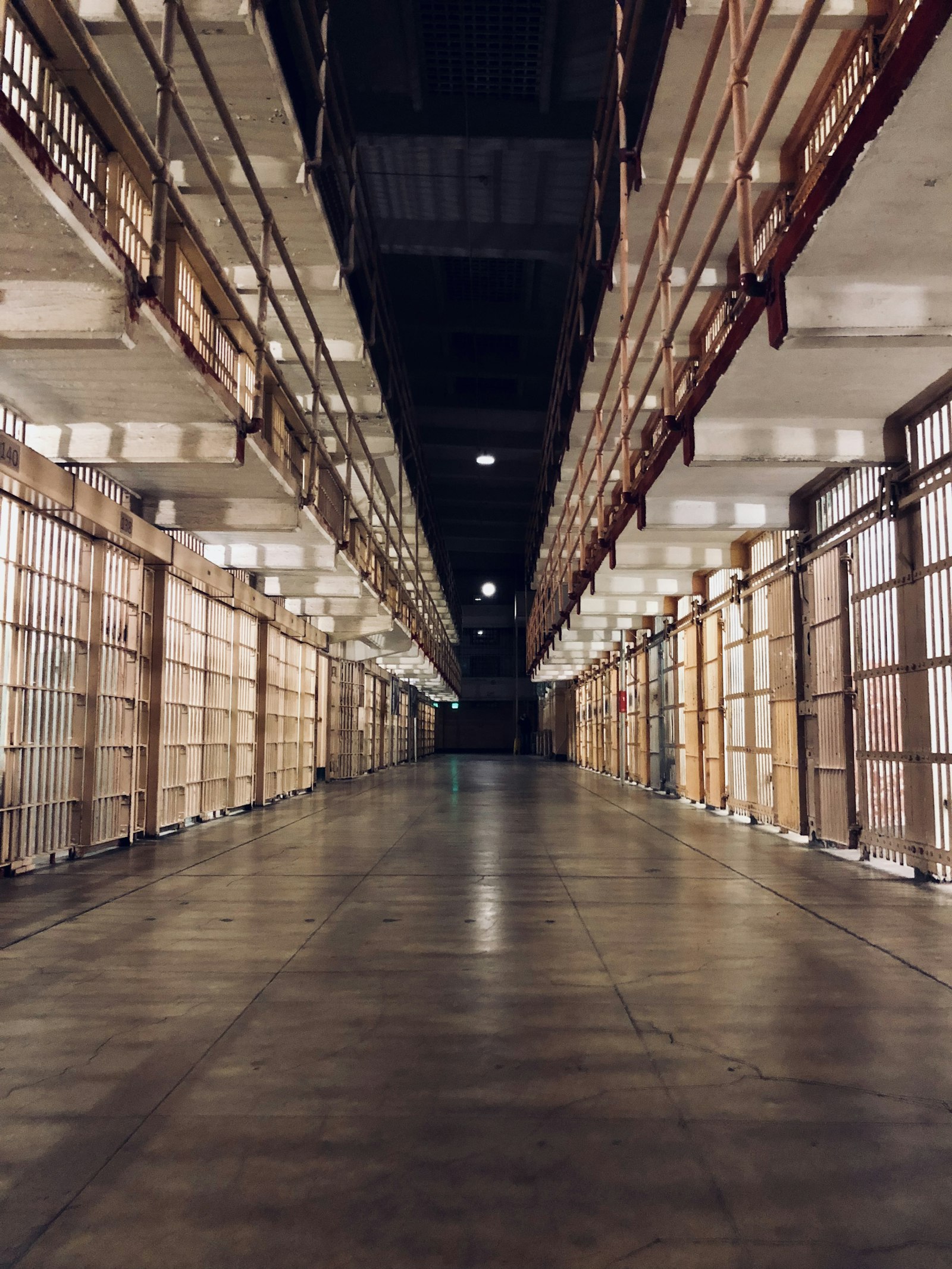
Correctional officers cramp because a housing unit is a heat trap that no forecast reports. Concrete and steel hold the day's heat long after sunset, most facilities have no air conditioning in the blocks, and the vest, belt, and long-sleeve uniform cut your ability to shed that heat. A 3 oz Fast Pickle shot carries 570 mg of sodium and triggers a nerve reflex that quiets cramp signaling in roughly 85 seconds, which is faster than any drink can be absorbed.
Ask anyone who has never worked a block what a correctional officer does all day and you will hear some version of "stands around indoors." Ask an officer who just came off a 16-hour hold-over in August what the dayroom felt like at 4 p.m. and you get a different answer. The Bureau of Labor Statistics counts roughly 387,500 correctional officers and jailers in the United States, plus about 19,000 bailiffs, and a large share of them work in buildings that were never designed to be cooled.
This is one of the few trades where the heat problem is fully documented and almost never discussed as a worker problem. The research, the lawsuits, and the news coverage all focus on the people in the cells. The officer walking the tier is standing in the exact same air, wearing more, moving more, and doing it for twelve to sixteen hours at a stretch.
This article covers why concrete housing units run hotter than the outdoors, what the research actually says about heat exposure in carceral facilities, why body armor and the uniform make it worse, and why a 3 oz brine shot fits a post where you cannot leave, cannot always drink, and cannot afford to be doubled over with a calf lock.
The Block Is A Thermal Battery
A housing unit is mass. Poured concrete floors, block walls, steel doors, steel bunks, steel stairs, and very little of it insulated. Mass absorbs heat all day and releases it slowly, which is why the block does not cool off when the sun goes down. It keeps radiating into the air you are breathing well into the night shift.
Stack that on top of three other loads. Body heat from a unit that may be operating above design capacity. Lighting that runs 24 hours. Kitchens, laundries, and mechanical spaces venting into shared corridors. Windows that are either sealed, screened, or security-glazed, and by design do not open enough to move meaningful air.
The result is a building that behaves like a battery. It charges during the day and discharges into the occupied space at night. An officer working 2 p.m. to 10 p.m. in July is not working in the afternoon high. They are working in the accumulated heat of the entire day, released into a sealed concrete box.
That is why the temperature you hear on the drive in has almost nothing to do with the temperature on the tier. It is also why officers who assume cramps track the weather forecast get blindsided by a cool, humid week that still produces a miserable block.
What The Research Actually Found
This is not anecdotal. A 2024 study in Nature Sustainability led by Cascade Tuholske mapped heat and humidity exposure across 4,078 continental United States carceral facilities from 1982 to 2020. The number of dangerously hot and humid days per year increased at 1,739 of those facilities, concentrated in the South. On average, facilities in the study saw roughly 100 days per year of hazardous humid heat.
A follow-up analysis in GeoHealth looked at 1,614 prisons from 1990 to 2023 and found the same trend. State facilities in Texas and Florida alone accounted for about 52 percent of total exposure in the national picture, despite holding around 12 percent of the incarcerated population.
The other number that matters is the one nobody fixed. At least 44 states do not provide universal air conditioning in their prisons, and roughly 29 states have partial or no air conditioning in housing units specifically. The block is frequently the last place in the facility to get cooled, because administration, medical, and control get priority when there is any cooling at all.
For the officer, that is the whole equation. You work the part of the building that does not have it.
The Threshold You Are Already Past
The National Institute for Occupational Safety and Health uses wet bulb globe temperature, a measure that combines air temperature, humidity, radiant heat, and air movement, rather than the number on a thermometer. For workers doing moderate physical activity, NIOSH puts the recommended ceiling around 28 degrees Celsius, which is 82.4 degrees Fahrenheit WBGT.
That is a lower number than it sounds. WBGT is not the same as air temperature. In a humid, unventilated concrete space with hot surfaces radiating at you, a WBGT of 82 degrees can occur while the wall thermometer reads well below what anyone would consider dangerous. Reported temperatures inside uncooled units during summer heat events have run well above 110 degrees Fahrenheit.
The practical problem is that almost nobody measures it. Indoor heat generated by a building cannot be read off a weather app, so it has to be measured on site. If your facility has never put a WBGT meter on a tier in August, then no one, including your administration, actually knows what that block is.
The Vest Is Working Against You
Heat load is only half of the problem. The other half is whether you can shed the heat you produce, and the uniform is built to prevent exactly the airflow that would let you.
The research on body armor is specific. Wearing a vest increases thermal insulation by roughly 15 to 19 percent and cuts evaporative cooling capacity by about 22 percent. Modeling in hot and humid conditions predicts a person in armor reaches a critical core temperature roughly 24 percent faster than the same person without it. One study measured an 11 percent increase in total sweat loss paired with a 27 percent drop in sweating efficiency, which is the worst possible combination: you lose more fluid and salt while getting less cooling for it.
That is the mechanism behind a complaint every officer has heard. You are soaked through by second count and you are still hot. Sweat that does not evaporate does not cool you. It just costs you sodium.
- The vest seals a microclimate. Stab-resistant and ballistic panels are effectively impermeable. The air against your torso saturates and stays there.
- The uniform adds a second layer. Long sleeves, a duty belt, radio, cuffs, keys, and OC on the belt line. Every item is one more barrier or one more pound.
- The work is not sedentary. Tier walks, stair counts, escorts, cell searches, and the occasional use-of-force. Heat production spikes exactly when you can least afford it.
- You cannot step out. A post is a post. There is no shade break on a tier and no cooler in the dayroom, and a relief that is 40 minutes late is a normal Tuesday.
Shift Length Is The Multiplier
Most trades get to go home after eight or ten hours. Corrections frequently does not. Chronic understaffing across state, local, and federal systems has made mandatory overtime routine, and BLS notes plainly that correctional officers may be required to work overtime around the clock coverage.
Held over for a second shift, you are now sixteen hours into sweat loss on a body that started the day already behind from yesterday. Sodium deficit is cumulative. A day of heavy sweating and light salting does not reset overnight, especially if you slept five hours and came back in.
This is why the classic corrections cramp does not land at hour two. It lands at hour eleven, or during the drive home, or at 3 a.m. in bed as a calf that locks up hard enough to wake you. By then the shift is over and it looks unrelated to work. It is not.
Why Water Alone Leaves You Cramping
Sweat is not water. It carries sodium, and the amount varies a great deal between people. Normative data puts sweat sodium concentration around 40 mmol per liter on average, which works out to roughly 900 mg of sodium per liter of sweat, with individual values running from well under half that to more than double it. Sweat rates under real work load commonly run half a liter to two liters per hour.
Run that arithmetic on an officer walking tiers in a vest in an uncooled block and you land somewhere between about 450 and 1,800 mg of sodium out per hour. Replace that with plain water and you refill volume while continuing to dilute what is left. That is how people end up drinking steadily all shift, cramping anyway, and concluding they must not have drunk enough.
If your uniform shirt dries with white salt rings at the collar and under the vest panels, or your eyes sting from sweat by mid-shift, you are on the salty end of that range and water alone is not going to hold you.
Sodium Per Ounce: What Fits On A Duty Belt
The constraint in corrections is not just how much sodium a product carries. It is how much volume you have to get down, where you are allowed to have it, and how fast you can use it. A 20 oz bottle of mixed sports drink is something you stage in a break room and come back to. That does not help you on a tier at hour eleven.
| Option | Serving | Sodium | Sodium per oz | Added sugar |
|---|---|---|---|---|
| Fast Pickle 3 oz shot | 3 oz | 570 mg | 190 mg | 0 g |
| LMNT (mixed) | 16 oz | 1,000 mg | 63 mg | 0 g |
| Liquid I.V. (mixed) | 16 oz | 500 mg | 31 mg | 11 g |
| Gatorade Thirst Quencher | 20 oz | 270 mg | 14 mg | 34 g |
| Water | 16 oz | 0 mg | 0 mg | 0 g |
At 190 mg of sodium per ounce, the 3 oz shot is three to thirteen times as sodium-dense per ounce as the mixed drinks, in a bottle that fits a cargo pocket, needs no mixing, and does not require access to a sink you may not have.
The Neural Reflex Behind A 3 oz Shot
The reason a small volume works at all is that cramp relief from brine is not a replacement mechanism. It is a nerve mechanism.
In the controlled study most often cited on this, Miller and colleagues induced cramps in the toe flexor muscles and compared pickle juice against deionized water. Cramp duration averaged 84.6 seconds with pickle juice versus 133.7 seconds with water, roughly 37 percent shorter. The finding that mattered most was what did not change: blood plasma sodium, potassium, magnesium, and calcium were statistically unchanged at five minutes after ingestion. The cramp had already stopped before any electrolyte could have been absorbed and delivered to the muscle.
The accepted explanation is an oropharyngeal reflex. Acid and strong flavor stimulate receptors in the mouth and throat, and that signal inhibits the runaway alpha motor neuron firing driving the cramp. The vinegar is doing the work in the throat, not in the bloodstream. Sodium still matters across a shift, but the fast part of the effect is a switch, not a refill.
That timeline is the whole argument for this format in corrections. Eighty-five seconds is something you can absorb standing at a control panel. Twenty minutes waiting for a sports drink to absorb is not a plan when you are the only officer on the tier, which is why a 3 oz shot in a pocket beats a bottle in a break room you are not getting to.
What Does Not Work On A Post
- Chugging water at count. Volume without sodium dilutes what you have left. It is the most common approach and the one most likely to leave a salty sweater cramping at hour eleven.
- Waiting the cramp out. A calf that locks on a stair tier is not just painful, it is a control problem in a place where being slow is a safety issue. Shut it down, then decide whether to call for relief.
- Sugary sports drinks as the main plan. Thirty-four grams of sugar buys 270 mg of sodium and a crash somewhere around hour nine, which is exactly when you get held over.
- Salt tablets on an empty stomach. Common in this trade, and a reliable way to end up nauseated on a post you cannot leave.
- Coffee and energy drinks as the hydration plan. They are the default on night shift and they do nothing for sodium. Have them if you want them, but do not count them.
- Assuming the AC in admin covers you. The front office temperature has no bearing on the block. The only number that means anything is the one measured where you actually stand.
Quick Reference: Cell Block Heat Protocol
- Front-load before roll call. Fluid and salted food before the shift starts, not after the first count. You cannot catch up once you are behind in a vest.
- Treat a hold-over as a second shift, not overtime. If you get held, eat and salt again. Sixteen hours of sweat loss is not one long eight.
- Carry it on you. A cramp on the tier is not a problem you solve from a locker. One 3 oz shot in a cargo pocket is the entire point of the format.
- Use it at the twitch, not the lockup. Early fasciculation in a calf, hamstring, or forearm is the signal. Waiting for the muscle to seize means working through the whole cramp before relief lands.
- Push for one WBGT reading. An on-site measurement is what turns "it is hot on the block" into something an administration and a union have to respond to.
- Salt the meal, not just the shift. The shot is the off switch. Real food with real sodium is the baseline that keeps you off the switch.
Frequently Asked Questions
How fast does a pickle shot work on a cramp?
In the controlled study, cramp duration averaged 84.6 seconds after pickle juice compared with 133.7 seconds after water. Call it about a minute and a half, and understand it is a nerve reflex triggered in the mouth and throat, not absorption.
Why do correctional officers cramp when they work indoors?
Because the housing unit is usually not air conditioned and behaves like a thermal battery. Concrete and steel absorb heat all day and release it into the occupied space for hours afterward, while sealed security windows prevent meaningful airflow. At least 44 states lack universal air conditioning in their prisons, and the blocks are typically the last spaces to get cooled.
Does the vest really make that much difference?
Yes. Body armor increases thermal insulation by roughly 15 to 19 percent and reduces evaporative cooling capacity by about 22 percent. In hot and humid conditions, modeling predicts a person in armor hits a critical core temperature roughly 24 percent faster than the same person without it. Sweat that cannot evaporate costs you sodium without buying you any cooling.
Why does the cramp hit at 3 a.m. instead of on shift?
Sodium deficit is cumulative and it does not clear itself overnight. A long sweat day with light salting leaves you short, and a calf at rest is a common place for that to show up. A shot at the first twitch works the same at home as it does on a tier.
Do the shots need refrigeration?
No. They are shelf stable, which is what makes them practical in a locker, a duty bag, or a vehicle that bakes in the lot all shift. Cold is more pleasant, not required.
Can a shift or a union local buy these for everybody?
Yes. Sergeants and shift commanders commonly stock the 12-pack in the shift office for summer, and larger rosters usually step up to the 24-pack.
The Science Behind The Bottle
Fast Pickle is a 3 oz shot of purpose-built brine: 570 mg of sodium, zero added sugar, under 1 g of carbohydrate, and the vinegar content that drives the oropharyngeal response documented in the cramp literature. It is fast-acting hydration support, not a daily plan, sized for a job where the nearest break room is behind two locked doors and a control officer.
For the roughly 387,500 correctional officers and jailers working in the United States, the case is straightforward. The heat is generated by the building and stored in its mass, so it does not follow a forecast and it does not end at sundown. The vest and the uniform take away most of your ability to shed it. Shift length turns a manageable deficit into a cumulative one. A format that delivers 190 mg of sodium per ounce, fits in a cargo pocket, and works on a nerve-reflex timeline is built for that set of constraints.
*These statements have not been evaluated by the Food and Drug Administration. This product is not intended to diagnose, treat, cure, or prevent any disease. Individual results may vary. If you experience symptoms of heat exhaustion or heat stroke, stop work, get to a cool area, and seek medical attention.