
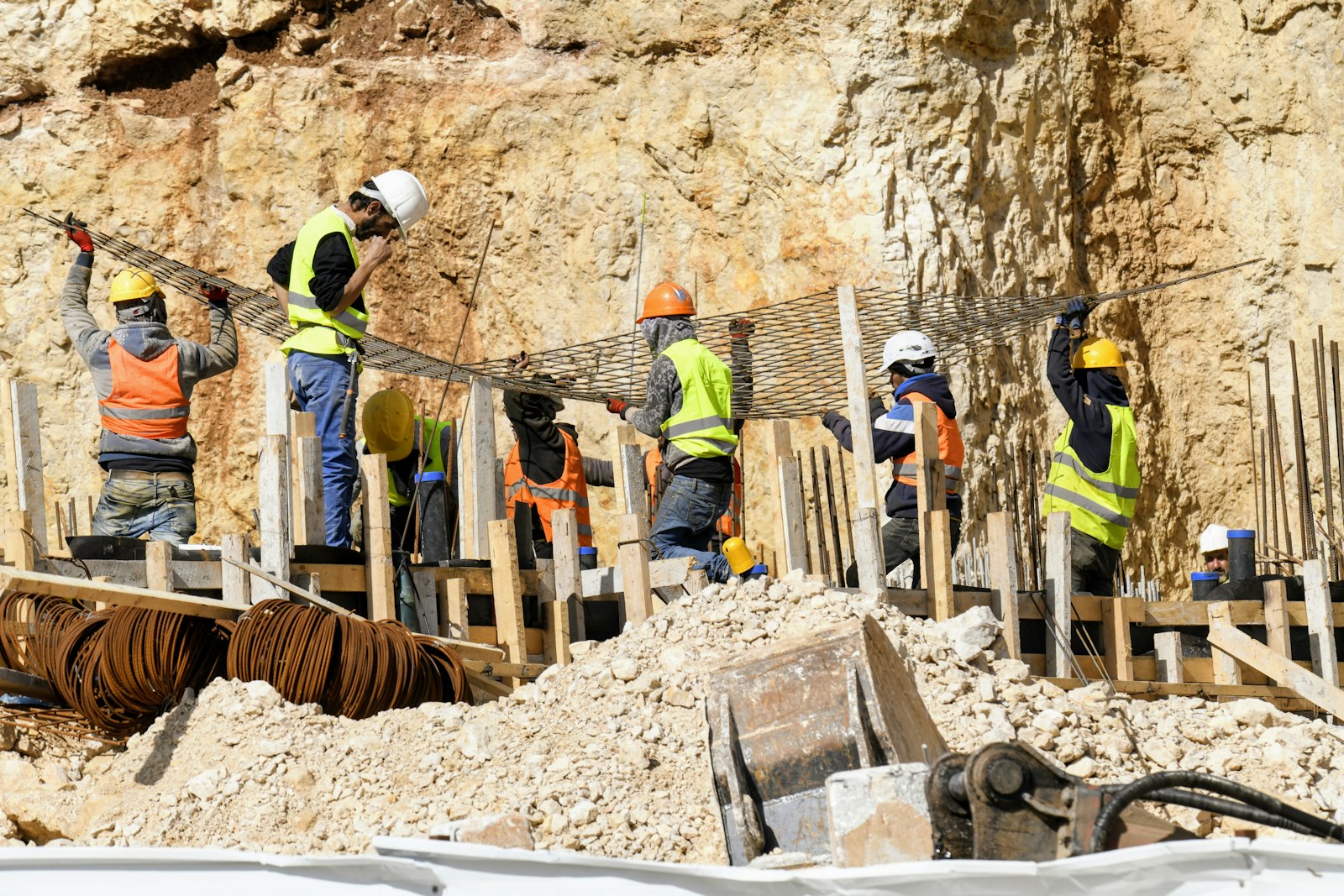
Concrete and masonry crews cramp where the trade hides the warning — the calves and quads on long screed pulls, the forearms and hands gripping a trowel or block, the low back after the third row of CMU on a hot wall. A 3 oz pickle brine shot delivers 570 mg of sodium and triggers a neural reflex that switches the cramp signal off in roughly 85 seconds — faster than any sports drink can absorb and fast enough to use at a tailgate water break. For finishers, masons, foundation crews, flatwork crews, and decorative-concrete crews working summer pour days, keeping a 24-pack on the trailer is the simplest cramp insurance there is.
How Pickle Juice Stops Concrete-Crew Cramps
The mechanism is one of the most-cited findings in exercise physiology over the past fifteen years. In the seminal 2010 study by Miller and colleagues at North Dakota State (published in Medicine & Science in Sports & Exercise), athletes who drank pickle juice during an active cramp recovered roughly 45% faster than athletes given deionized water — with the effect appearing around 85 seconds after ingestion. That window is too short for sodium to absorb into the bloodstream, which means the fix is not chemical rehydration. It is neurological.
Researchers concluded that the vinegar-and-salt combination triggers a reflex in the oropharynx — the back of the throat — that signals the brainstem to inhibit the alpha motor neurons firing the cramped muscle. Translation: your brain switches the cramp off.
For a finisher kneeling on a 10,000 sq ft slab in July, or a mason laying block in the third hour of a wall, the mechanism matters because:
- Sports drinks rely on intestinal absorption, which takes 20 to 40 minutes — longer than the window between a calf twinge and a full lockup that takes you off the deck.
- A cramp in the back half of a long pour or a 95 °F block-laying afternoon arrives in seconds. The signal does not announce itself in advance.
- A 3 oz shot can be opened, slammed, and back to the trowel or hod in under 20 seconds, before the cramp escalates from a signal to a lost workday.
The reflex is the entire argument for keeping a 24-pack in the trailer or the gang box alongside the bull floats, edgers, and hand jointers — one is your crew’s daily electrolyte plan, the other is the off-switch the moment a calf, forearm, or low back starts to talk.
Why Concrete And Masonry Work Stacks Every Cramp Driver
Most foremen and journeymen underestimate sweat-sodium loss on a pour day, because the cues that work for other trades fail in concrete. Salt rings on a t-shirt are hidden under a high-vis vest. The sun is reflected off the slab and back up at you, doubling the heat load with no obvious source. And the work is uniquely deceptive: a finisher can lose two liters of sweat over a morning slab pour without ever taking off a knee pad.
The cured slab and the fresh mix both radiate heat
Concrete is one of the few job sites where the ground is hotter than the air. A summer slab cures at 140 to 170 °F for the first few hours, and a fresh mix is delivered between 80 and 95 °F by spec. Add ambient summer air at 90 °F plus a clear-sky reflective load and a flatwork crew is working in a 110 °F effective environment from screed to finish. Sweat rates of 1.0 to 1.5 liters per hour are routine, with sodium losses of 900 to 1,800 mg of sodium per hour for a moderate sweater and considerably more for a salty one.
Pre-dawn starts mean a pre-dawn sodium plan
To beat the heat, most concrete crews start the truck at 4 to 5 a.m. and have the first yard on the deck before sunrise. That schedule eats into the breakfast window most workers actually use to load sodium, which means the deficit starts before the sun comes up. By the 10 a.m. coffee break, a crew working from 4 a.m. is already 5 hours into sweat loss with almost nothing replaced.
Heavy lifting layered on top of heat
Concrete and masonry are not light work. The day’s lift list typically includes 80 lb mix bags, 60-to-80 lb CMU block, 5-gallon buckets of slurry, mortar pans, rebar bundles, and the 50-to-90 lb power trowels. The hamstrings and low back load on every lift; the forearms and grip load on every trowel pass and block set. Heat plus heavy isometric and concentric loading is the textbook cramp setup — not later that day, but two to three hours in.
Squat, kneel, repeat — the finisher’s cramp window
Finishing flatwork puts a kneeling, edging, troweling, joint-cutting crew in a held squat or knee-down position for hours. The quads stay loaded, the calves stay shortened, and the hip flexors stay locked. When the crew finally stands up to walk to the next bay, the calves seize on the first step. Hand-trowel cramping is the next layer once the forearms have been gripping wood or magnesium for an hour straight.
Gloves and PPE trap sweat without replacing it
Cut gloves, vibration gloves, the high-vis vest, the hardhat with sweat-soaked liner, the steel-toe boots laced over moisture-wicking socks — everything PPE does to protect the worker also traps heat and accelerates sweat. The vest looks dry on the outside while the t-shirt underneath is wringable. The result: the foreman cannot see how much sodium the crew has lost.
The salty-sweater on the crew
Most crews have at least one worker who loses far more sodium per liter than the others. The tell-tale signs: white salt rings on the inside of a faded hard hat liner after one summer, salt residue on the corners of the eyes by lunch, the t-shirt that comes off the line stiff even after a wash. Those workers cramp first, hardest, and earliest in the season. Our salty sweat field guide walks the self-test.
Pickle Juice vs. The Other Things On The Cooler
Most jobsites already stock something. The honest comparison is what each option does, how much sodium it delivers, and how fast it acts when a worker is already cramping.
| Product | Sodium | Sugar | Time to acute effect |
|---|---|---|---|
| Fast Pickle 3 oz shot | 570 mg | 0 g | ~85 seconds (neural reflex) |
| Sqwincher Lite (20 oz) | ~210 mg | 0 g | 20 to 40 min (absorption) |
| Gatorade Thirst Quencher (20 oz) | 270 mg | 34 g | 20 to 40 min (absorption) |
| Gatorade Endurance (20 oz) | ~620 mg | 22 g | 20 to 40 min (absorption) |
| Liquid IV (1 stick / 16 oz) | 500 mg | 11 g | 20 to 40 min (absorption) |
| Salt tabs (1 cap) | ~200 to 500 mg | 0 g | 30 to 60 min (digestion) |
| Plain water | 0 mg | 0 g | — |
The takeaway: a sodium-forward drink mix like Gatorade Endurance or an electrolyte stick keeps a non-cramping crew topped up across a pour day; a Fast Pickle shot reverses an acute cramp that has already started, or pre-empts one when you can feel a calf or forearm starting to talk on the next screed pass. The best-run crews run both — an electrolyte mix in the cooler all day, a 24-pack of shots on the trailer for the cramp signal. We compare the absorbed-electrolyte options head to head in pickle juice vs Liquid IV and pickle juice vs Gatorade.
The Pour-Day Protocol
Here is the staged plan for a hot-weather pour day or a multi-day wall job. Adjust by sweat rate, mix temp, and shift length; if any worker on the crew comes off the deck with visible salt rings on a black t-shirt, bias every step toward more sodium.
Night before
- 16 to 20 oz of water with dinner. A real-food meal with deliberate salt — salted potatoes, deli sandwich on salted bread, a real bowl of chili — ahead of the 4 a.m. alarm.
- If you are the foreman on a known-hot pour, set the cooler the night before. Cold shots in the trailer beat warm shots in a tool box at 10 a.m.
Pre-shift, 4 to 5 a.m.
- One 3 oz shot with breakfast, especially for the salty sweaters and the crew members who have a history of mid-morning cramping. The reflex is primed before the first yard hits the deck.
- 16 to 20 oz of water with an electrolyte stick or two scoops of Gatorade Endurance powder for the absorption layer.
- Salt the eggs deliberately. A quarter teaspoon of table salt is roughly 600 mg of sodium — cheap insurance.
10 a.m. water break
- Refill the electrolyte bottle. Plain water alone here is the most common mistake on a hot crew.
- If any worker felt a calf, hamstring, or forearm twinge before the break, take a shot at the break. Do not wait to see if it goes away. It does not.
Lunch refill
- Real food with protein and salt — deli sandwich, leftovers with rice, salt-and-vinegar chips. A turkey sub plus a Fast Pickle shot before the afternoon push is a hard combination to beat.
- Foreman call: if the slab is reading 140 °F and the air is 95 °F, every crew member takes a pre-emptive shot at lunch, not just the historical crampers.
When a cramp starts on the deck
- The instant a calf, hamstring, forearm, or low back sends a signal — the trowel that slips, the awkward step off the kneeler, the involuntary grunt on the next CMU set — hand that worker a shot. Slam the 3 oz, walk it off for 60 seconds, and back to the deck.
- Most workers can finish the pour or the wall once the cramp signal is interrupted — without losing the rest of the day’s production to a single locked muscle.
End of shift
- One pickle shot within 5 minutes of the last trowel pass.
- 16 to 20 oz of an electrolyte drink across the next hour for the absorption layer — the shot handled any acute signal; the drink mix handles the rest of the sodium debt.
- A real-food dinner with protein and salt, especially if the crew is back on the deck before sunrise tomorrow.
Pour-Day Mistakes That Cost Production
- Drinking only water in the heat. A liter of plain water during a hot-weather pour without sodium dilutes the sodium the crew has left and accelerates cramping. After 60 minutes of screed-and-finish in the sun, water alone is making the imbalance worse.
- Skipping breakfast sodium before a pre-dawn start. A black coffee and a granola bar at 3:45 a.m. is a cramp recipe by 10. Salt the eggs, eat the leftover pizza, drink an electrolyte bottle before the truck rolls.
- Waiting until the cramp is full-locked to dose. The reflex fires fastest when the signal is just starting. The trowel that slips, the screed-pull that suddenly feels heavy — that is the dose window, not 30 seconds into a calf lockup on the slab.
- Treating a shot as the daily plan. The shot is the off-switch for acute cramping. The Gatorade Endurance, Sqwincher, Liquid IV, or LMNT in the cooler is the daily sodium plan. Run both.
- Sending the same worker who cramped yesterday into the hottest spot today. A worker who cramped on a hot pour yesterday is not recovered — the sodium debt rolled over. Pre-load that worker with a shot at 4:45 a.m., put the highest sun load on the freshest body, and rotate the kneel-work through the morning.
Which Pack Size Should A Crew Buy?
Three real-world picks for trade buyers:
- 24-pack — the trailer / gang-box default. A 4-to-6-person crew working a five-day pour week burns a 24-pack roughly every two weeks at one shot per worker per day. The right SKU for any foreman buying for the truck. Shop the 24-pack.
- 12-pack — the personal lunchbox / single-trade pick. A solo concrete contractor, a mason on a side job, or a finisher who keeps his own supply in his cooler. Shop the 12-pack.
- 6-pack — the try-it-first / weekend warrior. Two weeks of just-in-case insurance for a worker not sure yet whether he is a cramper. Shop the 6-pack.
If you run a crew through summer pour season or a long masonry job, the 24-pack is the right move — one in the trailer cooler, one in the foreman’s truck, one in the gang box.
Frequently Asked Questions
Can a concrete worker drink pickle juice before a shift?
Yes, and if you have a history of mid-morning cramping on hot pour days, you should. A 3 oz shot 20 to 30 minutes before the first yard hits the deck primes the reflex, delivers 570 mg of sodium ahead of the sweat, and won’t sit heavy on a 4:30 a.m. stomach the way a 16 oz drink can.
How much pickle juice do I need for a concrete-crew cramp?
One 3 oz shot is the dose used in the Miller 2010 study and is the dose every Fast Pickle protocol is built around. Half a shot can work for early signaling but a full shot is the no-second-guessing call once a calf, hamstring, forearm, or low back has locked.
Is pickle juice better than salt tabs for trade work?
For an acute cramp mid-shift, yes — salt tabs require digestion and take 30 to 60 minutes to reach the bloodstream. A pickle shot triggers the neural reflex in roughly 85 seconds and works on a signal level rather than a sodium-concentration level. For pre-loading sodium across a full pour day, salt tabs and electrolyte sticks are perfectly fine; they just are not the cramp off-switch when a worker locks up at the screed.
Will pickle juice help with low-back cramps after laying block all day?
If the cramp is the involuntary, locked, won’t-relax kind — yes. The neural reflex applies the same way to a paraspinal cramp that it does to a calf. If the low back is sore or stiff rather than cramped, that is a load-and-recovery issue rather than a cramp signal, and the answer is the next day’s schedule, sleep, and real food with salt.
Can a foreman just stock the cooler with shots for the whole crew?
That is the highest-leverage move on a hot crew. A 24-pack in the trailer cooler costs less than one lost half-day of crew production. One shot per worker per day during a hot summer pour week pencils out fast.
Do pickle shots count toward OSHA heat-illness water-and-rest protocols?
OSHA’s Heat Illness prevention guidance asks employers to provide cool drinking water, shade, and rest cycles, and to monitor for heat-illness symptoms including muscle cramps. A pickle shot is not a substitute for water, shade, or rest — it is a supplement that sits alongside the standard protocol and addresses muscle cramping specifically. Pair every shot with a water-and-shade break, not instead of one.
Can I keep the 24-pack in the trailer in the sun?
Yes — Fast Pickle is shelf-stable. A 24-pack in a trailer tool box on a 100 °F summer day is fine. The shot doesn’t need to be cold to fire the reflex; the vinegar-and-salt signal works at room temperature. A cooler in the cab is preferred for crew morale — cold shots go down easier — but the chemistry doesn’t require it.
Is this an OSHA-approved cramp protocol?
OSHA does not approve specific products. What OSHA does require is a written Heat Illness Prevention Plan, water and shade access, work-rest cycles, and acclimatization for new workers in heat. Adding Fast Pickle shots to your existing plan as a cramp-response tool is an enhancement to the standard, not a replacement for it.
How is this different from drinking pickle juice straight from the jar?
Two reasons it matters: dose and consistency. A 3 oz Fast Pickle shot is a fixed 570 mg of sodium — the same every time, formulated for the reflex. Jar brine varies wildly by brand, batch, and how much vegetable matter is still floating in it, and most table-pickle jars are diluted to be palatable rather than concentrated for athletic and trade-work dosing. If you want the Miller-study mechanism reliably on a hot pour day, you want the shot.
*These statements have not been evaluated by the Food and Drug Administration. Fast Pickle is not intended to diagnose, treat, cure, or prevent any disease. Individual results vary.