
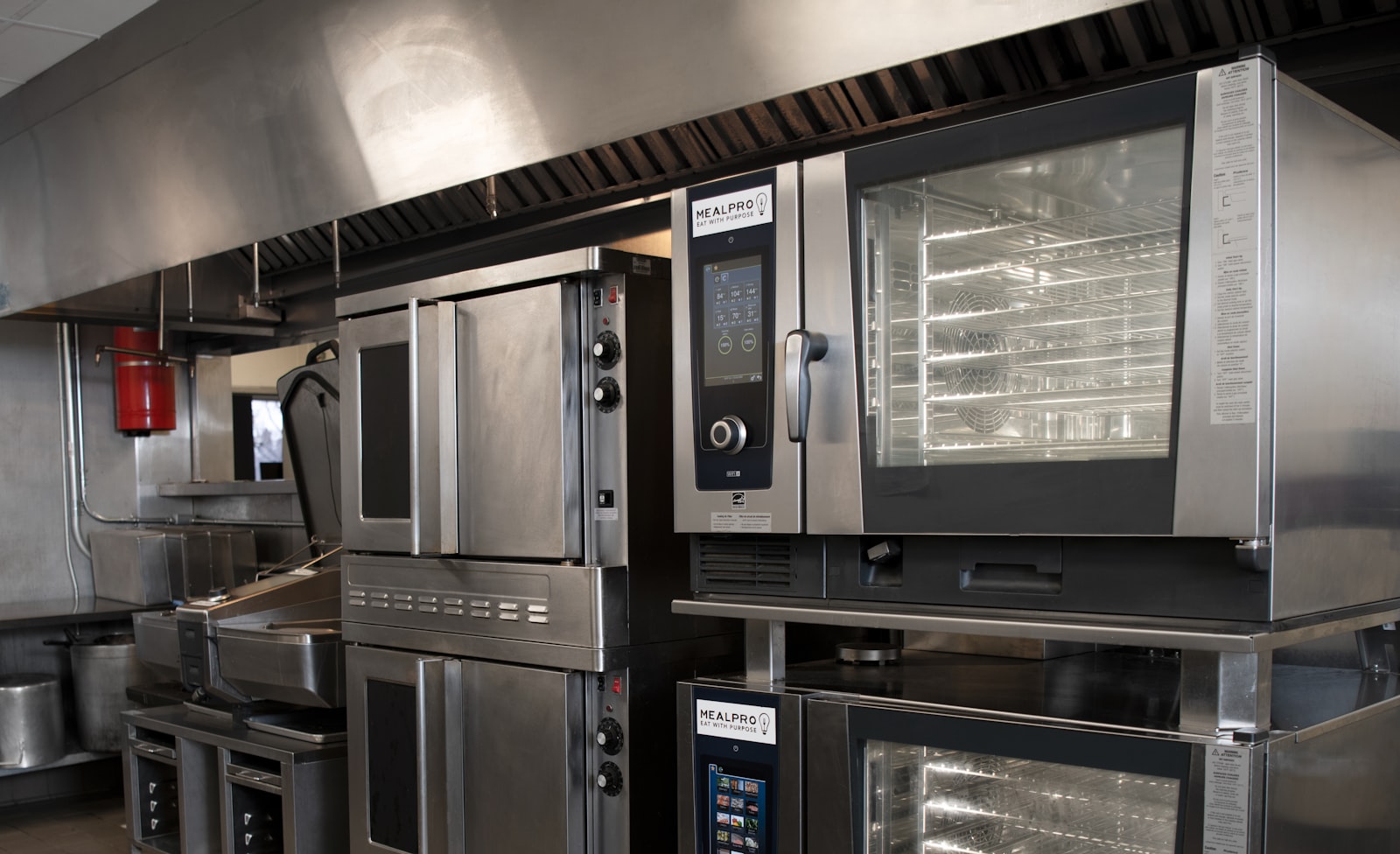
Bakery workers cramp because the heat load never leaves the room. Rack ovens run at 400 to 500 degrees, deck ovens vent steam by design, and the proof box holds 80 to 100 degrees at 70 to 95 percent relative humidity. High humidity is the part that matters: sweat that does not evaporate does not cool you, so the body keeps sweating and keeps dumping sodium. NIOSH lists bakery workers alongside firefighters and miners on its heat-stress risk list. A 3 oz Fast Pickle shot carries 570 mg of sodium and triggers a nerve reflex that quiets cramp signaling in roughly 85 seconds, which is faster than any drink can be absorbed.
Ask a production baker when the cramp shows up and almost nobody says the middle of a heat wave. They say 3 a.m. in February, on the fourth rack, with snow on the loading dock forty feet away. That is the tell. Bakery heat is not weather. It is equipment, and equipment runs the same in January as it does in July.
This article covers why the humidity in a bakery matters more than the temperature, what the proof box and the steam-injected deck do to your cooling capacity, why overnight shifts make the sodium math worse, and why a 3 oz brine shot fits a job where you cannot walk away from a timed bake.
Bakeries Are On The NIOSH Heat List For A Reason
When NIOSH names the occupations at elevated risk of heat stress, the list runs through the ones you would expect: firefighters, miners, farmers, construction workers, boiler room operators, foundry and factory workers. Bakery workers are on that same list. It is the one entry that surprises people, because the job happens indoors, in a clean room, under fluorescent light, with the door closed.
That indoor framing is exactly the problem. NIOSH's own guidance points out that heat sources like ovens cannot be captured by a weather report, which is why hot indoor workplaces are supposed to be measured on site with a wet bulb globe thermometer rather than estimated from the forecast. A bakery is the textbook case: the number that matters is generated inside the building by the equipment, and it is the same number at 4 a.m. in December as it is at 4 p.m. in August.
It is worth being precise here rather than dramatic. When NIOSH ran a health hazard evaluation at a commercial baking company, the highest indoor reading they recorded was 26.3 degrees Celsius WBGT at the jet oven pan-off station, and every reading came in below the recommended exposure limit for acclimatized workers. That is the honest picture. A well-ventilated commercial bakery is usually not an emergency. What it is, reliably, is a place where the exposure limit for someone who is not acclimatized sits meaningfully lower, and where the humidity does something to sweat that the dry-bulb temperature on the wall thermometer never shows you.
Humidity Is The Part That Breaks Cooling
Your body has one high-capacity cooling system and it is evaporation. Sweat leaves the skin, takes heat with it, and the skin cools. That transaction depends entirely on the air being dry enough to accept the water. Sweat that runs off your forearm and drips onto the bench cooled nothing. It only cost you fluid and sodium.
A bakery is engineered to keep air wet. Proof boxes are held between 80 and 100 degrees at 70 to 95 percent relative humidity, because dough surfaces skin over and crack if the air dries them. Deck ovens inject steam on purpose to get oven spring and a glossy crust. Every time a rack comes out, the moisture that was driven out of a hundred loaves goes into the room you are standing in.
So the baker opening a proof box takes a face full of 95 degree air at 90 percent humidity several times a shift. In that air, evaporative cooling is close to shut off. The body responds the only way it knows how, which is to sweat harder. You lose more fluid and more sodium for less cooling return. That is the mechanism behind the cramp that arrives on a cold night in a room that reads 82 on the wall.
The Overnight Shift Makes The Sodium Math Worse
Most production baking happens between 10 p.m. and 8 a.m. so that product is on the shelf by open. That schedule quietly stacks three problems on top of the heat.
- You start behind. A baker who clocks in at 11 p.m. has usually been awake since afternoon and has eaten one real meal. Sodium intake is front-loaded into the day and then stops, right as the sweating starts.
- Thirst signaling is blunted overnight. People drink less at 3 a.m. than they do at 3 p.m. for the same workload. The water is right there and it does not get consumed.
- Breaks are dictated by the bake, not the clock. You do not step away mid-cycle. A rack in the oven is a timer running, and the person who owns the timer stays on the line.
Add it up across a ten-hour overnight and you get a worker who is losing sodium steadily in a high-humidity room while replacing almost none of it, at the hour when they are least likely to notice.
Why Water Alone Leaves You Cramping
Sweat is not distilled water. Sodium concentration varies a lot between people, and normative sweat testing puts most workers somewhere in a broad range that translates to roughly 900 to 1,800 mg of sodium lost per hour under sustained heavy sweating. The high-sweat-sodium end of that range is the person whose apron dries with white salt lines on it, and they are common in bakeries.
Drinking plain water against that loss replaces the volume and dilutes what sodium you still have. That is why the crew member who has been dutifully working through a gallon jug all night is often the first one to cramp. They solved the fluid half of the problem and made the electrolyte half slightly worse.
This is the gap the 3 oz shot is built for. It is not the whole hydration plan. It is the concentrated piece that sits on top of the water you are already drinking.
Sodium Per Ounce: What Actually Fits In An Apron Pocket
Total sodium on a label is only half the story. On a bake line the real constraint is how much sodium you get per ounce you have to stop and swallow, because you have two minutes between racks and nowhere to set down a 20 oz bottle.
| Option | Serving | Sodium | Sodium per oz | Added sugar |
|---|---|---|---|---|
| Fast Pickle 3 oz shot | 3 oz | 570 mg | 190 mg | 0 g |
| LMNT (mixed) | 16 oz | 1,000 mg | 63 mg | 0 g |
| Liquid I.V. (mixed) | 16 oz | 500 mg | 31 mg | 11 g |
| Gatorade Thirst Quencher | 20 oz | 270 mg | 14 mg | 34 g |
| Water | 16 oz | 0 mg | 0 mg | 0 g |
A 3 oz shot carries more than twice the sodium of a 20 oz Gatorade in one-seventh the volume, with no added sugar. In a room where you are already handling sugar all night and where a sticky bottle is a sanitation problem, both halves of that matter.
The Neural Reflex Behind A 3 oz Shot
The reason a small volume works quickly has nothing to do with absorption. Miller and colleagues, publishing in Medicine and Science in Sports and Exercise in 2010, induced cramps in volunteers and compared pickle brine against deionized water. Cramps resolved in about 84.6 seconds with brine versus 133.7 seconds with water.
The important detail in that study is what did not change. Blood electrolyte levels were essentially unchanged five minutes after drinking. There was not enough time for 3 oz of anything to reach the muscle and correct anything chemically. The response is triggered in the mouth and throat, where receptors sensitive to the acid in the brine send a signal that dampens the runaway motor neuron firing driving the cramp.
Practically, that means the shot is an off-switch, not a hydration plan. It works on a timeline you can use in the two minutes between a rack coming out and the next one going in. It does not replace drinking water and eating salt across the shift.
What Does Not Work On A Bake Line
- Waiting for the break. Cramp signaling escalates. The window where a shot resolves it quickly is early, not after twenty minutes of a locked calf.
- Sugary sports drinks. At 14 mg of sodium per ounce you would need to drink close to a gallon to match the sodium in a few shots, and you would take on roughly 200 g of sugar doing it.
- Salt tablets on an empty stomach. Common at 2 a.m. when nobody has eaten since dinner, and a reliable way to end up nauseated on the floor.
- Assuming winter is safe. The ovens do not know what month it is. Neither does the proof box.
- Treating new hires like veterans. Acclimatization takes days of graded exposure. Bakeries run high turnover and seasonal surges, which means there is usually someone on the line in week one standing next to the hottest station.
Quick Reference: Bake Shift Protocol
- Salt before the shift, not during. A salted meal before you clock in does more than anything you can do at hour six.
- Water on a schedule, not on thirst. Overnight thirst signaling is unreliable. Pick an interval and hold to it.
- Keep a shot on you at the hot station. Pan-off, oven load, and proof box are where the exposure concentrates. The 12-pack covers a crew for a week of overnights.
- Take it at the first twitch. Early beats late by a wide margin.
- Watch the new person. Unacclimatized workers carry the real risk, and they are the least likely to say anything about it.
- Escalate real symptoms. Dizziness, confusion, clammy skin, or a stopped sweat rate is not a cramp problem. Stop work and get medical help.
Frequently Asked Questions
How fast does a pickle shot work on a cramp?
In the Miller 2010 study, cramps resolved in roughly 85 seconds with brine compared to about 134 seconds with water. The response is a nerve reflex triggered in the mouth and throat, not absorption, which is why the volume can be small and the timeline short.
Why do bakers cramp in winter?
Because the heat source is equipment rather than weather. Rack and deck ovens, steam injection, and proof boxes held at 80 to 100 degrees and high humidity produce the same conditions in February that they do in August. The loading dock being cold changes nothing about the oven line.
Is humidity really worse than temperature in a bakery?
For cooling, yes. Evaporation is the body's main heat-shedding mechanism and it requires dry-enough air to work. At the 70 to 95 percent relative humidity a proof box maintains, sweat runs off instead of evaporating, so you pay the fluid and sodium cost without getting the cooling benefit.
How many shots does an overnight shift take?
Most bakers use one at the first sign of a twitch and a second later in the shift on the hottest nights. It is a targeted tool rather than something you drink on a schedule. Water and salted food across the shift do the baseline work.
Do the shots need refrigeration?
No. They are shelf stable, which is the point in a bakery where cooler space is spoken for. They live in a locker, an apron pocket, or a shelf by the time clock. Cold is more pleasant, not required.
Can a bakery buy these for the whole crew?
Yes. Owners and production managers commonly stock the 12-pack in the break room for overnight crews. For larger operations the 24-pack is the usual step up.
The Science Behind The Bottle
Fast Pickle is a 3 oz shot of purpose-built brine: 570 mg of sodium, zero added sugar, under 1 g of carbohydrate, and the vinegar content that drives the oropharyngeal response documented in the cramp literature. It is fast-acting hydration support, not a daily plan, sized for a job where your break is measured against an oven timer.
For the roughly 185,000 people the Bureau of Labor Statistics counts as bakers in the United States, plus the far larger number working in commercial bakery manufacturing around them, the case is simple. The heat is generated by equipment, so it never goes out of season. The humidity that protects the dough is the same humidity that disables your cooling. The schedule puts the hardest hours at the time you are least likely to drink. A format that delivers 190 mg of sodium per ounce and works on a nerve-reflex timeline is built for exactly that.
*These statements have not been evaluated by the Food and Drug Administration. This product is not intended to diagnose, treat, cure, or prevent any disease. Individual results may vary. If you experience symptoms of heat exhaustion or heat stroke, stop work, get to a cool area, and seek medical attention.