
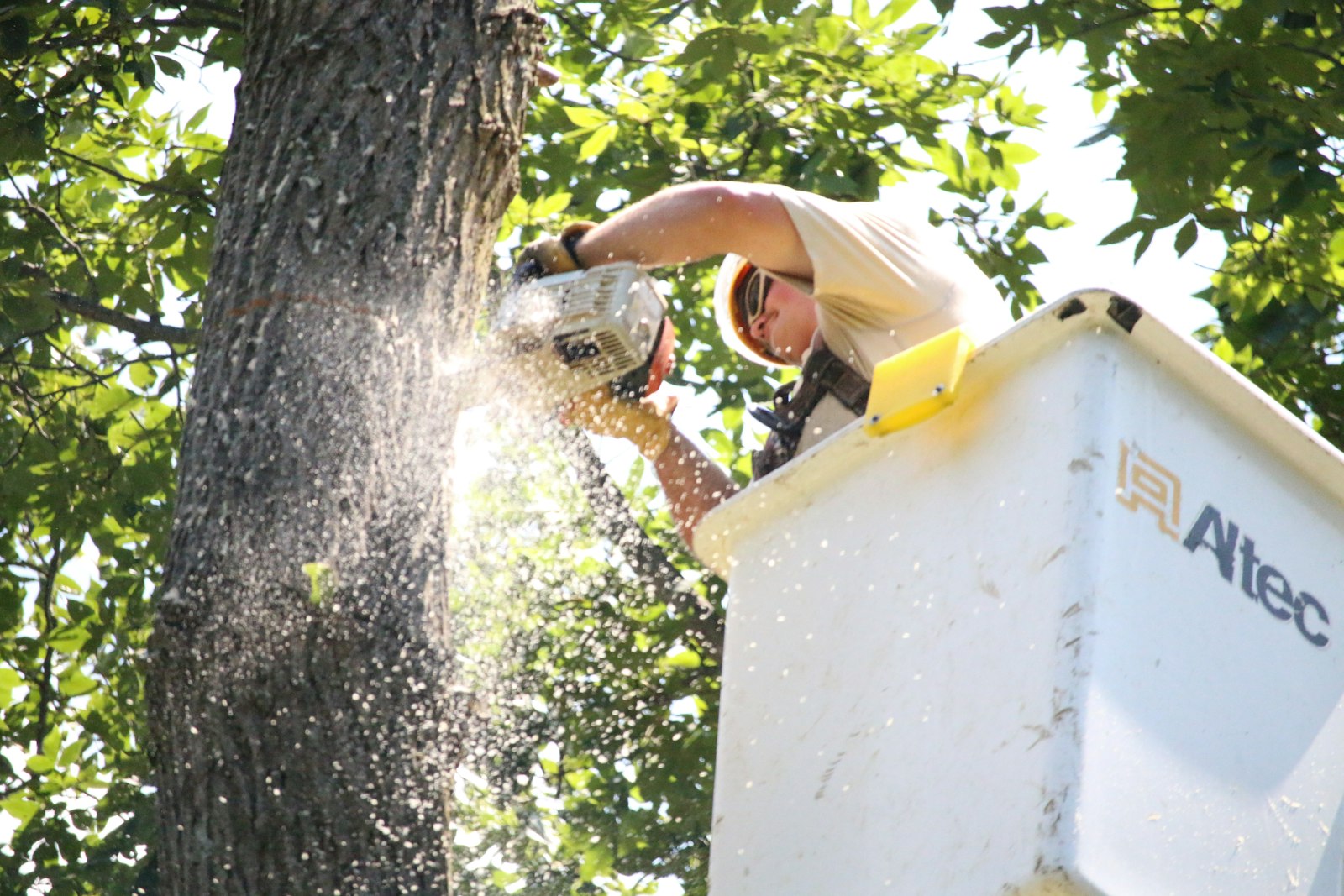
Yes — for arborists and tree crews, a 3 oz pickle brine shot is one of the fastest ways to put back the sodium that a hot day in the canopy pulls out of you. A full summer shift under chaps, a helmet, and a saddle can cost you 4.8 to 6 grams of sodium in sweat, and drinking only water replaces the volume while diluting the salt you have left. One 570 mg pickle shot delivers concentrated sodium as fast-acting hydration, and the sharp brine also triggers a neural reflex that eases muscle discomfort — in a 2010 study, faster than water could be absorbed.
Few trades cook you like tree work in July. You are in full sun in the top of the canopy where there is no shade and the air barely moves, wrapped in chainsaw chaps, a helmet, gloves, and eye and ear protection that seal heat against your body. The work itself — climbing on a saddle, throwing a line, bucking limbs, dragging brush to the chipper — is near-maximal effort for hours. By the second or third tree of the afternoon a forearm, calf, or the arch of a foot can lock up at the worst possible moment. The reason is the same one that catches roofers and dock crews: the heat is the setup, but the salt you lose in your sweat is the trigger.
The danger is real and documented. From 2020 through 2023 there were 243 tree-care-related fatal occupational injuries in the U.S. — an average of about 61 a year — and heat illness rides alongside the falls and struck-bys as a constant summer worry. When the temperature climbs past 90°F, work injuries across outdoor trades rise by roughly 6%, because heat slows your thinking and your coordination right when a running saw and a hundred feet of air demand both. A cramp aloft is an early warning shot. Reading it right — and putting the lost sodium back on the ground — is how you keep a rough afternoon from turning into something serious.
Why tree work is a heat-cramp magnet
A climb hits almost every box for sodium loss at once. You are in direct sun at the hottest hours, often with the canopy reflecting and trapping heat rather than shading you. Your PPE is built to stop a chainsaw, not to breathe — chaps, a helmet, and a long-sleeve layer hold heat in, so your core temperature climbs and your sweat rate climbs with it. The effort is relentless: there is no coasting on a climb the way there is on some jobs, just steady hard work between the rare moments you can rest on the saddle.
Then there is the ground crew, who are not getting off easy either — dragging brush, feeding a chipper, and humping gear in the same sun for the same hours. Cramps rarely show up in that first tree. They show up later, deep into the day, when the sodium you lost has finally added up. That delay is exactly why so many climbers never connect the cramp to the cause, and why OSHA's updated 2026 Heat National Emphasis Program now sends inspectors to tree-care and landscaping jobsites on any day the weather service issues a heat warning.
Why sodium loss is the real trigger
Sweat is mostly water and sodium. Across a full work shift in the heat, research on heat exposure puts average sodium losses at roughly 4.8 to 6 grams — the equivalent of 10 to 15 grams of salt — and even higher for people sealed inside heat-trapping PPE or not yet acclimatized to the season's first hot weeks. That is a serious amount of salt to climb and chip your way through without replacing.
Here is the trap: when it is hot, almost everyone reaches for plain water. Water brings the volume back, but it does nothing for the salt — and drinking a lot of it can actually dilute the sodium still in your blood. That dilution is part of why cramps, a foggy head, and that wobbly-legged feeling show up even when you have been "drinking plenty" all day. The fix for a heat cramp is not more water alone. It is water plus sodium.
What a hot day in the canopy pulls out of you
Here is a rough picture of what a hot tree-work day can drain from an average adult, and how urgently each piece needs to come back:
| What you lose | Typical range per hot shift | How fast it matters |
|---|---|---|
| Fluid | 4–8+ liters across a long day | Replace steadily, every break |
| Sodium | 4.8–6 g (10–15 g salt) | Replace through the day — this drives the cramp |
| Potassium | Several hundred mg | Food usually covers it |
| Magnesium | Small amounts | Diet usually covers it |
Sodium losses dwarf everything else, and sodium is exactly what most cooler drinks are short on. A 3 oz Fast Pickle shot carries 570 mg of sodium in a fast, no-mixing form you can keep in the chip-truck cooler — so you can chip away at that 4.8 to 6 gram hole across the day instead of finishing it empty.
How a pickle brine shot helps
A pickle juice shot works on two timelines, which is what makes it useful both for staying ahead of cramps and for one that is already happening.
The first is straightforward replacement. 570 mg of sodium per 3 oz goes directly toward the salt you sweated out, which is the foundation of fast-acting hydration in the heat. Over the minutes and hours after, that sodium helps your body hold onto the water you drink instead of passing it straight through — which matters when you are trying to stay topped up across a long day aloft.
The second is faster and a little surprising. In a 2010 study, researchers electrically induced cramps in dehydrated subjects and found that pickle juice eased the cramping in roughly 85 seconds — versus about 134 seconds with water. That is far too fast for the sodium to have been digested and redistributed. Their explanation: the sharp, sour brine triggers a reflex in the back of the throat that quiets the overactive nerve signals telling the muscle to fire. The acetic acid in the brine is the trigger, not the sodium. So a shot supports muscle function* on two fronts at once — the quick neural reflex when a cramp hits, and the slower sodium top-up that addresses why it happened.
Pickle juice vs the cooler options
When the problem is sodium, sodium per ounce is the number that matters most. Here is how the usual break-time options compare:
| Drink | Sodium | Added sugar | Sodium per oz |
|---|---|---|---|
| Fast Pickle (3 oz shot) | 570 mg | 0 g | 190 mg/oz |
| Gatorade (20 oz) | 270 mg | 34 g | ~14 mg/oz |
| Powerade (20 oz) | 250 mg | 34 g | ~13 mg/oz |
| Coconut water (1 cup) | ~250 mg | 9 g | ~31 mg/oz |
| Plain water | 0 mg | 0 g | 0 mg/oz |
Sports drinks carry sugar but little sodium per ounce, and you have to drink a lot of liquid to get a meaningful dose — not ideal when you are already cycling water all day and watching your weight on the climbing line. Coconut water leans on potassium, not the sodium you actually lost. A pickle shot is the most concentrated grab-and-go sodium of the group, with no sugar — you knock it back on the ground and chase it with your own water bottle before the next climb.
How to use it across a tree-work day
For a hot day on the crew, timing is simple and forgiving:
- Before you gear up: a shot 20–30 minutes before the first climb starts you with a fuller sodium tank instead of chasing the loss all day.
- At cool-down breaks: tie a shot to the breaks you should already be taking — OSHA's guidance points to cool-down breaks every couple of hours in the heat — so you stay ahead of the cumulative loss instead of waiting for the first lock-up.
- When a cramp starts: get the climber to a safe rest point or back on the ground, take a shot right away, and keep sipping water. The brine's neural reflex can help in well under two minutes while the sodium goes to work behind it.
This is why the 12-pack is the right size once the season heats up — a crew burns through shots fast when everyone on the truck is sweating through PPE for hours. They are shelf-stable until you chill them, so a box lives easily in the shop fridge or the chip-truck cooler.
Who on the crew cramps the most
Some workers cramp earlier and harder than others, and it usually comes down to how much salt they lose and how ready their body is for the heat:
- Climbers in full PPE — chaps, a helmet, and long sleeves trap heat and push the sweat rate higher than the ground crew's, so climbers often cramp first.
- Heavy and salty sweaters — anyone who finishes a day with salt crust on a helmet liner, shirt, or saddle is losing sodium fast and will cramp sooner.
- Crews not yet acclimatized — the first hot weeks of the season are when cramps spike before the body adapts; OSHA's "20% rule" of easing into heat over a week exists for exactly this reason.
- Storm and long-overtime days — back-to-back removals and mandatory overtime stack the sodium loss with no real chance to recover before the next one.
Is it safe across a summer of climbs?
For most healthy adults, a 3 oz shot on a heavy-sweat day fits comfortably inside daily sodium needs — the sodium you add is replacing sodium you just lost in the sun. On the hottest, longest days, two or three shots across the shift is a reasonable range for someone sweating heavily for hours under PPE. If you are on a sodium-restricted diet, or you manage blood pressure or kidney conditions, talk with your doctor about how a daily shot fits your plan before leaning on it through the summer. And remember a shot is a tool, not a substitute for the basics: keep water moving all day, take your cool-down breaks, and watch yourself and your crew for the signs of heat illness — especially aloft, where a foggy head is far more than an inconvenience.
Frequently asked questions
Does pickle juice help arborists with heat cramps?
A full day in the canopy under heavy PPE pulls a lot of sodium out in sweat, and a 3 oz shot delivers about 570 mg of sodium with no added sugar. It puts the salt back as fast-acting hydration, and the sour brine also triggers a neural reflex that eases muscle discomfort — in a 2010 study, faster than water.
How much sodium does a tree worker actually lose?
Research on working in the heat puts average losses across a full shift at roughly 4.8 to 6 grams of sodium — about 10 to 15 grams of salt — and higher for climbers sealed in heat-trapping chaps and helmets or not yet used to the heat.
How fast does it work on a cramp?
In that 2010 study, cramps eased in roughly 85 seconds with pickle juice versus about 134 seconds with water. The speed points to a throat reflex, not digestion — your gut cannot absorb minerals that quickly.
Is it better than a sports drink for tree work?
For replacing sweat sodium, yes. A 3 oz shot has about 570 mg of sodium and no sugar; a 20 oz sports drink has roughly 270 mg of sodium and 34 g of sugar. You would have to drink a lot of sports drink to match one shot.
How many shots can I have on a hot day?
For most healthy adults, one shot per heavy-sweat stretch is plenty, and two or three across a long, scorching day is a reasonable range. If you manage blood pressure, kidney issues, or follow a low-sodium diet, check with your doctor first.