
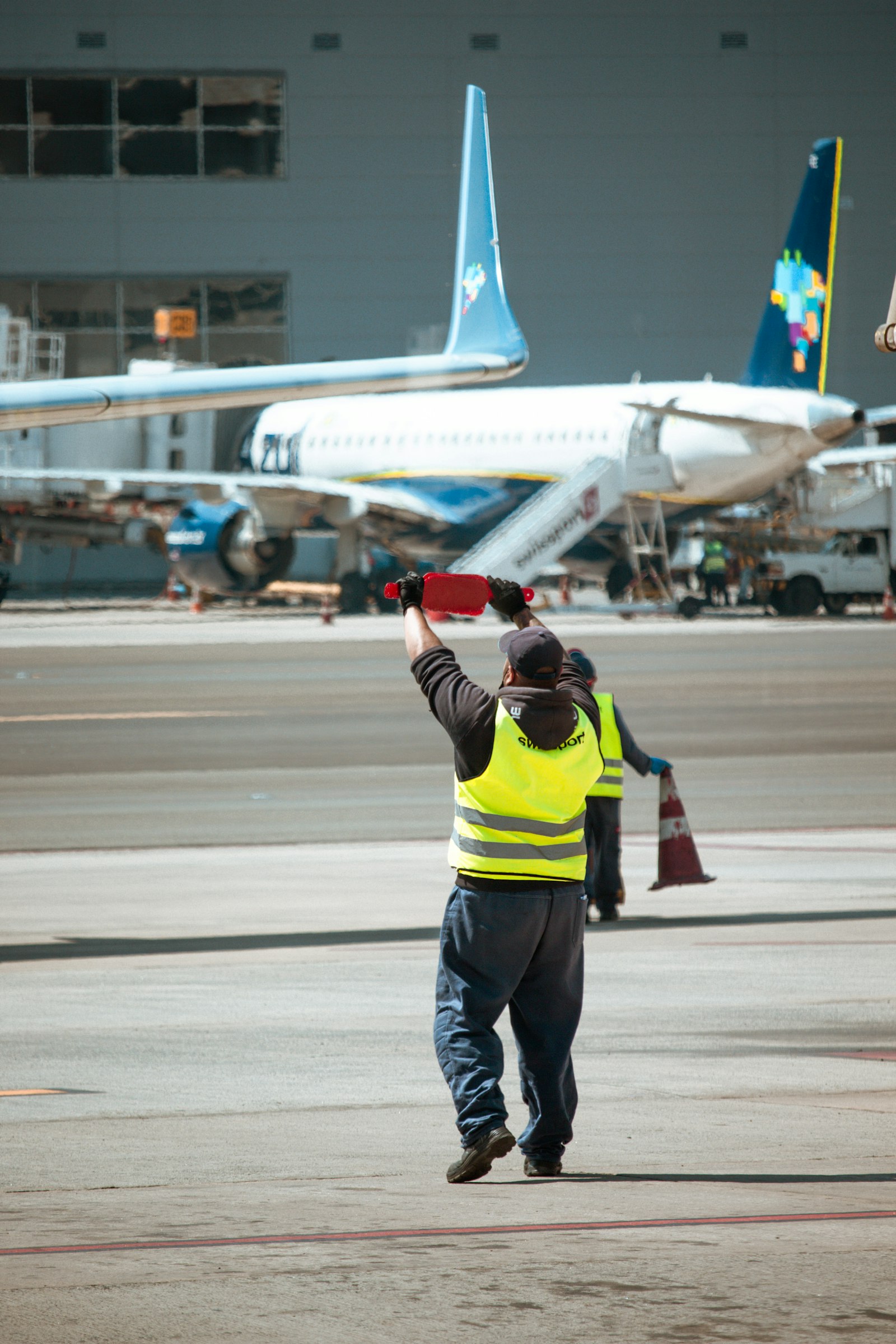
Airport ramp agents work on pavement that reaches 144°F when the air is 110°F, with radiant heat from jet engines and APUs stacked on top, and sweat sodium losses that commonly exceed 1,000 mg per hour across a turn-heavy shift. A 3 oz Fast Pickle shot delivers 570 mg of sodium and triggers a neurological reflex that shuts down cramp signaling in roughly 85 seconds — faster than any sports drink can be absorbed and fast enough to finish a bag load without leaving the aircraft.
Hydration advice is almost always written for athletes. It assumes a water bottle within arm's reach, a natural pause between efforts, and an environment where the air temperature is a reasonable proxy for the heat load. None of those assumptions hold on a ramp. A ramp agent working a summer bank at a hub airport is loading bags in a bin with no airflow, standing on radiant asphalt, wearing a high-vis vest and hearing protection, and working to a departure clock that does not care about the heat index.
This article covers the actual thermal load ramp agents carry, why the cramp pattern in this job shows up mid-bank rather than at end of shift, and how a 3 oz pickle brine shot fits a job where a 32 oz bottle does not.
The Thermal Environment on a Working Ramp
Ramp surface temperature is the number that gets missed. On a day when the air temperature hits 110°F, the pavement itself can reach roughly 144°F. That heat is radiated back upward at body level all shift, which is why ramp agents routinely report conditions that feel far hotter than the forecast suggests. Concrete aprons hold and re-emit that load well past sunset, so the last bank of the evening is often worked on a surface that is still shedding heat accumulated at noon.
Aircraft add their own sources. Auxiliary power units exhaust hot air directly onto the ramp while the aircraft is on the gate. Engine wash and jet blast raise local air temperature well above ambient during pushback and taxi. A cargo bin on a narrowbody has no ventilation and no shade, and bin temperatures climb quickly once the aircraft has been sitting on a sunlit stand.
OSHA has proposed an initial heat trigger at a heat index of 80°F and a high heat trigger at 90°F, at which point employers would be required to implement protective measures including water, rest, and shade. Baggage handlers and other airport service workers have filed heat-related complaints with OSHA seeking inspection of ramp working conditions — among the first heat complaints brought by U.S. airport workers. The regulatory picture is moving, but the shift you are working today still has to get loaded.
Why the Cramp Pattern Is Different in This Trade
Most outdoor trades build sodium debt on a fairly linear curve across a shift. Ramp work does not. Ramp work is banked: a burst of extremely high physical output during a turn, then a gap, then another burst. During a turn an agent may move 150 to 200 bags in twenty minutes, much of it in a crouch inside a bin with no airflow, at a work rate that would qualify as heavy labor under any heat-stress standard.
That burst pattern matters because sweat rate spikes during the turn and the gap between banks is rarely long enough to replace what was lost. Sodium debt accumulates in steps. The result is that ramp cramping tends to show up in the forearms, hands, and calves during the third or fourth turn of a shift — not at the end, and not during the first bank when the agent still feels fine.
The second complication is access. A ramp agent inside a cargo bin is not walking back to a cooler. Hearing protection, gloves, and a departure clock all work against stopping. By the time the cramp has developed enough to force a stop, the agent is already deep into the deficit that caused it.
The Neural Reflex Mechanism
The 2010 study by Miller, Mack, Knight, and colleagues at North Dakota State University demonstrated that pickle brine relieved exercise-induced muscle cramps 37 percent faster than water and 45 percent faster than no treatment. Relief onset began at roughly 85 seconds — well before meaningful sodium absorption from the gut could occur. That timing ruled out hydration or electrolyte repletion as the mechanism.
The accepted explanation is a transient receptor potential (TRP) channel response. Receptors in the oropharynx and esophagus are stimulated by the acidic, high-sodium content of pickle brine. Those receptors send a signal through the vagus nerve to the spinal cord, where the misfiring alpha motor neuron activity driving the cramp is suppressed. The reflex is fast, specific, and independent of fluid absorption.
On a ramp, the gap between 85-second and 20-minute resolution is the gap between finishing the load and calling for coverage. A shot that clears the episode without leaving the aircraft is the only format that matches how the job actually runs.
How Ramp Agents Use Fast Pickle on Shift
The 3 oz format solves the access problem. A 20 oz electrolyte bottle does not ride well in a bin or on a belt loader. A Fast Pickle shot fits in a vest pocket, rides in a tug console, or lives in a small cooler on the bag cart. No mixing, no water, no measuring.
Agents working summer banks typically run a straightforward protocol. One shot before the first bank sets a sodium baseline ahead of the first heavy turn. A second shot is held for the first forearm or calf tightening signal, which usually arrives around the third turn. On days when the heat index clears 90°F or the bank schedule runs past six hours, a third shot mid-shift is appropriate whether or not a cramp signal has appeared. The 12-pack is the practical unit here because ramp work is crew work — a station lead stocking a break room fridge is buying for four to six agents, not one.
For crew planning, budget one to two shots per agent per shift day during summer operations, with buffer stock for the first weeks of the hot season before crews have fully acclimatized. Agents on the first summer rotation after a winter schedule are the most likely to cramp, because heat acclimatization takes roughly one to two weeks of repeated exposure to develop.
What Doesn't Work on the Ramp
Volume-first hydration fails here for the same reason it fails on any job with restricted access. Drinking 32 oz of water in the break room before a bank does not carry an agent through three turns in 100°F heat, and water alone dilutes remaining serum sodium rather than replacing what sweat removed.
Sugary sports drinks are the default on most ramps because they are what the vending machine stocks. A standard 20 oz bottle carries around 270 mg of sodium and 34 g of sugar. The sodium is low relative to ramp sweat losses, and the sugar load produces the mid-bank energy dip agents describe on long summer schedules.
| Option | Sodium per serving | Sugar | Fits in a vest pocket |
|---|---|---|---|
| Fast Pickle 3 oz shot | 570 mg | 0 g added | Yes |
| Standard sports drink, 20 oz | ~270 mg | ~34 g | No |
| Electrolyte powder stick in 16 oz water | ~500–1,000 mg | 0–1 g | Only with a bottle |
| Water alone, 20 oz | 0 mg | 0 g | No |
Electrolyte powders and tablets do reach useful sodium concentrations, but they require a bottle, a water source, and 15 to 20 minutes for absorption — and absorption-based repletion cannot produce the 85-second reflex response documented in the 2010 research. Pickle-flavored gummies and diluted brine drinks do not reach the brine concentration required to trigger that reflex at all.
Sodium Numbers and the Shift Deficit
Fast Pickle delivers 570 mg of sodium per 3 oz shot. At a sweat sodium loss rate of roughly 1,000 mg per hour, a six-hour summer bank schedule produces a deficit near 6,000 mg. Two shots replace 1,140 mg, or about 19 percent of the total. That is not full repletion and is not meant to be. The objective during the shift is raising the threshold at which motor neurons begin misfiring under load. Partial replacement meaningfully delays onset and reduces severity even when it cannot offset the full shift deficit.
Full repletion happens off the clock, through normal salted meals. Agents who skip a proper meal after a heavy summer bank frequently cramp early on the next day's first turn even though they felt fine at end of shift. Sodium debt carries overnight, and back-to-back summer rotations compound it.
Quick Reference: Ramp Agent Shift Protocol
- Before the first bank: 1 Fast Pickle shot (570 mg sodium). Takes 30 seconds, no water required.
- First forearm or calf tightening signal: 1 shot immediately — do not wait for a full cramp to lock up mid-load.
- Heat index above 90°F, or a schedule past 6 hours: 1 additional shot mid-shift regardless of symptoms.
- End of shift: Salted meal to begin repletion before the next day's first turn.
- Crew stocking: A 12-pack covers a crew of 4 to 6 for roughly two summer shift days with buffer.
- New-season agents: Expect higher cramp risk for the first 1–2 weeks of hot-season rotation until acclimatization develops.
Frequently Asked Questions
How hot does an airport ramp actually get?
Air temperature understates it. On a 110°F day, ramp pavement can reach approximately 144°F, and that heat radiates upward at body level. Add APU exhaust, jet blast, and unventilated cargo bins and the effective working temperature for a ramp agent is well above what the forecast shows.
Why do ramp agents cramp mid-shift instead of at the end?
Ramp work is banked rather than continuous. Sweat rate spikes during each turn and the gap between banks is rarely long enough to replace the loss, so sodium debt accumulates in steps. Cramping typically appears during the third or fourth turn, once several bursts have stacked without adequate replacement.
How fast does a pickle shot work?
Research measured relief onset at roughly 85 seconds — faster than sodium can be absorbed from the gut. The effect comes from a nerve reflex triggered in the mouth and throat, not from rehydration, which is why the timing is so short.
Is one shot enough for a full summer shift?
Usually not on a heavy bank schedule. Most agents run one shot before the first bank and hold a second for the first tightening signal, adding a third on days above a 90°F heat index or on schedules running past six hours.
Does the sugar in sports drinks matter on the ramp?
For most agents, yes. A 20 oz sports drink carries roughly 34 g of sugar and about 270 mg of sodium — a lot of sugar for the sodium delivered. Fast Pickle has zero added sugar and under 1 g of carbohydrates per shot, which is why agents working consecutive banks tend to prefer it.
Can a station buy these for the whole crew?
Yes. The 12-pack is the standard crew unit and covers four to six agents for roughly two summer shift days. Stations running larger summer rotations typically keep several packs in a break room fridge or a bag cart cooler.
The Science Behind the Bottle
Fast Pickle shots are 3 oz of high-sodium pickle brine: 570 mg sodium per shot, zero added sugar, under 1 gram of carbohydrates. The formula was built to match the brine concentration used in the North Dakota State University cramp research. No artificial sweeteners, no caloric fillers, and nothing that weighs down an agent working a 4 a.m. first bank.
The 3 oz size is deliberate. It delivers a full-concentration brine dose sufficient to trigger the TRP reflex without requiring more than one unit per episode. Diluted or sweetened alternatives do not reach the same concentration threshold, and larger formats give up the portability that makes the shot usable inside a cargo bin.
Ramp agents are among the hardest outdoor crews to solve for on hydration, because the limit is structural rather than behavioral. Agents know they should drink more. The job does not hand them a clean chance to do it between the bin and the departure clock. A 3 oz shot that fits in a vest pocket, works in under 90 seconds, and needs no water or ice is the format that matches the work.