
If you manage blood sugar, evaluating an electrolyte product usually ends the same way: you find something that looks promising, flip it over, and see either a gram count of added sugar or a sweetener like sucralose buried in the ingredients. Either way, you put it back.
That frustration is legitimate. Most electrolyte drinks on the market were designed for endurance athletes who need fast-burning carbohydrates during prolonged exercise, not for people who need to stay hydrated without disrupting their glucose levels. The result is a market full of products that either carry 7 to 21 grams of added sugar per serving or swap that sugar for artificial sweeteners whose long-term safety profile is, at best, unsettled.
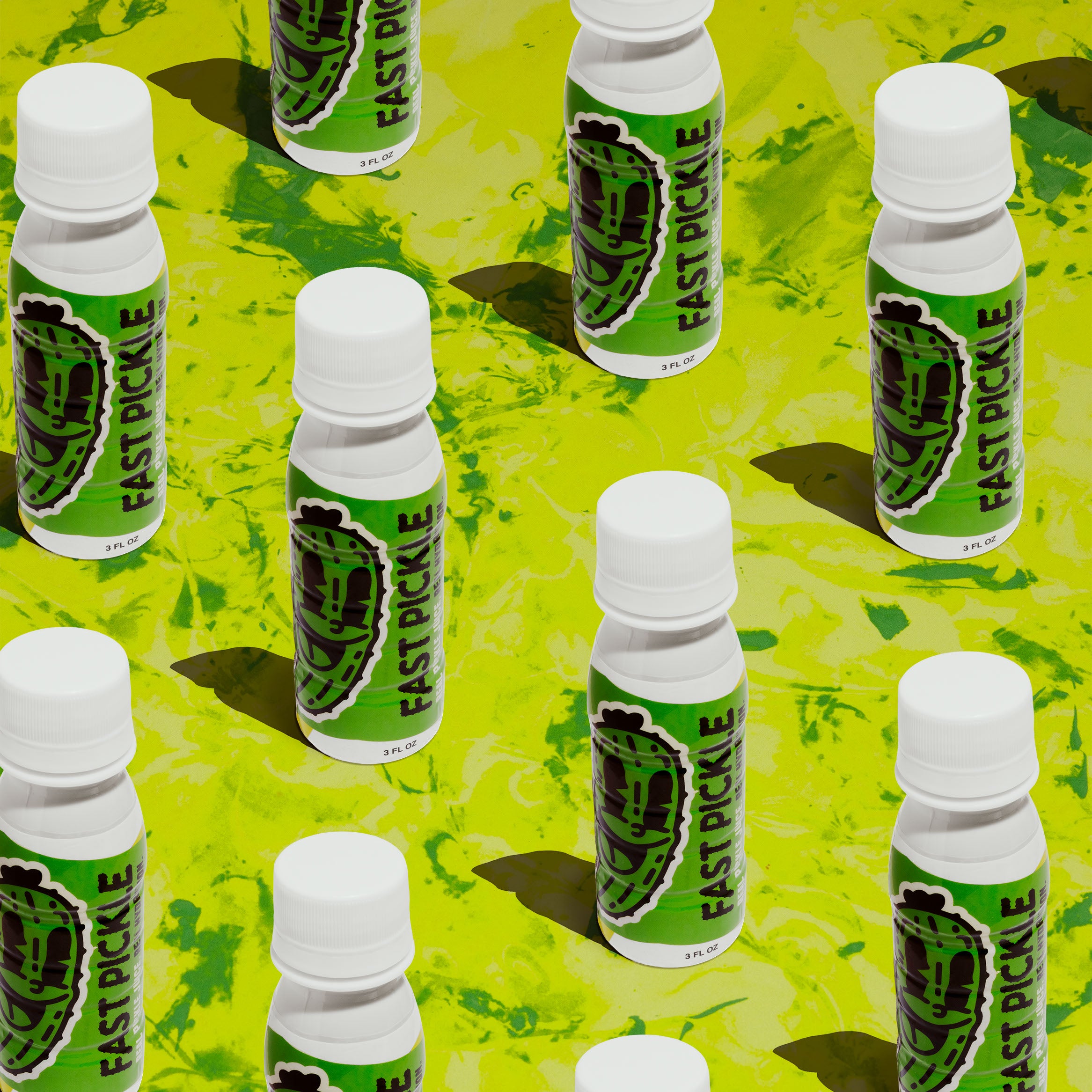
Fast Pickle contains zero grams of added sugar and zero artificial sweeteners. The formulation is built on real, fermented pickle brine, and its electrolyte concentration comes from sodium, not from a sweetened carrier solution. That distinction matters more than it might seem.
This article explains exactly what's in Fast Pickle, why the no-sugar-added formulation is a meaningful advantage for people managing blood glucose, and why the absence of artificial sweeteners is just as important as the absence of sugar itself.
Why Added Sugar Is a Problem in Electrolyte Drinks
The original rationale for adding sugar to sports drinks made sense in a narrow context: endurance athletes burning through glycogen during hours of sustained effort need fast carbohydrates to maintain blood glucose and delay fatigue. Research from Harvard's T.H. Chan School of Public Health confirms that sugar in sports drinks was specifically designed for that use case, and that "for the non-athlete, a sports beverage is just another sugary drink."
The problem is that the industry built its entire product category around that narrow use case, and then marketed it to everyone. The result is that people who are simply trying to replenish electrolytes lost through sweat, whether during a moderate workout, a long shift at work, or a hot day outdoors, are regularly consuming added sugar they don't need and can't afford metabolically.
What Added Sugar Actually Does to Blood Glucose
When you consume added sugar, your body responds with a rapid rise in blood glucose followed by an insulin response. For people with healthy insulin sensitivity, this cycle resolves quickly. For people managing Type 1 diabetes, Type 2 diabetes, or insulin resistance, the spike is harder to manage and the downstream effects compound over time.
The American Heart Association summarized recent findings clearly: sugary drinks spike blood glucose, which leads to inflammation, insulin resistance, and fat accumulation around organs. A Tufts University study cited by the AHA estimates that sugar-sweetened beverages contribute to approximately 2.2 million new cases of Type 2 diabetes and 1.2 million new cases of cardiovascular disease every year.
Critically, the AHA study found that one sugary drink per day was linked to an 18% higher risk of cardiovascular disease regardless of how much a person exercised. Physical activity does not neutralize the metabolic impact of regular added sugar consumption.
The "Zero Sugar" Version Problem
Many brands have responded to sugar concerns by releasing "zero sugar" or "zero calorie" versions of their products. These typically replace sucrose or dextrose with sucralose, aspartame, or acesulfame potassium. On the surface, this solves the blood glucose spike problem. In practice, it introduces a different set of concerns.
The American Diabetes Association notes that while artificial sweeteners do not raise blood glucose levels in the short term, "there is a great deal of research questioning their overall safety and long-term impacts on your health, including insulin resistance, weight gain, cancer, and inflammation." The ADA explicitly states that consuming artificial sweeteners in excessive amounts is not recommended, even for people with diabetes.
For someone who is already managing a metabolic condition, trading one ingredient of concern for another is not a meaningful improvement. It is a reformulation that addresses the label, not the underlying issue.
Related read: Sugar-Free Electrolytes: Why Fast Pickle Fits Low-Sugar Diets — a broader look at how sugar-free formulations fit low-carb and low-sugar diets.
What's Actually in Fast Pickle
Fast Pickle is a concentrated pickle brine electrolyte shot. The entire formulation is built around real fermented pickle brine, which naturally contains sodium, chloride, and the acidic compounds that give pickle juice its characteristic flavor. There is no sweetener of any kind added to the formula, artificial or otherwise.
Here is what that looks like on the label:
| Nutrient | Per 3oz Serving |
|---|---|
| Added Sugar | 0g |
| Artificial Sweeteners | None |
| Sodium | 570mg |
| Total Carbohydrates | 1g |
| Calories | 0 |
The sodium concentration is the point. At 570mg of sodium per 3oz serving, Fast Pickle delivers more sodium per ounce than most ready-to-drink electrolyte products on the market. That concentration is what makes it effective for rapid rehydration, and it comes entirely from the brine, not from a sugar-based delivery mechanism.
Why Pickle Brine Works Without Sugar
A common assumption in sports nutrition is that sugar is necessary for electrolyte absorption. This is based on the principle of co-transport: glucose and sodium share an intestinal transporter (SGLT1), so consuming them together can accelerate sodium uptake. The logic holds for very high-intensity endurance exercise lasting more than 60 to 90 minutes.
For most hydration scenarios, that mechanism is not required. Sodium absorption occurs through multiple pathways in the intestine, and research published in PMC found that sugar-free electrolyte formulations maintained blood electrolyte concentrations just as effectively as carbohydrate-electrolyte beverages in exercise trials, with no significant difference in performance outcomes.
The practical implication: you do not need sugar to absorb sodium effectively during normal hydration. The glucose co-transport advantage is relevant to elite endurance athletes fueling during competition, not to someone replacing sweat electrolytes after a workout, a long workday, or a hot afternoon.
The Hypertonic Formulation Advantage
Fast Pickle is a hypertonic solution, meaning its concentration of dissolved particles is higher than that of your body fluids. This is intentional. The concentrated shot format means a small 3oz volume delivers a meaningful electrolyte payload without requiring you to drink a large volume of sweetened liquid.
For people managing blood sugar, this format has a practical advantage: you take the shot, chase it with water, and your hydration is addressed without any glucose load entering your system. The volume is small, the ingredients are clean, and the sodium concentration is high enough to actually shift your hydration status.
Why This Matters Specifically for Blood Sugar Management
Dehydration and blood sugar management are more closely connected than most people realize. When you become dehydrated, the water content of your bloodstream decreases, which causes glucose to become more concentrated in your blood. The result is a measurable spike in blood glucose readings, not because more sugar entered your system, but because the ratio of sugar to water shifted.
This creates a compounding problem for people with diabetes: dehydration raises blood glucose, but most electrolyte products designed to address dehydration contain sugar that raises blood glucose further. The standard fix creates the same problem it is trying to solve.
The Cleveland Clinic identifies proper hydration as a key component of blood sugar management, noting that adequate fluid intake helps the kidneys flush excess glucose from the body through urine. Staying consistently hydrated is not just about comfort; it is a functional part of managing glucose levels day to day.
Who Benefits Most from a No-Sugar, No-Sweetener Electrolyte
The no-added-sugar formulation is relevant across a wide range of blood sugar management contexts:
- Type 1 diabetes: Any added sugar requires insulin dosing adjustments. A zero-sugar electrolyte eliminates that calculation entirely.
- Type 2 diabetes: Repeated glucose spikes from sugary beverages contribute to worsening insulin resistance over time. Eliminating added sugar from hydration is a low-effort, high-impact change.
- Pre-diabetes: People in the pre-diabetic range are often advised to reduce total added sugar intake as a primary intervention. Switching electrolyte sources is one of the easiest places to do it.
- Keto and low-carb diets: Ketosis requires keeping net carbohydrates extremely low. Even 7 to 10 grams of added sugar from a hydration product can push someone out of ketosis or toward their daily carb ceiling.
- Insulin resistance: Frequent blood glucose spikes, even from sources perceived as healthy, reinforce the cycle of insulin resistance. A clean electrolyte source removes one variable from the equation.
The Artificial Sweetener Concern Is Not Minor
For people in any of the categories above, the shift from "added sugar" to "artificial sweeteners" is not a clean solution. Verywell Health and multiple peer-reviewed sources have flagged that some artificial sweeteners may alter gut microbiome composition in ways that affect glucose metabolism, and that the long-term picture on sweetener safety remains genuinely open.
This is not a fringe concern. The American Diabetes Association acknowledges the uncertainty directly, and the research literature continues to accumulate questions rather than answers. For someone already managing a metabolic condition, adding another variable with an unsettled safety profile is not a neutral choice.
Fast Pickle sidesteps this entirely. There is no sweetener to debate because there is no sweetener present.
How Fast Pickle Compares to the Alternatives
To understand why Fast Pickle's formulation is unusual, it helps to look at what the broader electrolyte market actually offers people managing blood sugar.
| Product Type | Added Sugar | Artificial Sweeteners | Sodium per Serving |
|---|---|---|---|
| Traditional sports drinks | 14–21g | Sometimes | 110–160mg |
| "Zero sugar" sports drinks | 0g | Yes (sucralose, etc.) | 110–160mg |
| Electrolyte powders (standard) | 1–7g | Often | 200–500mg |
| Electrolyte powders (no-sugar) | 0g | Usually yes | 200–1000mg |
| Fast Pickle (3oz shot) | 0g | None | 570mg |
The table above illustrates the core gap in the market. Most no-sugar electrolyte products achieve their clean sugar label by substituting artificial sweeteners. Fast Pickle achieves it by not using any sweetener at all. The flavor comes from the pickle brine itself, which is naturally tart and savory, not sweet.
Related read: Fast Pickle vs. Liquid I.V.: Which Works for Heavy Sweaters? — head-to-head sodium and sugar comparison.
The Sodium Density Difference
Sodium is the primary electrolyte lost in sweat, and it is the electrolyte most directly linked to hydration status. At 570mg per 3oz serving, Fast Pickle delivers a clinically meaningful dose of sodium in a small, concentrated volume.
For context:
- A standard 12oz sports drink typically contains 110 to 160mg of sodium
- A single Fast Pickle shot contains more than three times that amount in one-quarter the volume
- The concentrated format means you get the electrolyte payload without the fluid volume, the sugar, or the sweeteners
This matters for blood sugar management because it means hydration can be addressed quickly and completely, without consuming a large volume of any liquid that might contain glucose-affecting ingredients.
Real Brine vs. Flavored Water
One distinction worth making explicit: Fast Pickle is made from real fermented pickle brine, not a flavored electrolyte solution that mimics the taste of pickles. The difference is meaningful because fermented brine contains naturally occurring acids and compounds from the fermentation process that are not present in artificially flavored products.
The formulation does not rely on sweeteners to make the product palatable. The flavor is inherently savory, which is actually a better match for what the body is losing during heavy sweating: salt, not sugar.
Practical Use: When and How to Use Fast Pickle
Fast Pickle works best as a targeted electrolyte intervention rather than a continuous sipping beverage. The concentrated format is designed for moments when sodium replenishment is the priority: after heavy sweating, during sustained physical activity, in hot environments, or when you feel the early signs of dehydration like muscle fatigue or headache.
Recommended Use Scenarios for People Managing Blood Sugar
- Before or after exercise: Take one 3oz shot before or immediately after a workout to prime or restore sodium levels without any glucose load.
- During hot weather or outdoor work: Sweat loss in high-heat environments is primarily sodium and water. A shot followed by 8 to 16oz of water addresses both without adding sugar to your system.
- For exercise-associated muscle support: Pickle juice has been studied for its effect on exercise-associated muscle cramps. A study published in Medicine & Science in Sports & Exercise found that pickle juice shortened the duration of electrically-induced cramps approximately 45% faster than water, likely through a neurological reflex mechanism rather than electrolyte replenishment alone.
- During illness or recovery: Fever, vomiting, and diarrhea all cause rapid electrolyte loss. A zero-sugar electrolyte shot is a clean way to replenish sodium without adding glucose stress during recovery.
- As a daily hydration support: For people who sweat regularly through work or activity, a shot taken once or twice daily can help maintain baseline sodium levels without any dietary sugar trade-off.
A Note on Sodium and Blood Pressure
People managing diabetes are often also managing cardiovascular risk, and sodium intake is a legitimate consideration in that context. It is worth noting that the 570mg of sodium in a Fast Pickle shot is a targeted electrolyte dose, not a casual snack. For most adults, the American Heart Association's guidance on sodium intake applies, and anyone with specific cardiovascular or kidney conditions should consult their physician about appropriate electrolyte intake.
That said, the sodium in Fast Pickle is the same sodium found in fermented foods that have been consumed for centuries. The concern with dietary sodium is primarily about chronic overconsumption from processed foods, not from purposeful electrolyte replenishment after sweat loss.
Frequently Asked Questions
Does Fast Pickle have any sugar at all?
Fast Pickle has zero grams of added sugar. It contains under 1 gram of total carbohydrates per 3oz serving from naturally occurring compounds in the fermented brine. There is no added sucrose, dextrose, fructose, or any other added sweetener.
What about stevia, monk fruit, or other "natural" sweeteners?
Fast Pickle contains none of those either. The formulation has no sweeteners of any kind — natural, artificial, or sugar alcohol. The flavor is savory, sourced entirely from real fermented pickle brine.
Is Fast Pickle keto-friendly?
Yes. With under 1 gram of total carbs and 0 calories per 3oz serving, Fast Pickle fits cleanly within ketogenic and low-carb dietary protocols. It will not push you out of ketosis or eat into your daily carb allowance.
Will Fast Pickle affect my blood glucose readings?
Fast Pickle contains no added sugar and no artificial sweeteners, so it should not directly raise blood glucose. By supporting hydration, it may help avoid the glucose concentration spike that can occur when blood volume drops from dehydration. As always, individual responses vary; talk to your doctor about how it fits your management plan.
Is the sodium level safe for someone with high blood pressure?
The 570mg of sodium per shot is a targeted electrolyte dose, not a casual addition to your daily intake. If you have hypertension, kidney disease, or any condition where sodium intake is medically restricted, talk to your physician before adding any electrolyte product to your routine.
How does Fast Pickle compare to electrolyte powders that are also sugar-free?
Most sugar-free electrolyte powders use artificial sweeteners (sucralose, ace-K) or natural sweeteners (stevia, monk fruit) to achieve their flavor. Fast Pickle uses neither. It also delivers more sodium per serving than most powders and skips the mixing step entirely.
The Bottom Line
The electrolyte market has a well-documented blind spot: it built its products for athletes who need sugar, and then sold those products to everyone. People managing blood sugar have been left to choose between added sugar and artificial sweeteners, both of which come with legitimate concerns for metabolic health.
Fast Pickle is formulated differently by design. Zero added sugar, zero artificial sweeteners, 570mg of sodium per 3oz shot, and a flavor profile that comes from real fermented brine rather than a sweetened carrier solution. It is one of the few electrolyte products on the market that genuinely resolves both sides of the sugar problem rather than trading one for the other.
Key takeaway: For anyone managing Type 1 or Type 2 diabetes, pre-diabetes, insulin resistance, or a keto/low-carb lifestyle, Fast Pickle's no-sugar, no-sweetener formulation makes it one of the cleanest electrolyte options available. The sodium concentration is high, the format is practical, and the ingredient list does not require any trade-offs.
If you have been putting electrolyte drinks back on the shelf because of what's on the label, Fast Pickle is worth a closer look.
*These statements have not been evaluated by the Food and Drug Administration. This product is not intended to diagnose, treat, cure, or prevent any disease. Talk to your doctor before adding any electrolyte product to your routine, especially if you have diabetes, hypertension, kidney disease, or any condition that requires sodium restriction.